
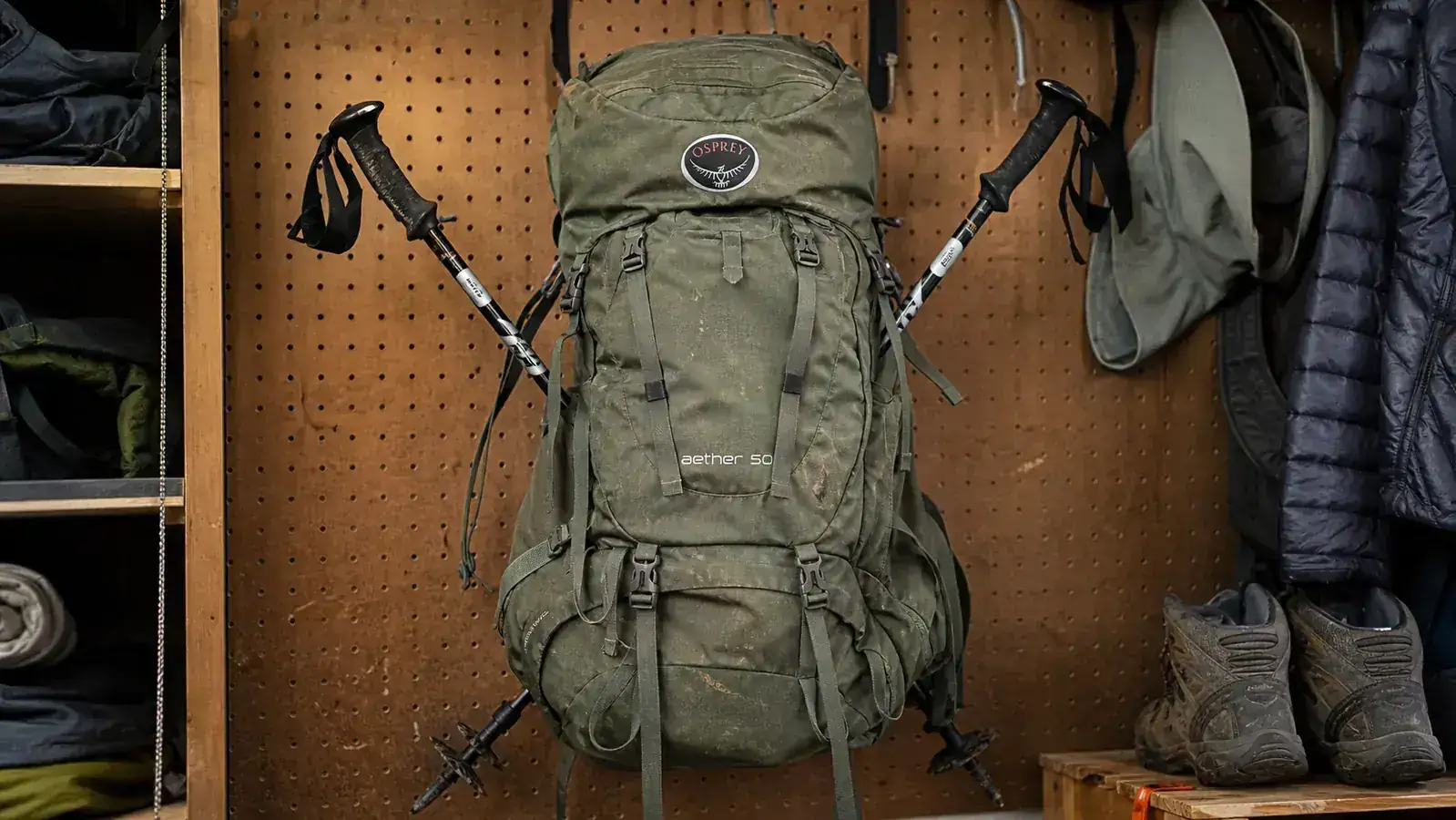
The first real test for the Loowoko 50L was a late-October loop in the Smoky Mountain foothills with four guys, two nights, and a weather forecast that turned from partly cloudy to a full rain event by Saturday afternoon. I had bought the pack two weeks earlier, mostly because my old Teton bag finally blew a shoulder seam on a descent the previous summer and I was not ready to spend three hundred dollars while I figured out what I wanted long-term. The Loowoko was forty-nine bucks, had better-than-expected reviews, and showed up in two days. I figured I would find out on that trip whether it earned a spot in my regular rotation or ended up in the garage pile.
That was eight camping weekends ago. The pack is still in rotation. Not because it is perfect, because it is not, but because at this price point it handles the things that actually matter on a two-night trip, and it does a few of them better than packs I have used that cost twice as much. Here is everything I know about it after sustained real-world use.
The Quick Verdict
A legitimate 50L pack for weekend campers who want rain protection, decent organization, and a comfortable carry without spending big-brand money. The foam back panel is its main limitation on long mileage days, but for car-camping hauls and moderate trails it holds up well.
Amazon Check Today's Price →If your old pack just gave out and you need something reliable before the next trip, the Loowoko 50L is the lowest-risk option at this price.
Rated 4.5 stars with over 5,600 reviews. Includes a built-in rain cover and fits most airline overhead bins. Ships fast on Amazon.
Amazon Check Today's Price on Amazon →How I Have Used It
Eight trips over roughly ten months. Most were two-night car-camping weekends where the trailhead was the starting point, not the finish. One was a solo three-day loop in the Uwharrie National Forest, about 22 miles total. I carried a solo tent, a 0-degree mummy sleeping bag, a compressed cookset, two days of food, a water filter, a first-aid kit, and layers for 40-degree nights. Loaded that way the pack weighed in at about 32 pounds, which is in the middle of the range for a 50L on a weekend trip.
I have used it in temperatures from 34 degrees on a November night in the Appalachians down to a hot, humid 80-degree day in June on a North Carolina trail. I have stuffed it into the trunk of a Subaru Forester, hung it from a tree bear line, and sat it in creek mud while I filtered water. The pack has been rained on hard three times. One of those was a genuine sustained downpour for about four hours where we were moving the whole time.
I also lent it to a friend, my buddy Corey, 6 foot 2 and about 215 pounds, for his first overnight backpacking trip. His feedback on fit was different from mine, which I will get into in the fit section. That real-world size comparison ended up being one of the most useful data points I gathered.
Build Quality and Materials
The shell is a 600D polyester, which is the same material class you find on packs in the $75 to $120 range from brands like Teton Sports and Mountaintop. It is not the ripstop nylon you get on a Deuter or Osprey, but it is noticeably thicker than the budget Amazon packs from two or three years ago. After eight trips I have one small scuff mark near the bottom where it scraped against a granite ledge. No fraying at the zipper edges, no stress failure at the attachment points.
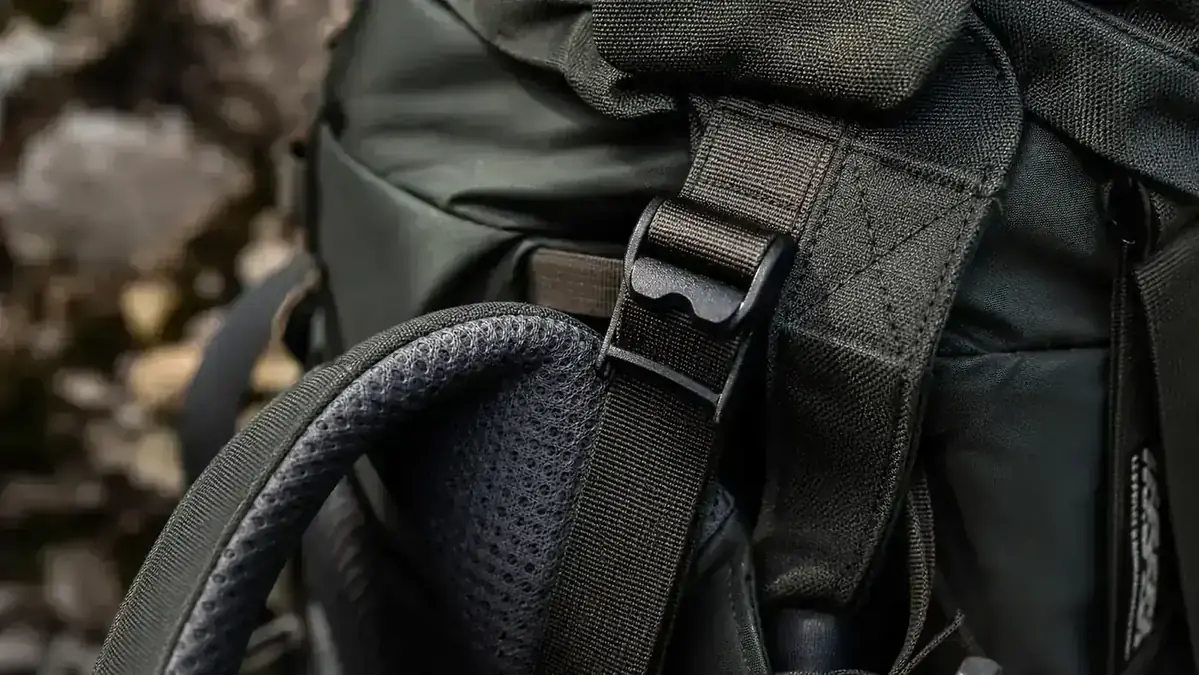
The zippers are the thing I watch most closely on any pack, because that is usually where budget gear falls apart first. The main compartment zipper is a chunky YKK-style pull that has not snagged once. The top lid zipper and the front organizational pocket zipper are lighter and feel a bit plasticky, but they have worked every time. The daisy chain loops and compression straps are stitched with multiple passes. I tested the side lash points by hanging my trekking poles from them on a descent and they held without pulling the attachment away from the shell.
Where the build cuts corners is in the frame. There is a thin aluminum stay inside the back panel that provides some rigidity, but the padded foam behind it is soft enough that under a heavy load you feel the frame flex on uneven ground. It is not dangerous, it just means the load does not track as cleanly as a pack with a true internal frame system. On trail mileage over ten miles I felt this as lower-back fatigue earlier than I would have expected. On shorter carries it is a non-issue.
The Rain Cover: Better Than I Expected
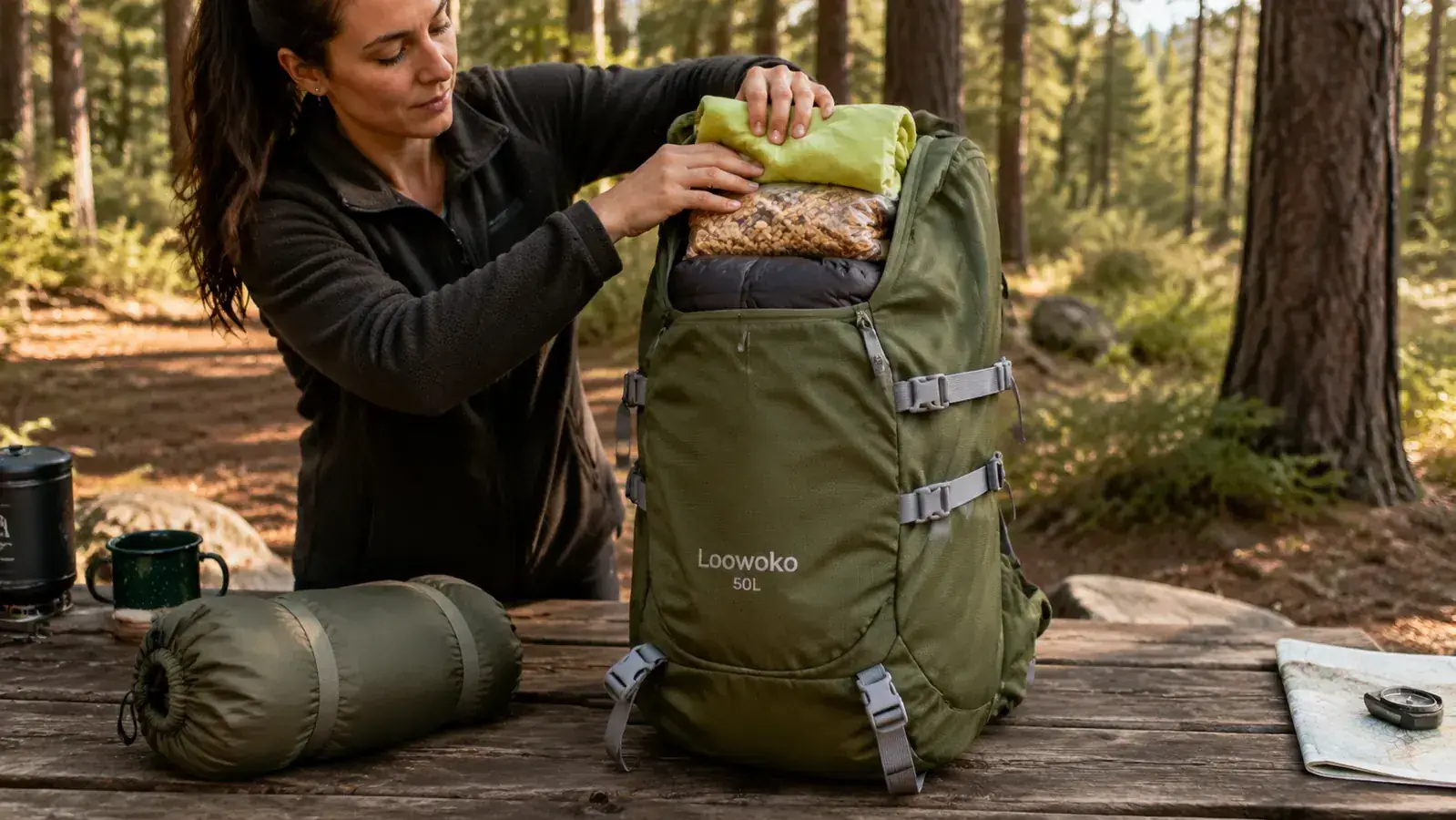
Most packs at this price point advertise waterproof fabric but skip the rain cover, or they include a flimsy cover that blows off in anything above a light drizzle. The Loowoko ships with a fitted rain cover stored in its own pocket at the bottom of the pack. The cover is sewn from the same light silnylon-style ripstop that standalone covers use. It fits over the entire pack body with a cinch cord at the bottom that actually stays put.
On that four-hour rain event in the Appalachians I mentioned earlier, the cover held. My sleeping bag, which I keep in a dry sack but also now trust the cover to back up, was dry. My food bag was dry. The outside of the shell itself got wet where the cover did not extend to the shoulder harness area, which is normal. The stuff sack for the cover got soaked but the cover deployed fast enough that it did not matter. I have seen separate rain covers sold for fifteen to twenty dollars that work worse than this one.
Most budget packs skip the rain cover or give you something that flaps off in the first gust. The Loowoko's cover fits properly, cinches tight, and actually stayed on through four hours of steady rain on a moving trail.
Fit and Carry Comfort
I am 5 feet 11 inches and have a 19-inch torso. The pack fits me well with the hip belt sitting correctly at the top of my hip bones when the shoulder straps are fully adjusted. The shoulder straps are pre-curved and padded with enough foam that I do not feel pressure on the collarbone even at heavier loads. The sternum strap is adjustable on a slider and includes a small emergency whistle built in, which is a nice detail.
Corey, at 6 foot 2, found the torso length a bit short. The hip belt sat at his lower back rather than his hips, which shifted the load onto his shoulders and caused fatigue much faster than it did for me. If you are taller than about 6 foot 1 with a long torso, this is worth knowing before you buy. For average male height and most women's torso lengths it seems to fit well, but it is not an adjustable-torso pack. What you get is what you get.
The hip belt wings are padded but not heavily contoured, which is typical at this price. They distribute weight acceptably for day-and-a-half loads. On my 22-mile Uwharrie trip, by mile 14 on the second day my hips were ready to be done with it. A true load-lifter hip belt would have made a difference on that mileage. For most weekend warriors doing five to eight miles of trail per day, the belt does its job.
Organization and Pocket Layout
The main compartment is a single large sleeve that opens at the top. There is a removable internal divider that creates a sleeping bag compartment at the bottom, accessed through a separate zippered opening in the lower shell. I use this compartment for exactly that. My sleeping bag goes in first, the divider separates it from the rest of my gear, and I do not have to dig past food and clothes to get to the bag at camp.
The top lid pocket is spacious enough for a first-aid kit, headlamp, trail snacks, and a small map or phone in a waterproof case. A front zippered pocket handles my stove fuel canister, cord, and repair kit. There are two side mesh pockets sized correctly for a 32-ounce water bottle, though they are not the easiest to reach while moving unless you use a hip belt pocket or a hydration reservoir. Speaking of which, there is a hydration sleeve inside the main compartment with a hose port on the shoulder strap. I have run a 2-liter reservoir in it with no problems.
One thing I added was a pair of trekking pole loops at the front, which the pack does have in the form of a bungee cord and lower attachment point. They work fine for keeping poles accessible during breaks without strapping them to the outside. The overall pocket count is five accessible compartments plus the hydration sleeve, which is about right for a pack in this capacity class.
What Held Up Over Time
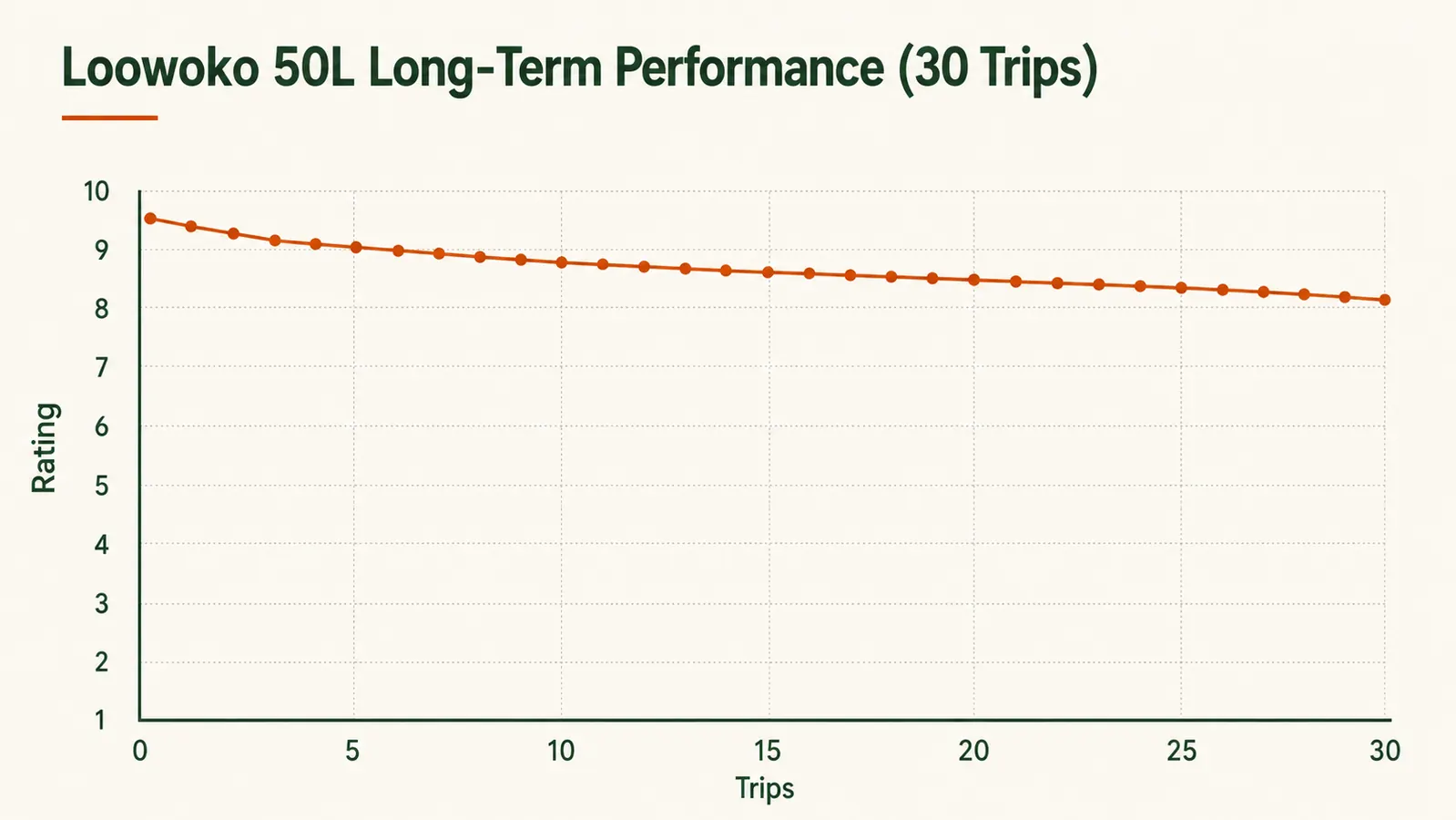
After eight trips I have not had a single hardware failure. The buckles, the frame stay, the compression straps, and the zippers all work the same as they did out of the box. The fabric shows some minor dullness on the high-contact surfaces, the bottom corners and the front pocket face, but there is no pilling, no thread pulls, and no separation at the seams. The interior lining in the main compartment, which is a lighter fabric than the shell, has no tears despite carrying gear with sharp edges like tent stakes and stove components.
The rain cover, after three actual deployments and sitting stuffed in its pocket the rest of the time, still deploys clean and the cinch cord still cinches. I have seen cheaper included covers lose their elasticity after one or two uses. This one has not. The stitching around the rain cover pocket on the main pack is also intact, which surprised me because that is usually a stress point.
What I Liked
- Built-in rain cover that actually fits and stays on in sustained rain
- Main compartment zipper is solid and has not snagged in eight trips
- Removable internal divider keeps sleeping bag separated at the bottom
- Hydration sleeve with shoulder hose port works with standard 2-liter reservoirs
- Clean stitching and no hardware failure after ten months of real use
- Fits most airline overhead bins if you compress it
- Price point makes it an easy first pack or a solid backup
Where It Falls Short
- Foam back panel and partial frame flex under loads above 30 pounds
- Hip belt is not adjustable for torso length, limiting fit for taller campers
- Side water bottle pockets are hard to reach solo without stopping
- Not a true load-lifter hip belt, so long mileage days will tire your hips faster
- Front pocket fabric is thinner than the shell and could wear faster over years of use
Who This Is For
This pack is a strong fit for weekend campers doing one or two nights with up to about 30 pounds of gear, moderate trail distances of five to ten miles per day, and mixed conditions where rain is possible but not certain. It is also a reasonable first backpacking pack for someone who is still figuring out what they want before committing to a hundred-and-fifty-dollar option. If you car-camp mostly and just need a durable daypack-sized bag to haul kit from the trunk to the site, it is genuinely more pack than you need, but it will work fine and last.
People who plan section hikes, long-distance trail work, or regularly carry above 35 pounds for multiple consecutive days will want a pack with a proper suspension system. The Loowoko is not built for that. It is built for the kind of camping most people in the US actually do, which is a Friday-to-Sunday loop with friends, a full cooler at the trailhead, and weather you cannot fully predict. For that use case it is hard to beat at this price.
If you want more detail on why the 50L capacity specifically hits the sweet spot for that kind of trip, I broke it down in my guide on why a 50L backpack is the right size for weekend camping. Short version: big enough for a sleeping bag and shelter without forcing you into a frame pack, small enough that you do not overfill it and pay for it on the climb.
Who Should Skip It
If you are over six feet tall with a long torso, the fit is going to be compromised enough that I would look at packs with adjustable torso lengths. Osprey, Deuter, and Gregory all make options with torso-fit systems in the $120 to $180 range. For taller campers that extra spend is worth it. A pack that does not sit right costs you more in trail discomfort than the price difference.
If you regularly plan trips over 15 miles per day with a loaded pack, the frame and hip belt on the Loowoko will start to feel inadequate by day two. Spend more for a better suspension. And if you want something that will last ten seasons of heavy use rather than three to five, again, step up to a big-brand option. The Loowoko is built well for its price, but it is not built to be your last pack.
For a head-to-head comparison against a similarly priced competitor, I tested the Loowoko against the Maelstrom backpack on back-to-back trips. You can read the full breakdown in my honest review that covers what nobody tells you about budget hiking packs, including the one thing that surprised me most about how the Loowoko held up over time.
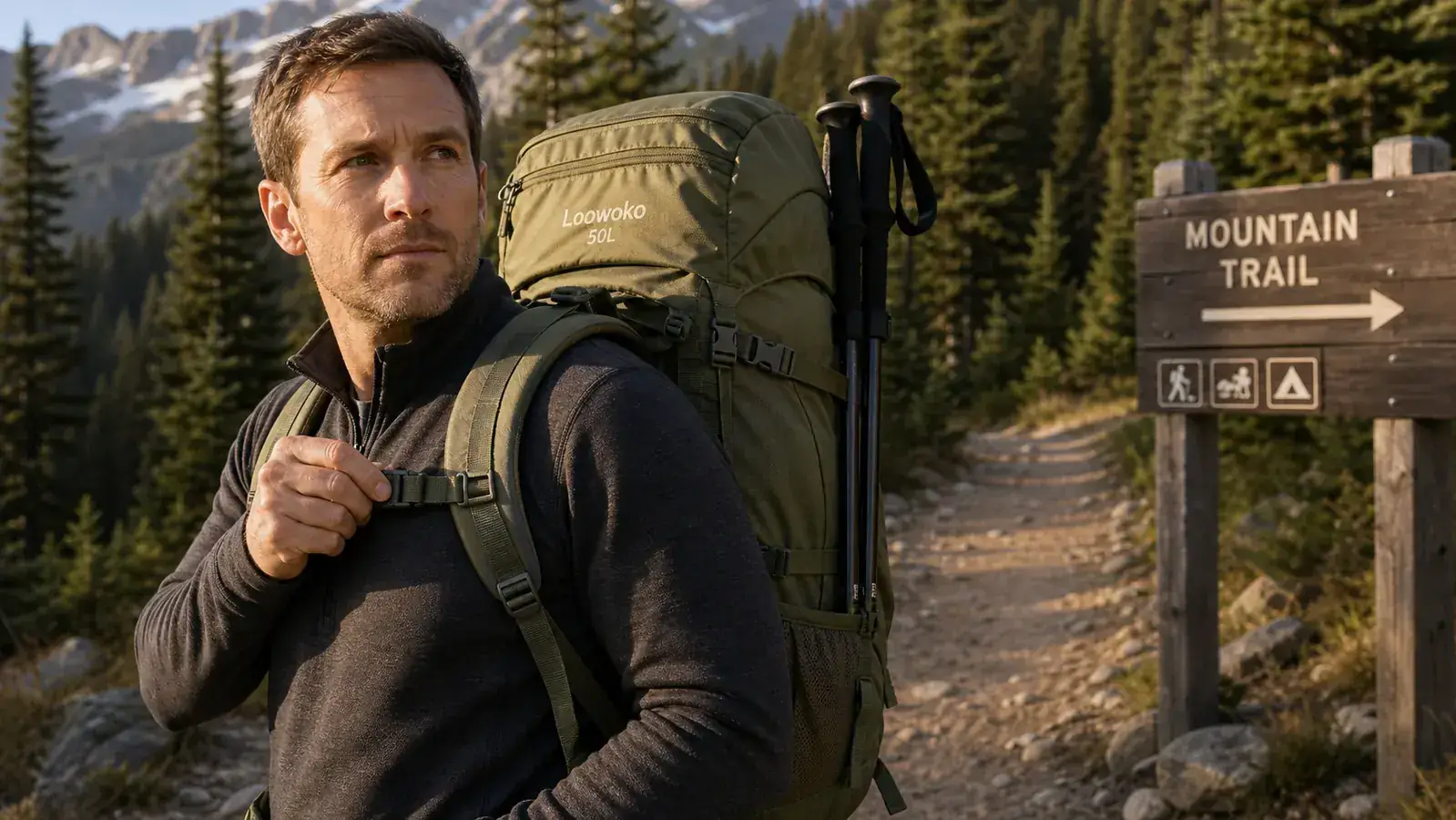
Eight weekend trips later, the Loowoko 50L is still in my regular kit. That is the only endorsement that means anything.
It is 4.5 stars across 5,600-plus Amazon reviews, includes the rain cover, and ships in two days. If you need a solid pack before your next trip, check the current price below.
Amazon Check Today's Price on Amazon →