
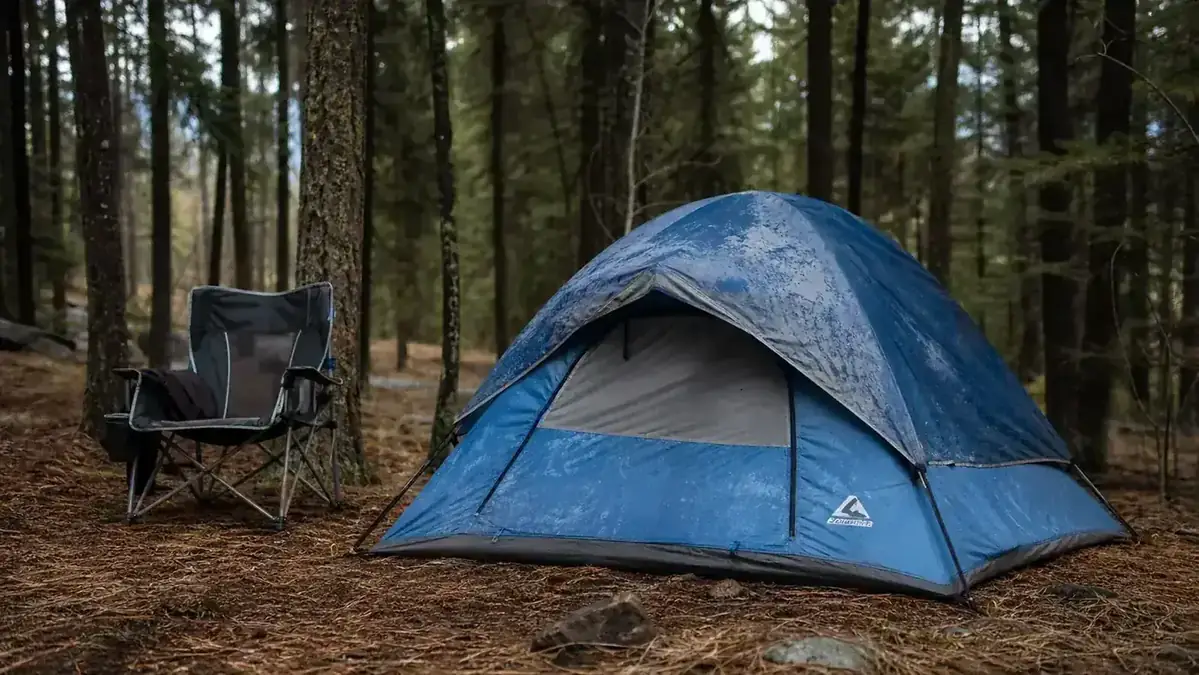
The first time the Coleman Sundome saved my trip was a Saturday in late August, deep in the Appalachian foothills, around 2am. A line of storms pushed through that nobody had forecast, and I woke up to rain hammering the rainfly and one very nervous group of first-timers in the site next to mine. Their tent, a no-name dome that cost about half what the Sundome does, was already pooling water at the corners. My Coleman held. Everything inside stayed dry. I rolled over and went back to sleep. That trip was about six months after I first bought the 4-person Sundome, and it was the moment I decided this tent deserved a proper write-up after I'd logged some real time with it.
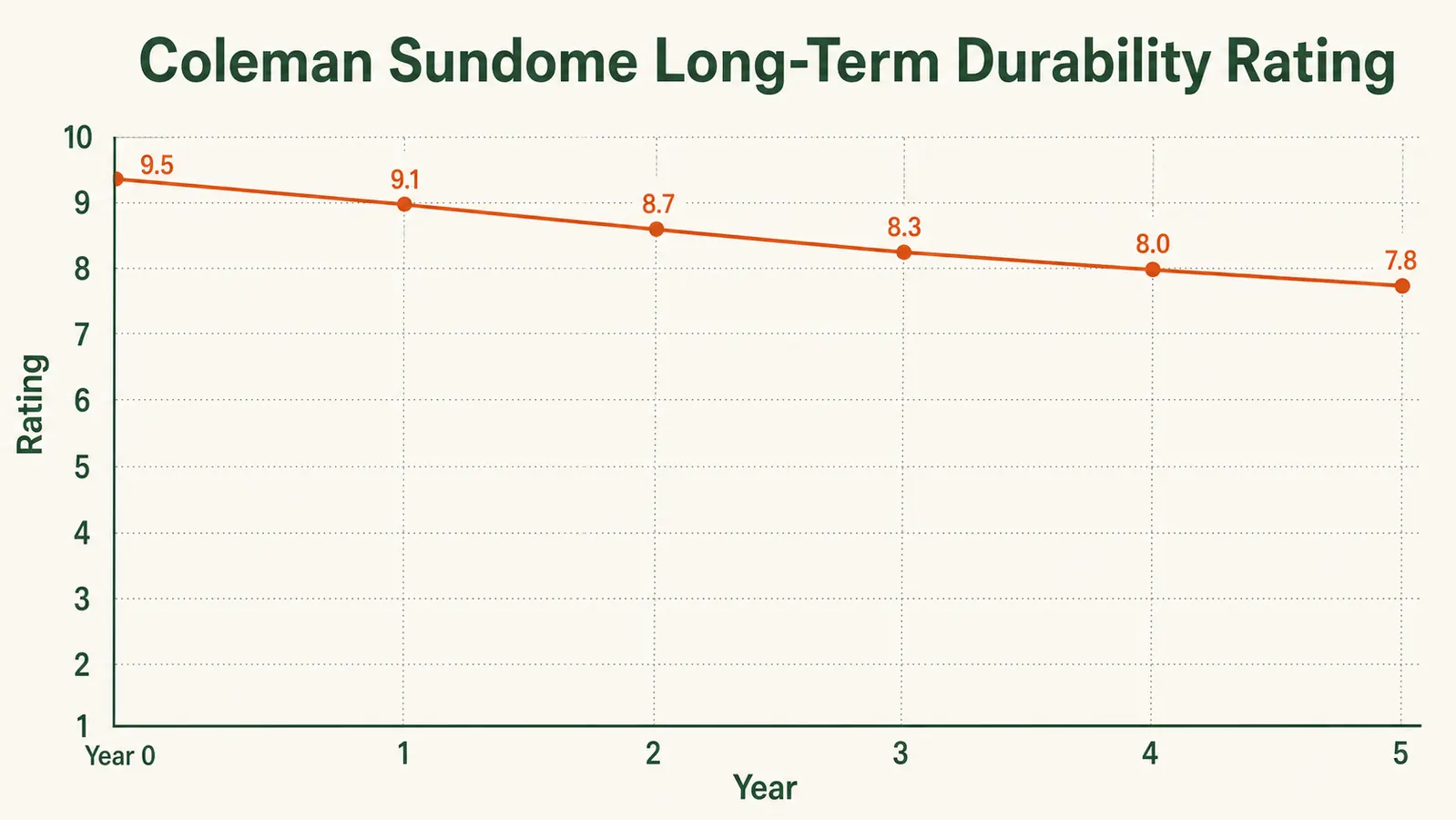
Two years and somewhere north of 40 campsites later, I have that write-up. This is not a first-weekend take. I've pitched this tent in a Georgia pine forest in July heat, on a frozen October night in the Smokies when the ground stakes barely went in, at a packed state park in June where I set it up in the dark with a headlamp and three restless kids watching me. I know its quirks. I know where it earns its price and where it cuts corners. That's what I'm laying out here.
The Quick Verdict
The Coleman Sundome is the best value car-camping tent under $100 for most weekend campers. It sets up fast, handles moderate rain well, and lasts longer than it has any right to at this price. The floor seams need attention and the ventilation could be better in high humidity, but nothing in this class beats it for the money.
Amazon Check Today's Price →If your current tent has a single seam that leaks, this is the upgrade that costs less than a weekend of takeout.
The Coleman Sundome 4-person regularly sits under $60 on Amazon, and it ships Prime. Check today's price before it moves.
Amazon Check Today's Price on Amazon →How I've Used It
I bought the 4-person Sundome in spring 2024, not because it was the most exciting tent on the market but because I needed a reliable workhorse for group trips where other people were counting on me. I lead camping weekends for a loose crew of about eight adults, and I've learned that gear failures on group trips are not funny. When the trip leader's tent fails, the whole dynamic changes. I wanted something I could trust without spending $300 on a tent that would mostly see car-camping use.
My testing conditions: one mid-summer trip with sustained rain through the night and morning, one shoulder-season trip in October when temps dropped to 29 degrees Fahrenheit overnight, two beach-adjacent sites with salt air and wind, and the rest were standard spring and fall camping in the Southeast and Appalachians. I sleep in it with one other adult, which leaves the 4-person floor plan feeling spacious. I've also used the 6-person version for group overflow, and the setup process is identical, just scaled up.
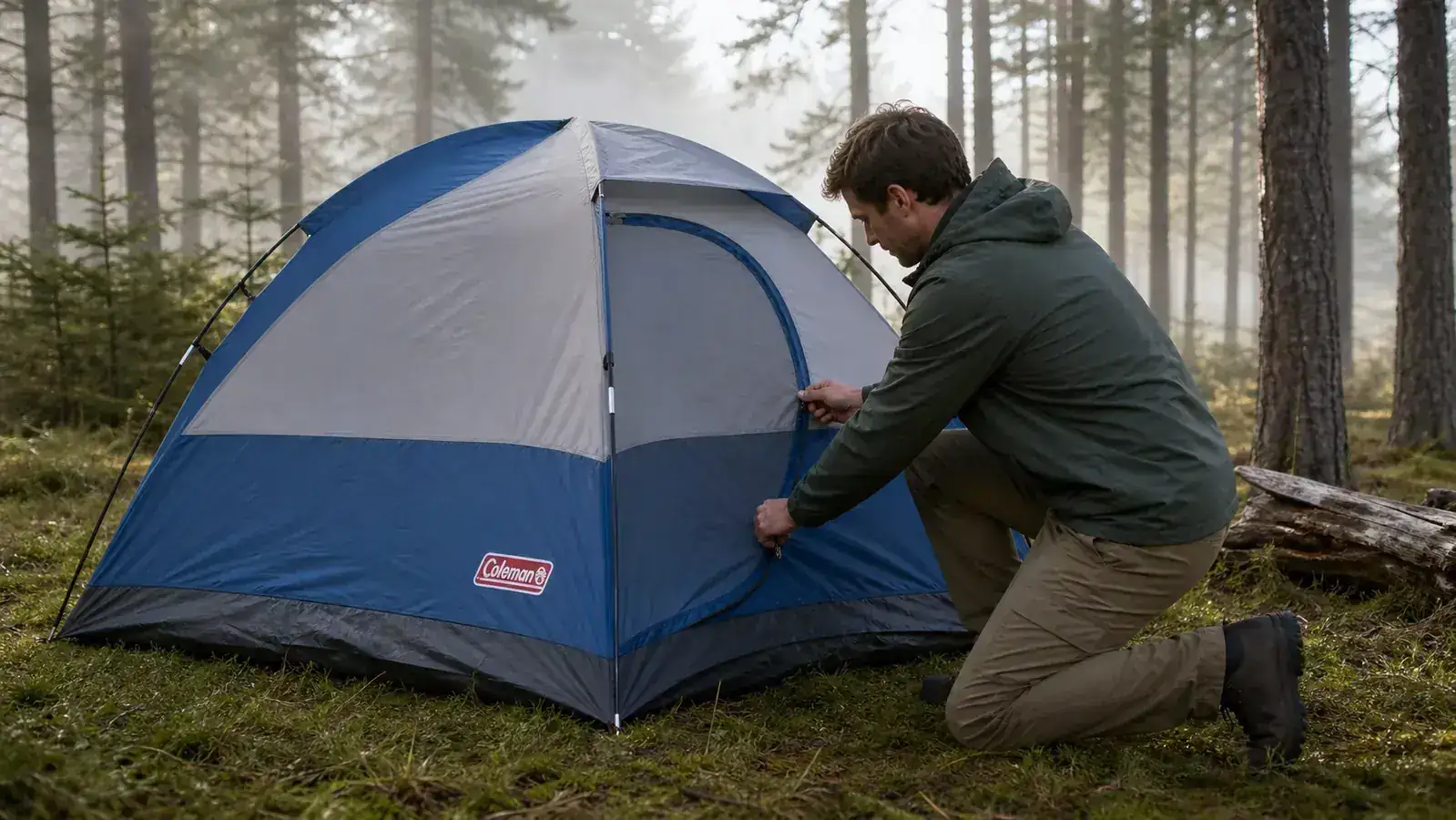
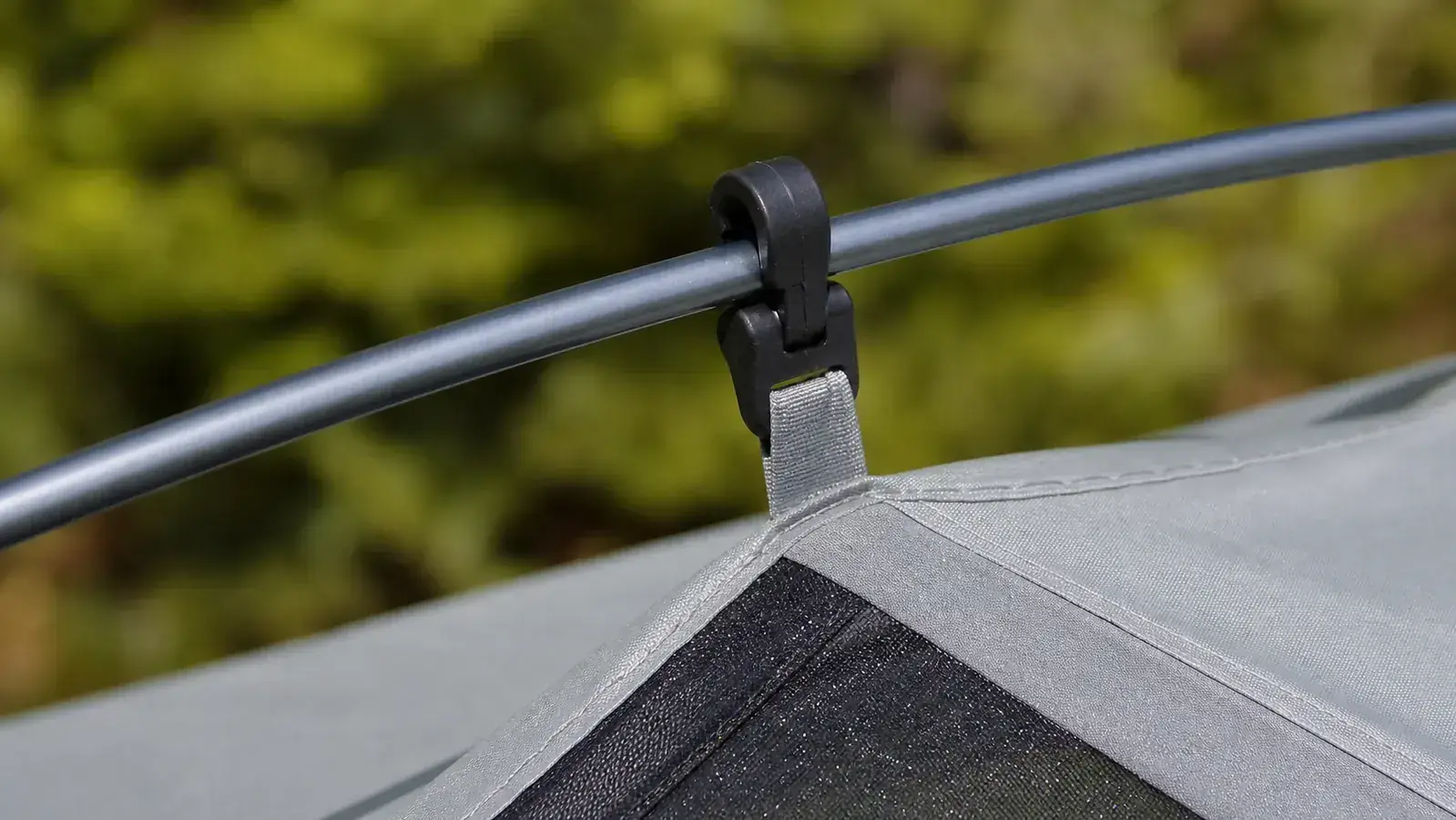
Setup time on the first try, with no practice: eleven minutes. By the third trip I was under eight minutes solo. The pole system is the big reason. Two crossing fiberglass poles slot into four corner pins and a single pin at each side, and the tent clips on with plastic C-clips rather than sleeves. Those clips are the part I watch for wear, and I'll come back to that.
WeatherTec Fabric and Rain Performance
The Coleman Sundome uses what Coleman calls WeatherTec technology, which is their term for a combination of welded floor seams, inverted seams on the walls, and a polyguard rainfly. That welded floor seam is the part that matters most. On cheaper tents, the floor seams are stitched and then taped, which eventually de-laminates. Coleman's welded seams don't de-laminate in the same way. After two years and a genuine rainstorm, my floor is still bone dry in the morning.
The rainfly is where I have one complaint. It covers the top dome and extends about eighteen inches down each side, which is adequate for light to moderate rain. In a heavy sideways rain, you get some splash-back under the fly at ground level, especially if your site isn't perfectly level. I've put a ground cloth under the tent every trip since, which handles it, but it's worth knowing. The rainfly also has a single pole-sleeve at the top that keeps it from collapsing inward in wind, and that design works well.
The October trip in the Smokies was the real weather test. I woke up to frost on the outside of the fly and 29 degrees on my thermometer. The tent itself is not insulated, which nobody should expect at this price, but the floor seal held against any condensation intrusion and the stakeout points gave me a tight enough pitch that there was no significant flapping through the night. That matters more than people realize. A tent that rattles in wind at 3am is a tent that keeps everyone awake.
Poles, Clips, and the Parts That Wear Out
The fiberglass poles that come with the Sundome are not the strongest poles on the market. They're springy and light, which makes them fast to set up, but fiberglass does crack and splinter under enough stress. I have had no failures in two years of regular use, but I treat the poles carefully: I never force a bend beyond the natural curve, I don't leave the tent pitched in sustained high wind without lowering it as much as possible, and I store the poles straight rather than coiled. If you camp in exposed mountain terrain with serious wind exposure, you'll want to be thoughtful about staking all six stake-out points. The tent's profile is low enough that it handles moderate wind fine when properly staked.
The C-clips that attach the tent body to the poles are the component I watch closest. On my tent, one clip on the 4-person cracked slightly at the hinge by the end of year one. It still functions, but I keep a small bag of spare clips I bought separately for a few dollars. Coleman's warranty is two years on most components, and customer service has been straightforward on the few occasions I've heard from people who needed a replacement part.
I've camped in cheaper tents and I've borrowed tents that cost three times as much. The Sundome sits in a specific sweet spot: it does everything a weekend car-camper needs, and it does it without demanding any technical knowledge or a big gear budget.
Interior Space and Living With It for a Weekend
The 4-person Sundome measures 9 by 7 feet on the floor, with a 5-foot center height at the peak. Two adults with regular camping sleeping bags and pads fit without touching walls. Gear gets stowed in the E-port area, which is a small ground-level port designed for running a power cord into the tent. In practice I use it for a lantern cable and my phone charger at campsites with power, and it seals closed with a hook-and-loop flap when I don't need it. That E-port is a nice touch for car-camping that backpacking tents obviously don't have.
Ventilation is where the design could be better. There's one mesh panel in the door and a single vent window at the back. On cool nights it's fine. On humid Georgia nights in July, the interior gets warm and condensation builds on the walls by morning. Leaving the door unzipped to the mesh screen helps, but if you camp in high-humidity summer environments regularly, plan for it. You won't wake up soaked, but you'll notice it. This is not a flaw unique to the Sundome, it's a characteristic of entry-level dome tent design, but it's worth naming.
Storage pockets run along both sidewalls, four mesh pockets total, which is enough for phones, headlamps, reading glasses, and the other small items that otherwise disappear into the sleeping bag. The door opens wide and zips smoothly. After two years the zipper still runs without snagging, which I consider a meaningful quality data point. Cheap tent zippers start hanging up by trip three.
How It Compares to the Alternatives I Considered
Before buying the Sundome I looked seriously at the Core 4-person dome, the Ozark Trail 4-person from Walmart, and briefly at the REI Co-op Passage as a splurge option. The Ozark Trail lost me when I read enough owner reports about seam failures in year one. The Core dome is genuinely competitive and costs about the same, though its rainfly coverage is different and the pole system takes a few more minutes. I'll cover that head-to-head in a separate piece. The REI Passage is a better tent for more technical use, but it costs more and it's overkill for car-camping with a group.
What kept me on the Sundome is the combination of: reputation (nearly 48,000 Amazon reviews at 4.6 stars does not happen without real, consistent quality), the welded floor seam, and the clip setup speed. For the kind of camping I do, those three things matter more than anything else.
What I Liked
- Sets up in under 10 minutes solo once you've done it once or twice
- Welded floor seams genuinely keep the interior dry in rain
- C-clip design is faster than sleeve-style poles and easier for beginners
- E-port for campsite power cord is a practical car-camping feature
- 4 mesh storage pockets keep small items organized
- Zipper quality holds up well over two-plus years of use
- Backed by a 2-year limited warranty with responsive Coleman support
Where It Falls Short
- Rainfly coverage is moderate: heavy sideways rain can get under the edges
- Fiberglass poles are not windproof in exposed mountain sites; stake all six points in wind
- Ventilation is limited in hot, humid summer weather
- C-clips can develop hairline cracks by year one with frequent use; carry spares
- No gear loft or overhead storage included
Who This Is For
The Coleman Sundome is exactly right for weekend car-campers who drive to a designated site, pitch in a flat clearing, and spend their time fishing, hiking, or sitting around a fire. It's the tent I recommend to every person in my group who is buying their first real tent and doesn't want to overthink it. It's also the tent I recommend to families who camp three or four times a year and need something that packs into a bag the size of a hockey bag and still pitches in ten minutes when the kids are already running around. If you are car-camping in places with power hookups, the E-port adds genuine comfort. If you want to run it for three or four seasons before replacing it, treat the poles carefully and it will get there.
Who Should Skip It
If you're planning multi-night backpacking trips where you need to carry the tent in your pack, the Sundome is too heavy at around 7.5 pounds packed. Backpacking tents are built around weight, not car-camping comfort, and they're a different category. If you camp in exposed ridgeline sites or in sustained high wind above 40 mph with regularity, you'll want aluminum poles and a more bomber pole structure. And if your camping calendar runs June through August in Florida or the Gulf Coast, the ventilation limits of this tent will bother you enough that a more breathable double-wall design would serve you better. For everyone else, which is most weekend campers, this is the tent.
Two years, 40-plus campsites, one tent that kept showing up. The Sundome earns that trust.
Check Amazon for today's price on the Coleman Sundome. The 4-person is the sweet spot for couples and small groups. If you need room for four sleeping people plus gear, go straight to the 6-person.
Amazon Check Today's Price on Amazon →