
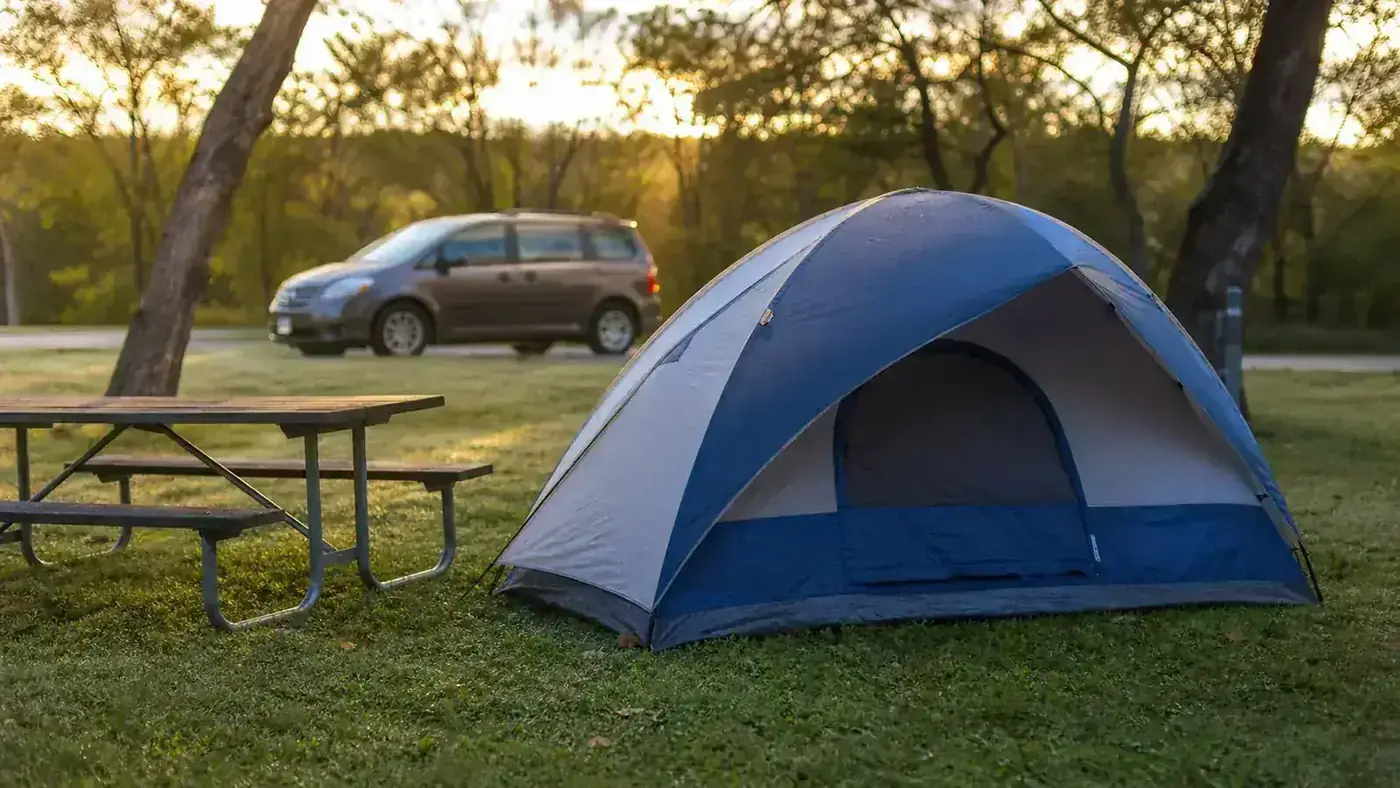
I have slept in the Coleman Sundome at more than 40 campsites across three states, in weather that ranged from a clear 75-degree June night at Ocala National Forest to a sideways-rain weekend at Pisgah that had me questioning every choice I had ever made. The Sundome has been on both trips, and a lot of trips in between. When people in my camping group ask me what tent to buy when they are just getting started with car camping, I tell them the same thing every time: get the Sundome. Here are the 10 reasons I keep saying it.
You're already paying for a campsite. Don't sleep in a tent that leaks.
The Coleman Sundome has 4.6 stars from nearly 48,000 buyers. It's the tent I recommend to every new camper in my group, and most of them are still using it three seasons later.
Amazon Check Today's Price on Amazon →It Goes Up in Under 10 Minutes
Coleman says 10 minutes. I've done it in eight, solo, with cold hands on a November morning at Cheaha State Park. The pole system uses color-coded clips that snap to the frame in an obvious sequence, so you're not hunting through an instruction sheet in the dark. For car camping, where you're often arriving after a long drive and want to eat before setting up, that setup speed matters more than people expect. New campers especially: if your first tent takes 45 minutes and a YouTube tutorial, you're going to dread using it.
The WeatherTec System Actually Works
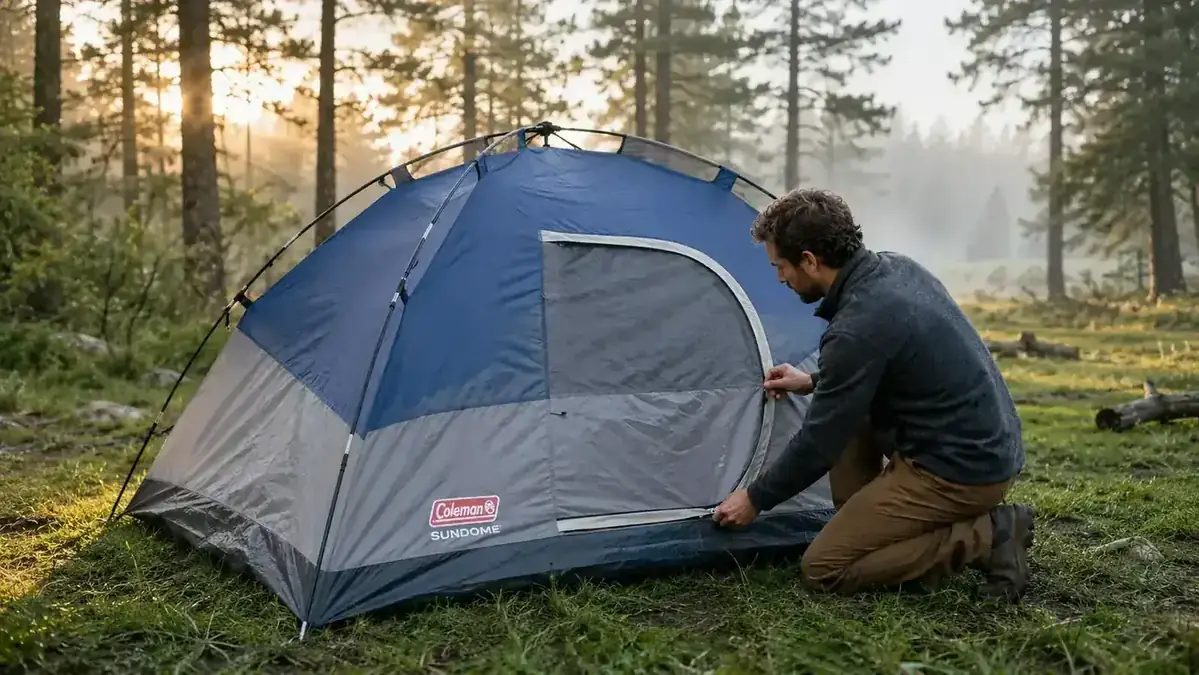
Coleman's WeatherTec is welded floor seams, inverted seams on the tent body, and a rainfly that comes down low on all four sides. I have been caught in real downpours in this tent, including a two-hour thunderstorm at Tishomingo State Park in Mississippi, and the floor stayed dry. The key is making sure you have the rainfly staked out taut. If it sags and touches the inner fabric, moisture can wick through. Keep it tensioned and this tent handles weather the same way a more expensive tent would. That's a specific claim and I'll stand behind it at this price point.
The E-Port Solves a Real Problem
The electrical cord port is a small feature that most gear reviewers skip over, but it's the one my camping group talks about the most. You can run a low-profile extension cord from a nearby hookup through the port without compromising the weather seal. At campgrounds with electric sites, this means a small fan in summer, a phone charging block that actually stays charged, and a lantern that doesn't eat batteries. I know purists will say that's not real camping. Those purists have not tried sleeping in Georgia in August.
The Floor Footprint Is Honest
The 4-person Sundome is 9 by 7 feet. That is a true car-camping footprint: fits two adults and two kids, or three adults if nobody is particular about personal space. I have used the 4-person version as a 2-person tent with gear stored inside, and there is enough room to live comfortably for a weekend. Overstuffed tents are miserable. Buy one size up from what you think you need, and the Sundome's sizing options make that easy to do without breaking the budget. The 2-person is a legit solo tent. The 6-person works for a family.
Nearly 48,000 Reviews Don't Lie
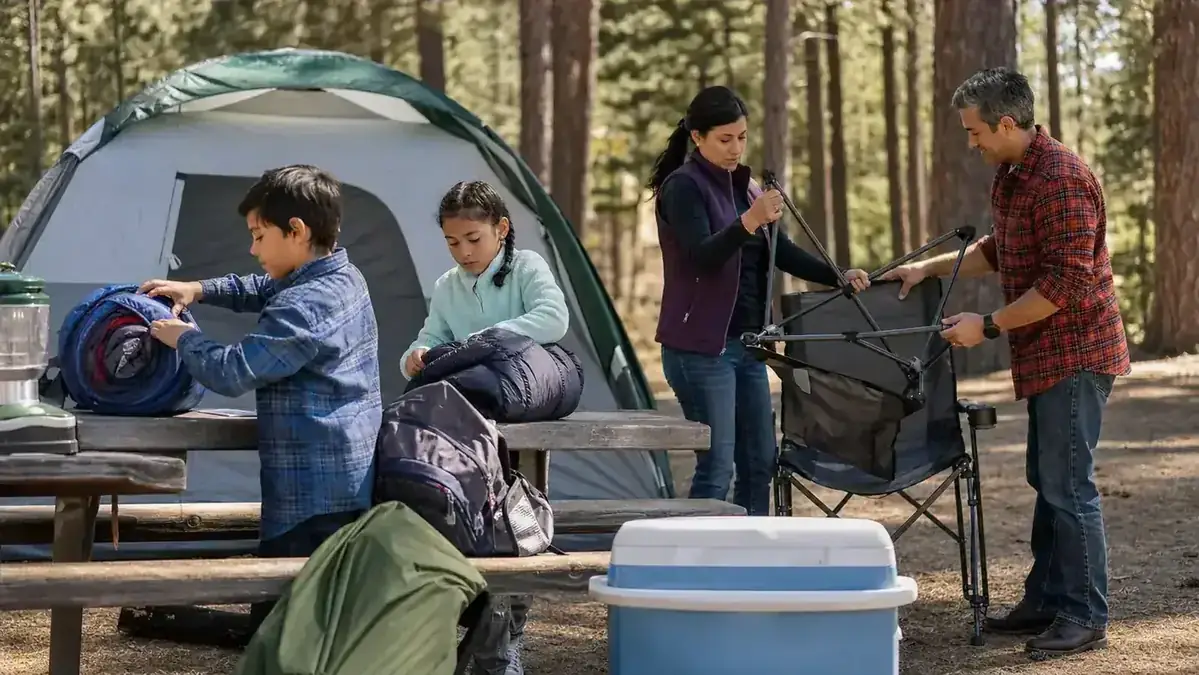
I am generally skeptical of review counts because manufacturers have spent the last decade gaming them. But 47,973 reviews at 4.6 stars on a tent under $100 is hard to dismiss. At that volume, the outliers average out. What you're looking at is the genuine consensus from a wide cross-section of car campers, and the consistent praise is for exactly what I have experienced: weatherproofing, ease of setup, and value for the price. The most common complaint is condensation on the interior in very humid conditions, which is true of any dome tent without cross-ventilation. Crack a window. Problem mostly goes away.
I've used tents that cost four times as much. None of them went up faster or stayed drier in a real storm. The Sundome just works.
The Carry Bag Actually Zips After You've Packed It
This is funnier than it sounds, but if you have ever fought a tent bag in a dark parking lot after a wet weekend, you know it matters. The Sundome's carry bag is generously sized for the folded tent and poles, and the zipper closes without theater. Competing tents at similar prices often ship with a bag that's only big enough for the tent if you fold it in the same factory-perfect origami it was shipped in. After a weekend of mud and rain, that's not happening. Coleman got this right.
Two Large Doors Mean No Climbing Over Your Campmate
Both the 4-person and 6-person Sundome have two D-shaped doors, one on each end of the tent. For couples or friends sharing a tent, this means neither person has to crawl over the other at 2am for a bathroom run. It's a feature that sounds minor until the third night of a trip when you've already banged into each other's gear twice. Single-door tents are fine for solo use. If you're sharing, two doors is the only reasonable choice, and the Sundome has them at every size above 2-person.
The Mesh Interior Keeps Airflow Moving
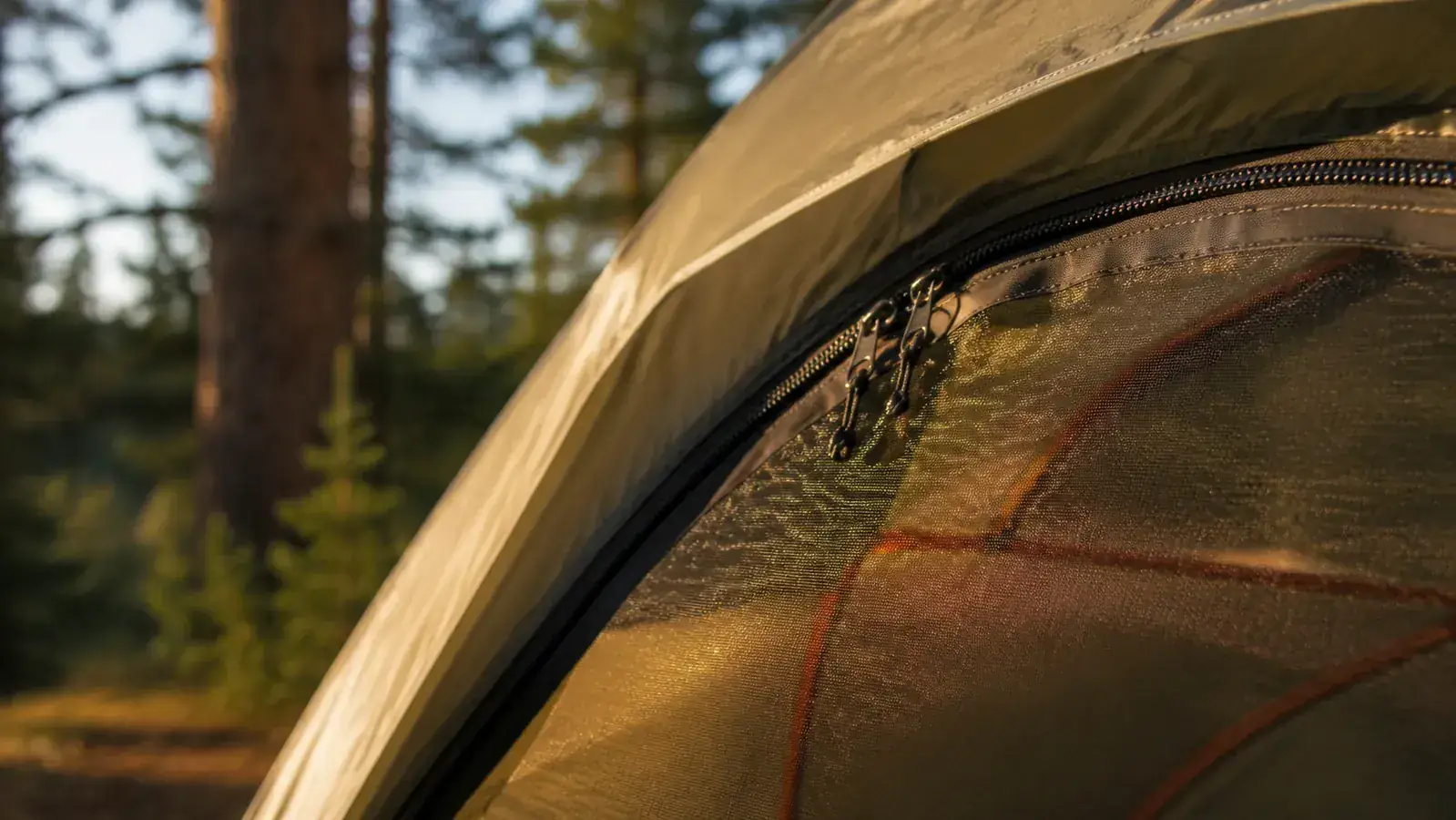
The Sundome's inner tent wall is mostly mesh with a solid fabric skirt at the base. At night in warm weather with the rainfly off, there is real airflow and you can see the stars through the ceiling, which I will never not appreciate. With the rainfly on, the mesh still breathes better than a fully solid inner wall would, and condensation is less of a problem because of it. In cold weather, you will want the solid rainfly and a good sleeping bag, but on those summer weekends at Cloudland Canyon or Land Between the Lakes, sleeping under the mesh ceiling is genuinely pleasant.
Replacement Parts Are Easy to Find
Coleman is the largest camping brand in the country and has been in business since 1900. That means when a pole section cracks after three seasons, you can actually buy a replacement. When a zipper pull breaks, Coleman's customer service will often send you one. The gear ecosystem around the Sundome is fully developed, and the tent is popular enough that third-party accessories, footprints, and gear lofts made for it are available on Amazon. A no-name budget tent might be cheaper up front, but when something breaks at year two, you are buying a whole new tent.
The Price Is Honest for What You Get
At the current price, the Coleman Sundome costs less than one night at a lot of the campsites I go to. It is not the cheapest tent you can buy, but it is nowhere near the most expensive, and it performs well above its price point in the only tests that matter: a real campsite, real weather, and real use over multiple seasons. I have recommended it to my sister, to three coworkers who started camping during the pandemic, and to a scout troop leader who needed something reliable and simple. Every single one of them is still using it. That is the best data point I have.
What I'd Skip
If you are going backpacking, the Sundome is not your tent. It's a car-camping shelter and it weighs and packs like one. The aluminum poles on the Sundome 2 are lighter than the fiberglass poles on the larger sizes, but none of the Sundome models are trail-weight. If you're planning to haul your shelter more than a mile or two, look at an ultralight option. For car camping at a drive-in site, though, weight is irrelevant. You're loading it in a trunk, not on your back. For the majority of weekend car-camping trips, the Sundome is hard to beat at anything close to its price. If you want to go deeper on what holds up over time, my long-term Coleman Sundome review covers two years of trips in detail.
For car camping, weight is irrelevant. You're loading it in a trunk, not on your back. The Sundome was built for exactly that situation.
Ready to stop borrowing gear and own a tent that actually holds up?
The Coleman Sundome sets up in under 10 minutes, handles real rain without leaking, and costs less than most camping trip fees. It's the first tent I recommend to every new camper I meet, and the one I still pitch myself when I want zero setup drama.
Amazon Check Today's Price on Amazon →