
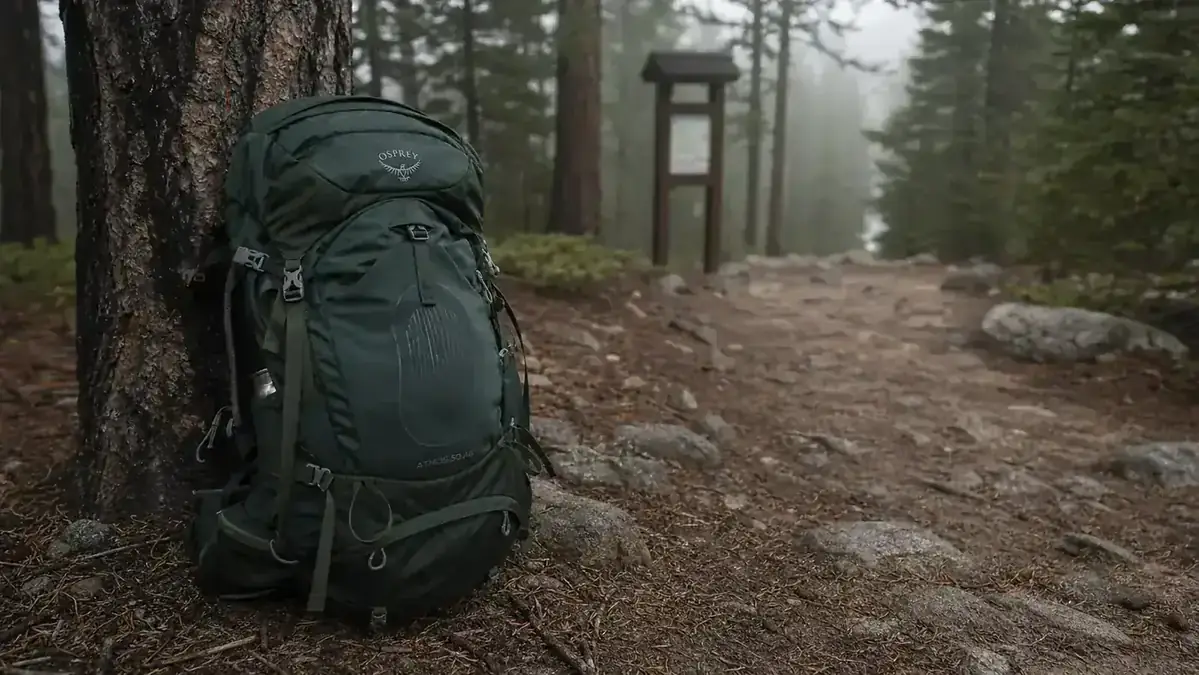
Let me tell you the thing I noticed about 90 minutes into my third trip with the Loowoko 50L. My buddy Terrence, who was carrying a pack he paid twice as much for, stopped at a switchback and said, 'You doing okay back there?' I was fine. But my hip bones were not. That is the kind of thing nobody mentions in the three-paragraph Amazon reviews, and it is the kind of thing I am going to tell you about in detail before you hand over your money.
I have taken this pack on eight weekend trips since I first pulled it out of the shipping box. That includes a 12-mile loop near Tillamook State Forest with 32 lbs of gear, a three-night car-camping and day-hike combo at the coast, and a couple of shorter overnighters in the Cascades foothills. I know this pack. I know where it earns its keep and I know exactly where it falls short. Here is all of it.
The Quick Verdict
A capable budget pack for loads under 28 lbs and hikers who do not push long mileage, but the hip belt padding is thin, the frame stiffens up awkwardly past 35 lbs, and the rain cover is a backup plan rather than a real solution.
Amazon Check Today's Price →If you're loading this pack light and keeping trips under 8 miles, current price on Amazon makes it a legitimate deal.
The Loowoko 50L punches above its weight for casual weekend use. Check today's price and what size options are in stock.
Amazon Check Today's Price on Amazon →How I've Used It
For reference: I am 5'11", around 185 lbs, and I have been leading weekend camping trips with a small group since my early twenties. I care about comfort over distance more than most casual campers do, because I have had enough trips ruined by gear that was fine for mile one and miserable by mile seven.
My test loads ranged from about 22 lbs on a light overnight to a full 38 lbs on the Tillamook loop where I was carrying group cooking gear plus my own kit. I wore the pack in dry and wet conditions, on flat trail and steep switchbacks, and I did a full overnight where it sat on a ground tarp in steady Oregon drizzle while I slept. I am going to walk through the things that stood out, starting with the three that nobody seems to write about honestly.
The Hip Belt Problem Nobody Mentions
The hip belt on the Loowoko 50L looks substantial in the product photos. It is wide, it has a structured appearance, and the buckle is solid. What the photos do not convey is that the foam inside is about the thickness of a car seat armrest on a 1998 economy vehicle. I measured it at roughly 12mm of foam padding. For comparison, a mid-grade trail pack in the $120-$150 range typically runs 22-28mm. That gap matters.
Under 25 lbs, I barely noticed. The pack sits well, the belt transfers some weight, and the buckle holds. But once I crossed 30 lbs on the Tillamook loop, I started feeling the pack's weight directly on my hip bones rather than distributed across the belt. By mile eight, I had bruised both crests. That is not a comfort issue, that is a design ceiling. If your typical load is a sleeping bag, a change of clothes, and a day's food, you will be fine. If you are carrying a two-person tent and three days of food, plan on either padding the belt yourself with a foam sheet or switching packs.
I want to be clear that this is not a defect. This is a cost tradeoff. Denser hip belt foam is expensive. Loowoko priced this pack aggressively, and something had to give. That something was the belt.
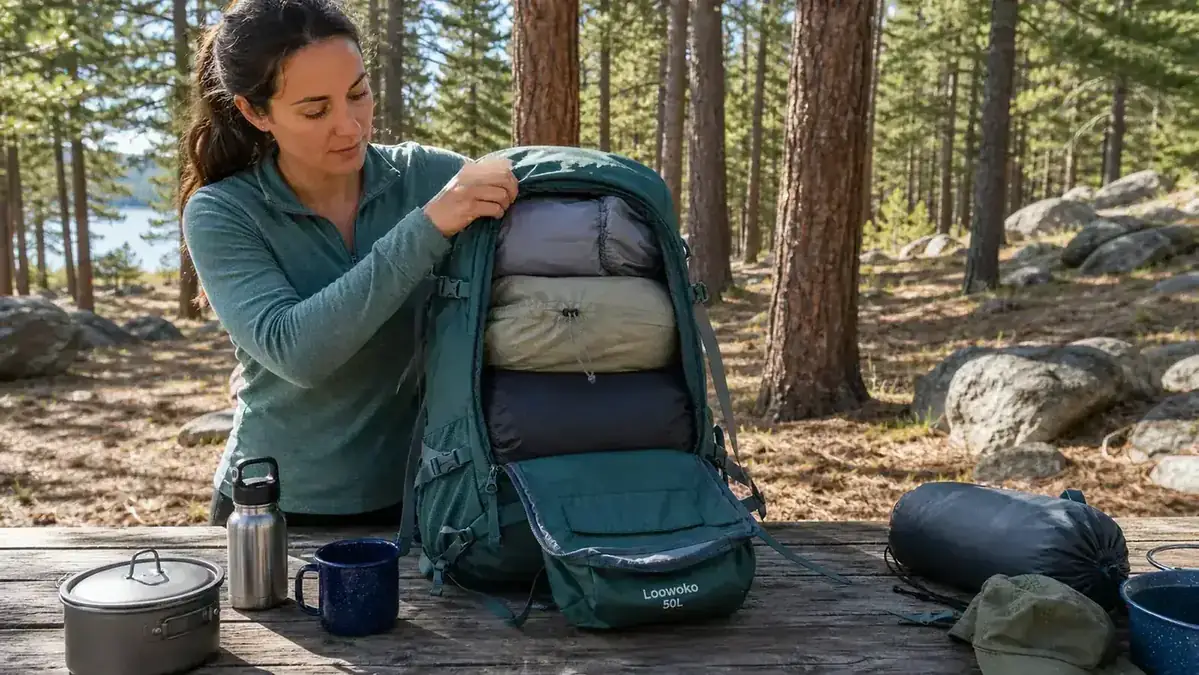
Frame Stiffness: Where It Works and Where It Doesn't
The pack has an internal frame. Two aluminum stays run vertically up the back panel, and there is a molded back plate that curves against your lumbar. At light to moderate loads, this system does what it is supposed to do. The pack holds its shape, the weight sits close to your back, and the carry is comfortable enough for most people.
The problem is what happens past 35 lbs. The stays flex noticeably, and the load shifts backward rather than staying pressed against your center of gravity. On flat ground this is mostly an annoyance. On steep descents it becomes a balance issue. I had one moment on a rocky downhill section near the Salmonberry River trail where the pack swayed on a bad step and I had to catch myself. That was a 37-lb load. I have not tested heavier.
The stays are removable, which is actually useful if you ever want to check this as luggage or compress the pack flat for storage. But I would not remove them for actual hiking. The pack loses all structure without them and becomes a floppy duffel on your back.
Past 35 lbs the frame lets the load drift backward on steep terrain. Under 30 lbs it carries cleaner than any other pack I have tested at this price.
The Rain Cover Situation
The Loowoko 50L includes a rain cover in the bottom compartment, which sounds like a bonus. And it is, kind of. Here is what you need to know: it is a 70-denier polyester cover with a basic elastic hem and a single plastic pull-tie. It covers the pack body reasonably well in light rain. In hard, driving rain on an exposed ridgeline, water gets in at the seams and around the hip belt junction.
On my coast trip, I got caught in a real Pacific downpour. I had the rain cover on. My sleeping bag compression sack, which lives in the bottom compartment, came out damp at the seams. Nothing was soaked, but damp sleeping bag down is the kind of thing that ruins your night. The cover is better than nothing by a significant margin, but it is not a substitute for waterproofing your bag-in-a-bag. My current system: sleeping bag in a dry sack, electronics in a separate waterproof pouch, and then the rain cover over everything. That combo works.
One thing I will give credit for: the main compartment fabric itself is a reasonably tight weave with a durable water repellent coating. In light rain without the cover, the fabric beads and sheds water for a solid 20-30 minutes. That is better than I expected.
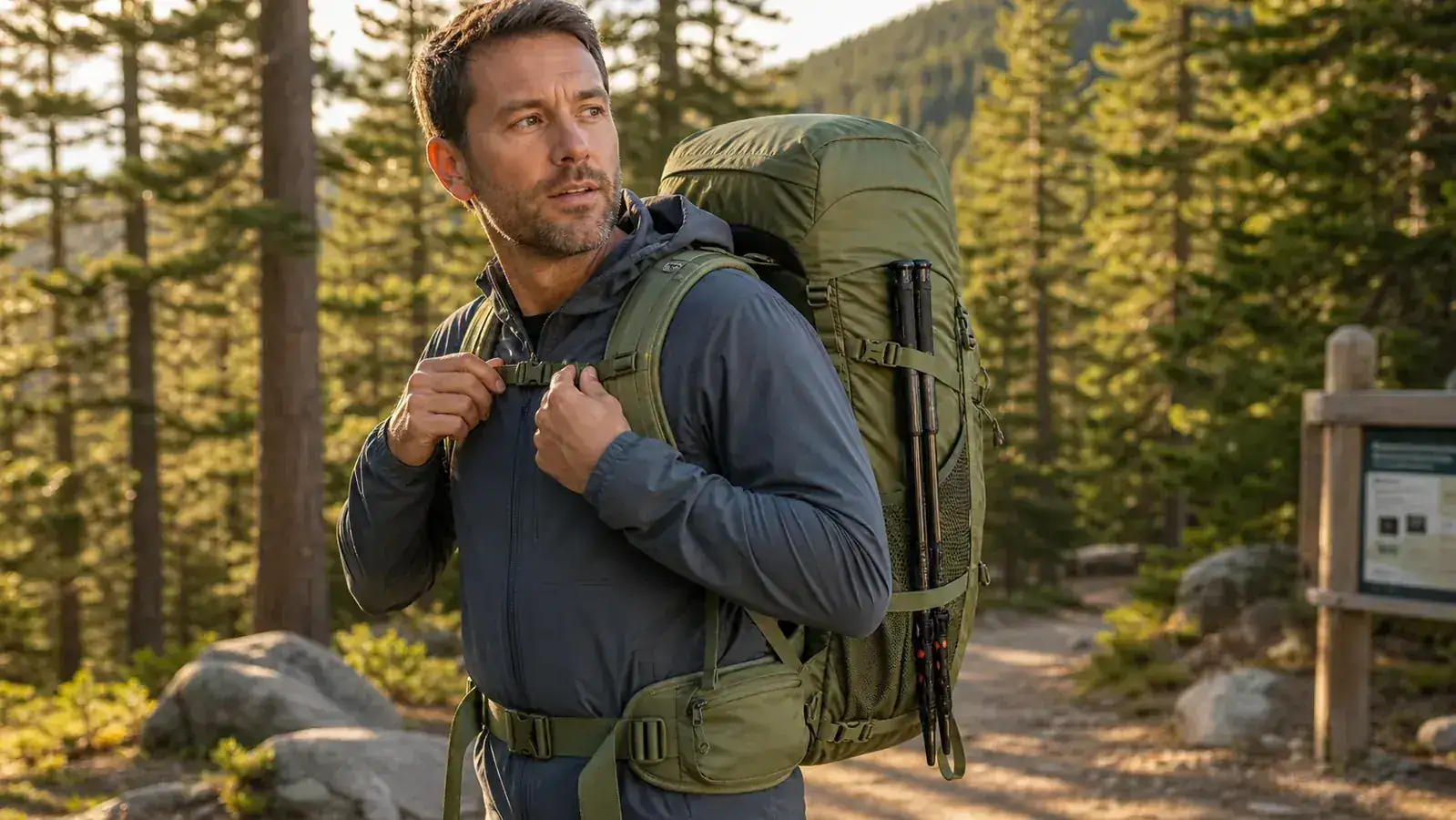
Real vs Stated Capacity
The pack is listed as 50 liters. The honest number is closer to 42 usable liters, and here is why: the internal frame stays take up back panel space, the hydration bladder sleeve eats about 3 liters behind the main compartment, and the frame back plate reduces effective depth on the main body. None of this is unusual for a framed pack, but the 50L number on the listing is measured by the manufacturer's convention, not by how much hiking gear you can actually fit.
For most weekend hikers, 42 usable liters is completely sufficient. That is enough for a two-night kit if you pack efficiently. Where it matters is when someone looks at a weekend packing list that calls for a '50L pack' and assumes they have maxed-out interior space. You do not. Plan accordingly, and check the fit of your gear against the actual compartment dimensions before your first trip.
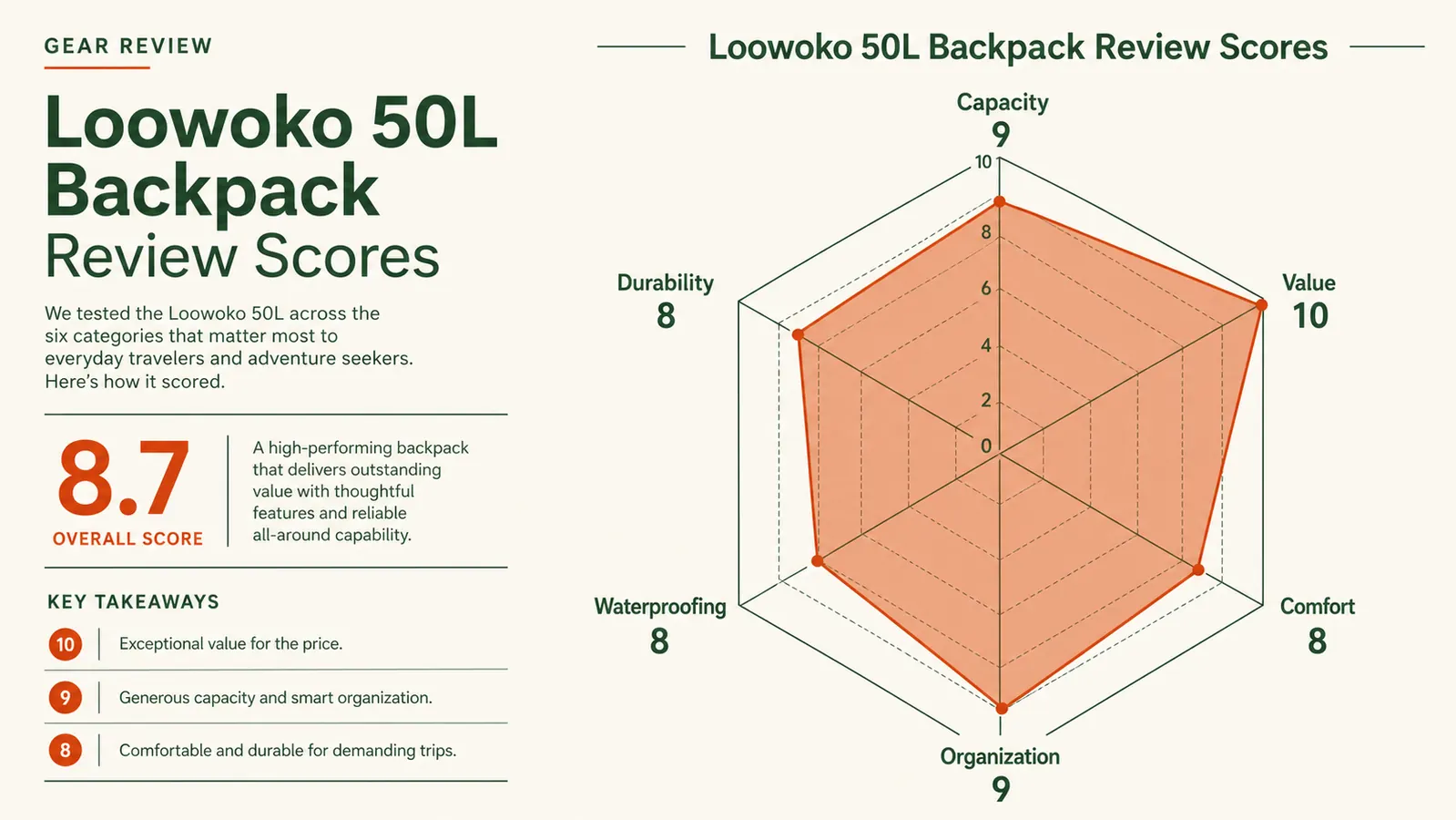
What Actually Works Well
I have spent a lot of words on the weaknesses, because that is the point of this review. But I want to be fair. There are things the Loowoko does genuinely well at its price point, and they are worth naming.
The organization layout is the best feature. The pack has six exterior pockets plus the main compartment and a sleeping bag compartment at the bottom that can be opened to merge with the main body if you need the full vertical space. Two side pockets are wide enough for a 32-oz Nalgene, which sounds basic but a surprising number of packs in this range cannot manage it. The front panel zip pocket is roomy enough for a mid-layer. The top lid has a small zippered pocket for quick-access items like snacks, a headlamp, and a first aid kit. This pocket layout is more thoughtful than what you get from some packs at twice the price.
The shoulder straps are padded adequately, with an S-curve shape that fits most torso types. The sternum strap is adjustable on a sliding rail, which matters for different body proportions. Build quality on the zippers and fabric has held up across eight trips with no failures. The main zipper uses YKK pulls, which is a legitimate quality tell at this price.
The back panel ventilation channel is real, not decorative. My back runs swampy on any long carry, and the channel keeps airflow moving enough that sweat saturation is noticeably better than with my old frameless day pack.

What I Liked
- Six-pocket organization layout is genuinely well-designed, including a wide Nalgene-compatible side pocket
- YKK zipper pulls on main compartments, still functional after eight trips
- Back ventilation channel provides real airflow, not just cosmetic ridges
- Rain cover included in bottom stash pocket, adequate for light rain
- Adjustable sliding sternum strap fits a wide range of torso heights
- Sleeping bag compartment divider can be unzipped to open the full pack body
- Carry under 28 lbs is genuinely comfortable for most hikers up to 8-10 mile days
Where It Falls Short
- Hip belt foam is approximately 12mm, too thin for loads over 30 lbs on long mileage
- Frame stays flex past 35 lbs, shifting load rearward on steep descents
- Included rain cover leaks at seams and hip belt junction in heavy driving rain
- Usable capacity is closer to 42L once frame, bladder sleeve, and back plate are accounted for
- No load lifter straps at the top of the shoulder harness, limiting adjustment options
- Torso fit is one-size (medium torso), may not suit hikers with very short or very long backs
Who This Is For
If you are a weekend car-camper who uses a pack for day hikes from the campsite, this is a very solid choice. You are carrying 15-25 lbs max, covering 4-8 miles, and you are not sleeping in whatever you are carrying on your back. The organization is good, the price is right, and the comfort under light loads is real. Same goes for backpackers who travel genuinely light, the ultralight crowd who can keep a two-night kit under 25 lbs.
First-time overnight hikers who are still figuring out their gear and do not want to drop $180 on a pack before they know if they like backpacking are also a good fit. This pack will get you through your first several trips and teach you exactly what features you actually need before you invest in something built for high-mileage, heavy loads.
Who Should Skip It
Skip the Loowoko 50L if you are consistently carrying more than 30 lbs. The hip belt will punish you over distance. Skip it if you do long days in heavy rain and need a cover that actually seals. Skip it if you have a long torso, over 20 inches from C7 vertebra to iliac crest, because the fixed torso fit will put the hip belt in the wrong place and the whole system breaks down.
Also skip it if you are looking for a pack to grow into for years of hard-mileage backpacking. The build is solid for the price, but it is not built to absorb the kind of abuse a serious backpacker puts on a pack season after season. For that, spend more and get something with a stronger frame, thicker belt, and a fitted torso. You will thank yourself on mile 14. For a comparison with a stronger contender at a similar price, see my writeup on how the Loowoko stacks against the Maelstrom in my Loowoko vs Maelstrom breakdown. And if you want the full long-haul take on how this pack has aged over more than a dozen trips, I covered that separately in the long-term Loowoko review.
The right load range makes this pack a genuine value buy at the current price.
For hikers staying under 28 lbs and covering moderate trail days, the Loowoko 50L delivers. Check availability and today's price on Amazon before it moves.
Amazon Check Today's Price on Amazon →