
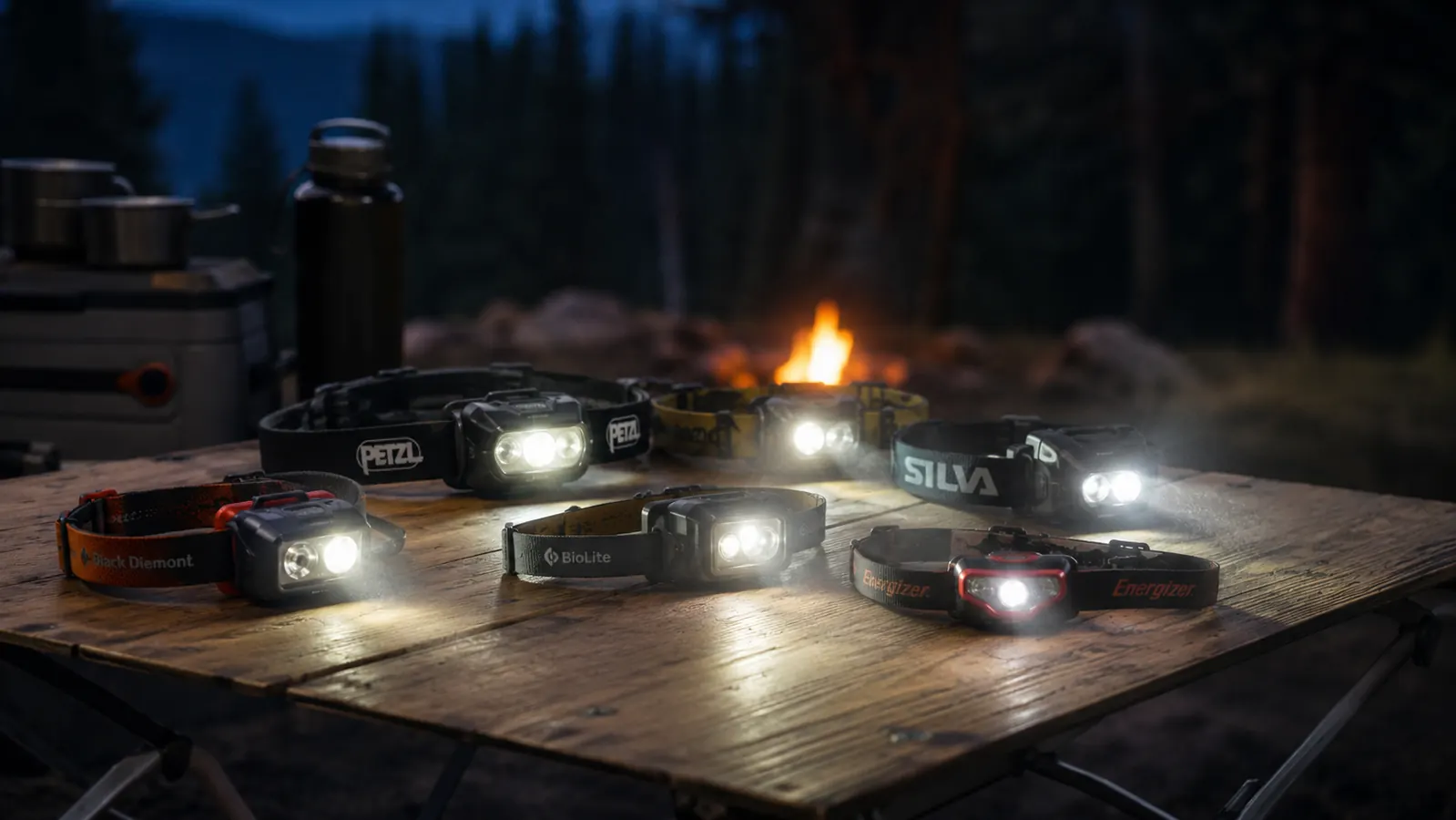
I have been in the dark on a trail at 2am, fumbling with a headlamp that had three modes I could not remember and a battery that died somewhere between high beam and strobe. That night taught me more about headlamp selection than any product page ever could. Most campers buy whatever is cheapest or whatever comes up first in a search, strap it on, and find out at the worst moment that it is not right for how they actually use it. A headlamp is not a complicated piece of gear, but there are seven things you need to get right, and if you miss even one of them, you will feel it out there.
This guide is what I check before buying any headlamp, shaped by more than twenty seasons of weekend camping and overnight trips. At the end I will tell you which specific model I have been running for over a year and why it holds up across every one of these criteria. The LHKNL rechargeable headlamp is the pick I keep coming back to, and I will explain exactly why.
If you want to skip the research: the LHKNL is the headlamp I carry on every trip
Rechargeable, 120,000 lux output, five lighting modes including red light, and weighs under 2 ounces. Rated 4.5 stars across more than 35,000 reviews. See today's price on Amazon.
Amazon Check Today's Price on Amazon →The 7 Things to Check Before Buying a Camping Headlamp
Walk through each of these in order. They build on each other. Lumens matter less if the runtime is poor. Runtime matters less if the charging method is inconvenient. And none of it matters if the headlamp weighs enough to give you a neck cramp by hour three.
Step 1: Lumens and Beam Distance
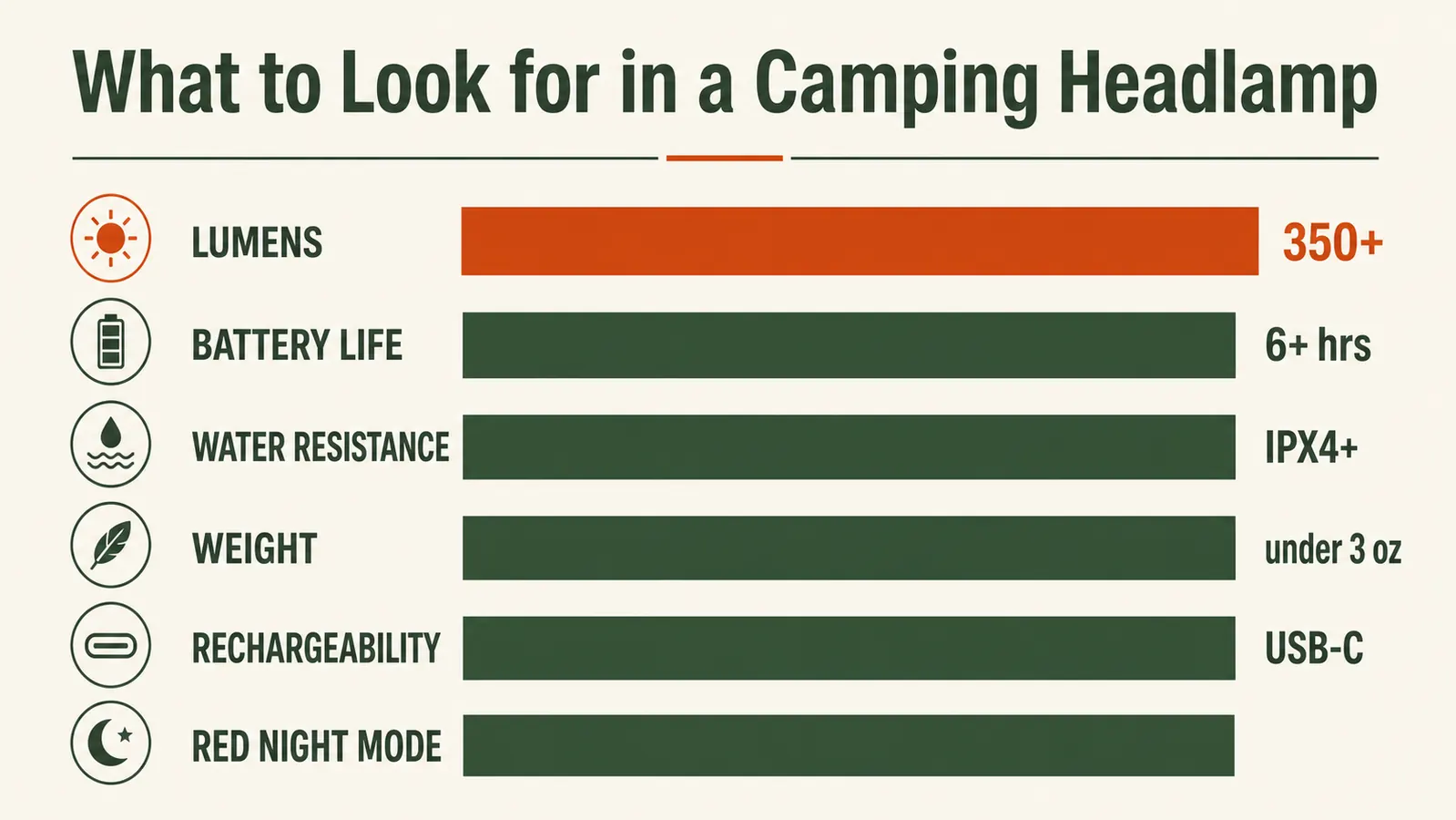
Lumens measure the total light output of the lamp. Beam distance tells you how far that light actually reaches in a useful way. For camping, you need enough brightness to read a map, set up a tent, or navigate a dark campsite without blinding your tentmates. For trail running or off-trail scrambling, you need considerably more reach. The sweet spot for general camping use sits between 200 and 400 lumens on the highest mode. Less than 200 and you are squinting at tasks within arm's reach. More than 400 is fine, but it burns through battery faster and you rarely need that much candlepower unless you are running technical terrain in the dark.
Beam distance matters separately from lumens. A flood beam spreads light wide across a close area, which is what you want around camp. A spot beam reaches farther but narrows the field of view, useful on trail. The best headlamps offer both. Look for a model that either switches between flood and spot or uses a wide enough beam to cover camp tasks without making you swivel your head constantly. The LHKNL delivers a wide flood beam on its standard mode and a focused high beam when you need distance, which covers both use cases without fumbling through settings.
Step 2: Runtime and Battery Capacity
Runtime is where cheap headlamps lose people fast. The number printed on the box is almost always calculated on the lowest brightness mode, which is not how most people actually use the lamp. A headlamp rated for 40 hours might give you 8 to 10 hours on the medium setting you will actually run most of the time. Before you buy, look for the runtime breakdown across all modes, not just the headline number. For a two-night camping trip, you want a minimum of 8 to 10 hours on medium before needing to recharge or replace batteries.
Battery capacity is measured in milliamp-hours (mAh) on rechargeable models. A 2000mAh battery gives you a solid full night and then some at medium brightness. The LHKNL runs a built-in rechargeable battery with enough capacity to last through a full weekend trip on moderate use without a mid-trip charge, which is the practical test that matters.
Step 3: Charging Method
This is the one people overlook until they are sitting at a campsite with a dead headlamp and a micro-USB cable that does not match anything in their kit. If you are buying rechargeable, confirm the port type before you order. USB-C is now the standard that most campers carry anyway for phones, battery packs, and cameras. Micro-USB is older and increasingly annoying to deal with in the field. Some headlamps still use a proprietary charging cradle, which means one more cable to forget.
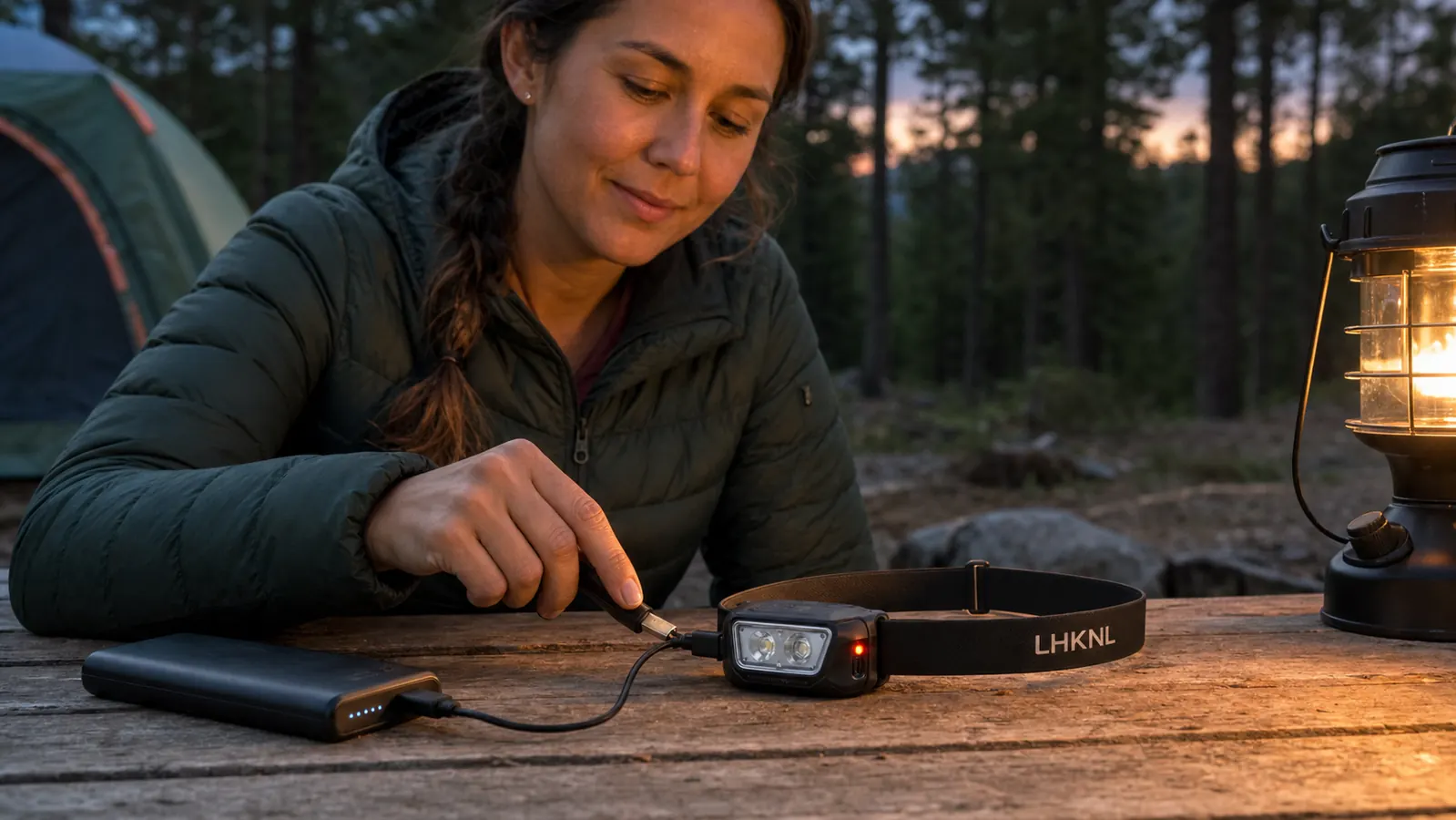
Also check whether the headlamp can charge from a portable battery bank, because that is almost always how you will top it off in the backcountry. Most quality rechargeable headlamps support pass-through from any standard USB power bank. If the headlamp requires an AC outlet, it is not well suited to multi-day trips. The LHKNL charges via a standard USB connection and draws from any power bank I have ever tested it with, which keeps it practical no matter how far from a plug I end up.
Step 4: Weight and Fit on the Head Strap
A headlamp that weighs 8 ounces feels fine in the parking lot and miserable on hour three of a night hike. Weight matters more the longer you wear it. The target for a camping headlamp is 3 ounces or under for the complete unit including strap. Many quality rechargeable models now come in under 2 ounces, which means you genuinely forget you are wearing them. That is the goal. Heavier mining-style headlamps with external battery packs can get you more runtime and brightness, but they make no sense for the kind of camping most of us do.
Fit matters as much as weight. The strap should be adjustable enough to fit different head sizes without slipping on sweat or requiring constant readjustment. Tilt on the lamp housing is useful because it lets you angle the beam down to see what is in front of your feet without craning your neck. Some cheaper headlamps have a fixed angle, which forces awkward head positions. The LHKNL weighs 1.6 ounces and the housing tilts, both things I noticed and appreciated immediately on first use.
Step 5: Lighting Modes (And the Red Light You Will Actually Need)
Most headlamps come with three to five modes: high, medium, low, strobe, and red. The strobe is for emergencies. Low is for close-range camp tasks without blinding everyone. High is for navigation. But the red light mode is the one that separates a thoughtful product from a careless one, and a lot of buyers ignore it until they need it.
Red light does not destroy your night vision the way white light does. When you step out of your tent at 3am and switch on a white high beam, your eyes take 20 to 30 minutes to readjust to darkness. Red light lets you see what you need to see at close range without blowing your adaptation. It is also courteous to other campers sleeping nearby. For early morning starts, navigating to the latrine without waking your campmates, or checking a map in a tent without flooding everyone with light, red mode is essential. Any headlamp worth buying in 2025 should have it. The LHKNL has a dedicated red light mode that I use more than any other setting on a typical camping night.
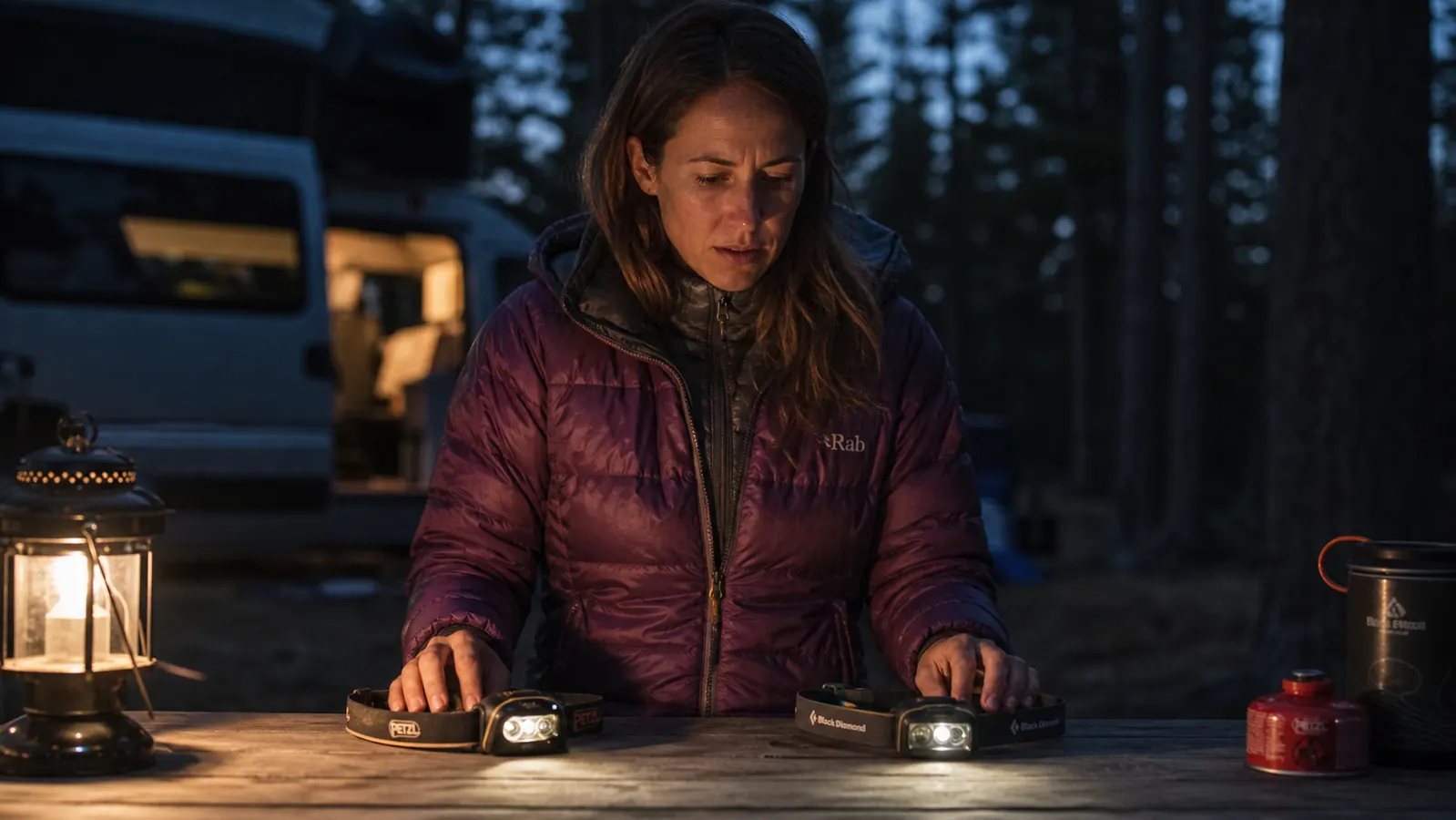
The red light mode is the one people ignore until the first time they need it at 3am and their tentmates do not hate them for using it.
Step 6: Water Resistance Rating
If you only camp in perfect weather, you can skip this one. The rest of us need to know the IPX rating on the box. IPX4 means splash resistant from any direction, which is enough for rain, sweat, and accidental drops in a puddle. IPX6 means it can take a jet of water and keep working. IPX7 means it can be submerged briefly. For camping and weekend backpacking, IPX4 is the floor. Anything below that and you are one rainstorm away from a problem.
Check the rating in the product specs, not the marketing copy. Some manufacturers describe headlamps as water resistant without specifying a rating, which means nothing useful. The LHKNL carries a water resistance rating that covers rain and splash, which has held up through several wet camping weekends without any issues.
Step 7: Mode Switching Logic
This is the least-discussed spec and one of the most annoying things to get wrong. Mode switching logic is the sequence of modes you cycle through when you press the power button. On poorly designed headlamps, the sequence is something like: high, medium, low, strobe, red. That means every time you turn it on, you start at blinding high beam, and if you want low or red you have to cycle through strobe. In a dark tent at midnight, cycling through a strobing high beam to find red light is a way to wake up everyone within 50 feet.
Good mode logic starts at medium or low, puts strobe and SOS at the end of the sequence or on a long-press, and makes the most-used settings immediately accessible. The LHKNL cycles through its common modes first and buries the strobe behind a long hold, which is exactly what you want. Read the mode descriptions in the product listing before you buy and pay attention to the sequence. It sounds minor until it is not.
What Else Helps When Choosing a Camping Headlamp
Beyond the seven steps above, a few practical things make a difference in the field. Tilt angle on the housing is one I already mentioned, but it bears repeating: a headlamp that cannot point down toward the ground forces you to hunch your neck to see your feet on trail. Memory function, where the lamp returns to the last mode used when switched back on, saves a lot of button pressing. A low-battery indicator is more useful than it sounds because a dead headlamp at 11pm with no warning is a bad situation. A lockout mode or travel lock keeps the lamp from switching on in your pack and draining the battery before you ever get to camp.
Brand reputation matters in a practical way: if the headlamp fails and you want to find a replacement charging cable, a less-established brand may have disappeared from the market. The LHKNL has more than 35,000 reviews on Amazon, which gives me confidence it will be available and supported when the next set of campers in my group needs one. For more detail on how the LHKNL performs after a full year of real use, the long-term review covers everything from first charge to the night I used it for a trail rescue: see the full LHKNL headlamp review for the complete breakdown. And for the story of what happens when headlamp quality actually gets tested under pressure, the LHKNL night hike story is worth reading before your next overnight trip.
The market at any price point is crowded. There are headlamps for $8 and headlamps for $200, and the performance gap between them is real but not always proportional to the price. The sweet spot for most campers is in the $15 to $30 range: rechargeable, 200-plus lumens, red mode, water resistant, under 3 ounces. The LHKNL sits squarely in that zone, which is why I keep recommending it to people in my camping group who ask what to buy before their first season.
The LHKNL checks every box on this list at a price that won't make you wince
120,000 lux output, five modes including red light, USB rechargeable, water resistant, and 1.6 ounces. More than 35,000 campers have rated it 4.5 stars. See today's price on Amazon and check if it is still in stock.
Amazon Check Today's Price on Amazon →