
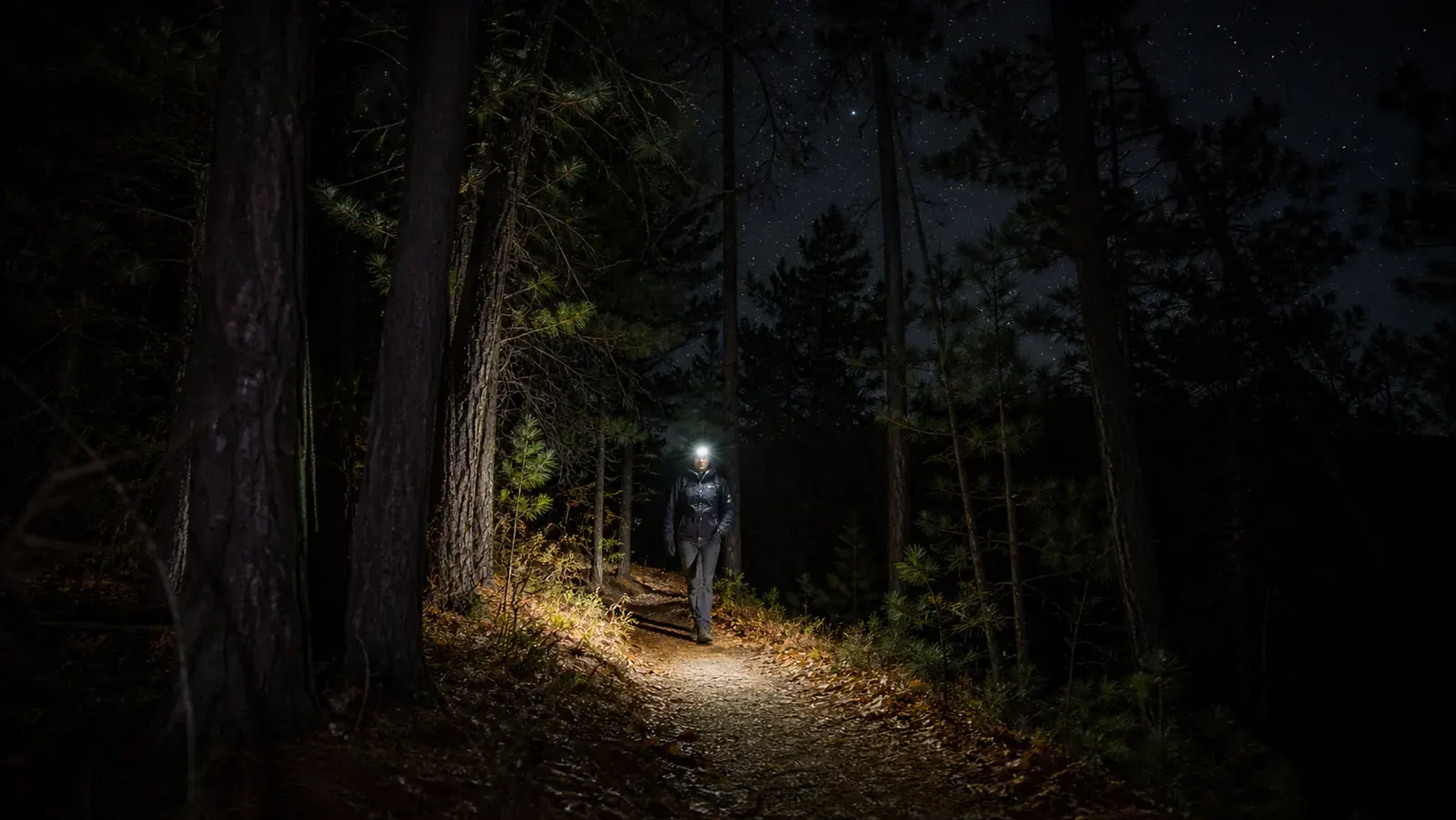
I made the switch to rechargeable headlamps about three seasons ago, and I will tell you exactly what prompted it: I was at a campsite in the Uwharrie National Forest at 11pm, my headlamp died, and I had zero backup AAs. Pitch dark, a quarter mile from the outhouse, and a site full of trip members who trusted me to have my gear dialed in. That was the last time I relied on disposable batteries for primary lighting. Since then I have been running the LHKNL Headlamp on every trip, and the difference is real. Here are ten reasons the rechargeable camp beats the battery-powered old guard every time.
Dead batteries at midnight are a solved problem. The LHKNL charges via USB and runs up to 8 hours per charge.
With over 35,000 reviews and a 4.5-star rating on Amazon, the LHKNL is the headlamp Marcus keeps in his kit year-round. Check the current price before your next trip.
Amazon Check Today's Price on Amazon →You Will Never Run Out of Power at the Worst Possible Moment
Disposable batteries drain fastest when you need them most: cold nights, extended use, older cells you forgot you already half-used. A rechargeable headlamp like the LHKNL charges from any USB source, including a power bank. Top it off before you leave the trailhead and you have a full tank every single time. The LHKNL shows a charge indicator light so you know exactly where you stand.

The Long-Run Cost Is Almost Zero
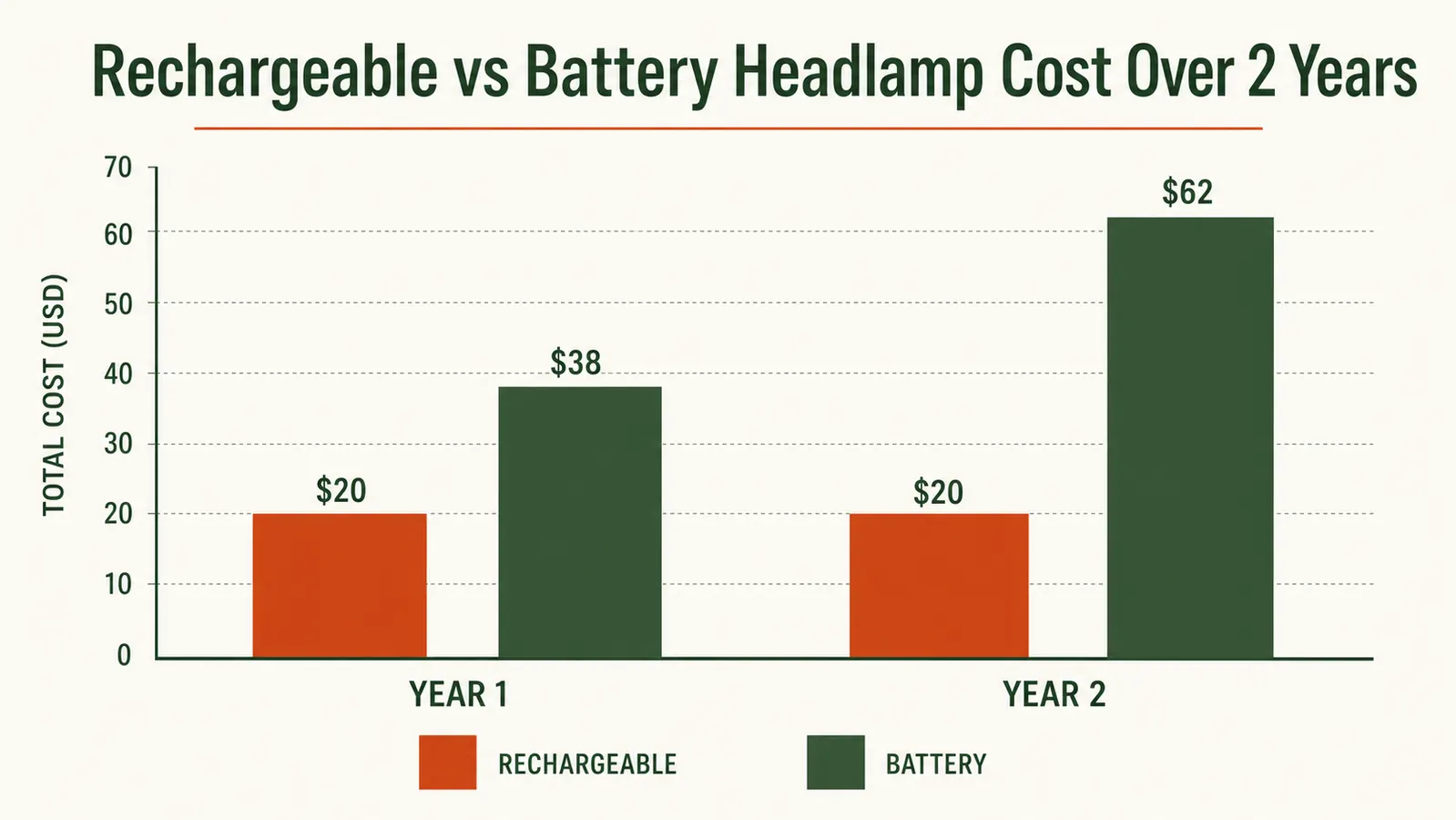
A four-pack of quality AA batteries runs around $6. If you camp 10 weekends a year and swap batteries twice per trip, you are spending $30 or more annually just to keep the light on. The LHKNL charges from the same USB cable you already carry. After the initial purchase, the ongoing cost is essentially nothing. Over two or three seasons, that gap adds up to real money.
Weight and Pack Space Stay Where They Belong
Spare AAs weigh almost nothing individually, but a full set of backup batteries for a multi-night trip adds up. When every ounce matters on a long carry, swapping batteries for a USB cable you already own is a small but real win. The LHKNL itself weighs under three ounces, so the whole lighting kit fits in a shirt pocket.
Consistent Brightness From First Minute to Last
Here is something nobody mentions about alkaline batteries: the light output starts dropping almost immediately as the cells drain. You get two hours of good light, then a slow dim you barely notice until suddenly you are navigating a root-covered trail in orange glow. A lithium-powered rechargeable like the LHKNL holds near-peak brightness until it actually runs low, then gives you a warning flash. The quality of the light stays consistent for the whole run.
Better for Cold-Weather Performance
Alkaline batteries lose capacity fast when temperatures drop. Take them below 32 degrees and you might get half the rated runtime. Lithium cells, which power most built-in rechargeable headlamps, hold their capacity far better in the cold. On a 20-degree November night in the Smokies, my LHKNL ran the same as it does in July. The battery-powered headlamp from the gear bin next door died before midnight.
Three seasons in, I have charged the LHKNL from a power bank, a car charger, a camp USB hub, and once off a solar panel. I have never once thought about buying replacement batteries.
One Cable Charges Your Headlamp and Everything Else
Modern rechargeable headlamps including the LHKNL use micro-USB or USB-C. That is the same standard most campers already carry for phones, GPS units, and Bluetooth speakers. You are not adding a charger to the kit. You are just making your existing cable do one more job. Battery-powered headlamps require you to carry a full spare set of cells that only work for that one device.
Less Waste, Which Matters on Public Lands
Every AA that dies at camp is either packed out in your trash bag or, in less conscientious camps, buried or tossed. Batteries contain heavy metals and should not be entering the backcountry waste stream at all. Switching to rechargeable eliminates that friction entirely. It is a small thing, but it is the right call on any land you want to keep using.

Multiple Light Modes Without Burning Extras
The LHKNL offers a 330-lumen high beam, a medium mode, a low mode, and a red light for night vision. On a battery-powered headlamp, running high mode burns through cells fast. Most campers end up stuck on medium to conserve. With a rechargeable, you use the mode you actually need without rationing. If you need the full beam to read a map or find tent stakes at midnight, you use it.
You Can Charge It Off a Solar Panel or Power Bank Mid-Trip
On multi-night trips, a rechargeable headlamp becomes an asset in an ecosystem. If you are already carrying a solar panel to keep your phone running, you can top up your headlamp during the day at no additional cost. I have been on 4-day trips where I charged the LHKNL twice off a 10,000mAh power bank and still had battery capacity to spare on the bank for other devices. With AAs, day four means buying fresh packs before you go.
The LHKNL Costs Less Than a Box of AAs Up Front
This is the part that surprises people. The LHKNL is priced well under $25. A four-pack of Energizer AAs runs $6 to $8, and a quality headlamp that takes AAs typically costs $20 to $30 on top of that. The rechargeable option often costs less than the battery-powered alternative when you add the first year of battery purchases. You are not paying a premium for convenience. You are paying less for a better product.
What I Would Skip
If you are buying a rechargeable headlamp as a true backup unit, something you stash in a bag and forget about for months, a battery-powered backup makes some sense. Lithium cells in rechargeable headlamps self-discharge slowly, but after six months sitting uncharged they may be significantly depleted when you need them. For a dedicated emergency kit, a headlamp with a set of lithium AA batteries that you swap out annually is a valid choice. For primary use, though, the rechargeable wins on every metric that matters at camp.
For a primary camping headlamp, the case for rechargeable is not even close. Lower total cost, better light quality, and one less thing to forget at the hardware store on the way out of town.
The LHKNL has 35,000-plus reviews and costs less than a night's worth of batteries over a full season.
If you are ready to stop thinking about AA batteries before every trip, check the current price on Amazon. It is one of the few pieces of gear I recommend to everyone in my group, regardless of experience level. For a deeper look at field performance, see my full LHKNL Headlamp Review or the LHKNL vs DanForce comparison.
Amazon Check Today's Price on Amazon →