
I have been leading group camping trips for going on twenty-two years. Most of them are uneventful in the best possible way: you drive out Friday evening, set up camp before dark, cook something decent, sleep well, and break it all down Sunday morning with dirt on your boots and nothing to complain about. That is the goal. That is the trip you plan for. But sometimes a trip teaches you something, and the lesson it teaches is almost always about a piece of gear you either had or wish you had. This story is about the LHKNL headlamp, and a night I was glad it was on my head.
This is about a September trip into the Ouachita National Forest, a loop we had done twice before, camped near a creek crossing at mile eight. There were six of us. My buddy Dale, who had been camping for years but had started getting a little overconfident about it, decided to take a short solo walk after dinner to look at the stars from an open ridge we had passed on the way in. He said he would be back in thirty minutes. He took a small flashlight with two AA batteries that he had not checked since spring. You can probably see where this is going.
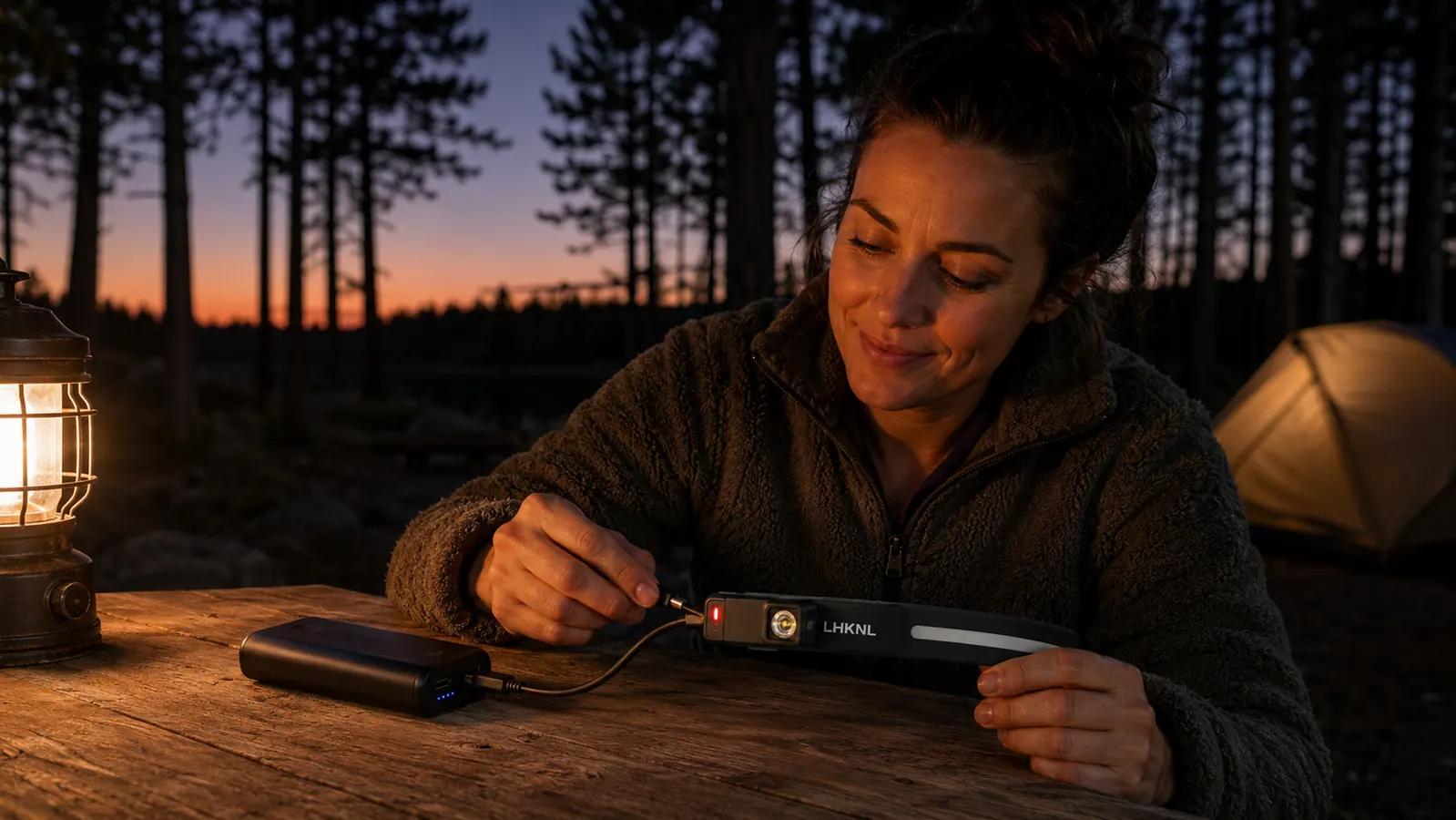
By ten thirty, we were not worried yet. By eleven fifteen, we were. At midnight, three of us grabbed our gear and started back down the trail to find him. I had my LHKNL rechargeable headlamp, which I had been using for about four months at that point. I had bought it somewhat casually, replacing a battery-powered unit that had served me well enough but kept eating AAs at inconvenient times. I had not thought much about it beyond the fact that it charged over USB, worked for a solid three hours on high, and sat light on my forehead. But that night it became the most important piece of equipment I was carrying.
We found Dale about a mile and a half from camp, sitting on a log about forty feet off the marked trail, in a drainage that dropped steeply toward the creek. He had lost the path in the dark, his flashlight had gone dim within thirty minutes of leaving camp, and he had made the smart call to stop moving rather than get further turned around. He was cold, a little shaken, but fine. What got us to him was the LHKNL on high beam, throwing a wide enough arc of light that we could see both the marked trail and the off-trail terrain beside it at the same time. The beam distance on that thing is real. It is not a marketing claim.
Dale had made the smart call to stop moving. What got us to him was the LHKNL on high beam, covering both the marked trail and the terrain beside it at once.
Your next night hike should start with a headlamp you can trust on the trail.
The LHKNL rechargeable headlamp is what I carry. USB rechargeable, lightweight at under 3 ounces, and bright enough to read terrain confidently in the dark.
Amazon Check Today's Price on Amazon →
The walk back to camp with Dale was quieter than the walk out. He was a little embarrassed, which is understandable. I did not pile on. We have all had a moment where we underestimated something in the field. What I kept thinking about, though, was how different the evening could have gone if I had also shown up with a flashlight running on old batteries. The other two guys with me had decent headlamps. Mine was the brightest, and in those conditions, brightness was not a luxury.
After we got back, we ate the food that had been sitting on the camp table and nobody said much for a while. Then someone made coffee and the story started getting funnier. By morning it was practically a legend. But I spent some of that time thinking about my kit. I replaced the one thing that had been borderline: an older backup light I kept in my pack that I had not actually charged in two months. I charged everything before the next trip and I have kept that habit since.

The LHKNL headlamp has been on every trip I have taken since that September. It is light enough that I forget I am wearing it. The red light mode is genuinely useful around camp at night because it does not kill your night vision the way white light does. The battery indicator gives you a real read on how much charge you have left, which matters more than people think until it matters a lot. And when I need the full beam, it delivers. No fumbling with settings, no dim flicker on the last stretch.
I have since recommended it to four people in my regular camping group, including Dale. He now carries two headlamps on every trip. That is maybe overcorrecting, but I understand the impulse. Once something goes sideways in the dark, you respect the dark more.
What I'd Tell You If We Were Sitting at My Kitchen Table
Here is what I would say: the headlamp is one of the cheapest pieces of gear in your kit, and it is also one of the most consequential. People tend to spend their budget on the tent and the sleeping bag and the stove, which are all correct priorities. But then they grab whatever flashlight is on the checkout shelf at the hardware store and call it done. That is the mistake. You want a headlamp that is always charged, always bright when you need it, and light enough that you actually wear it instead of leaving it at the bottom of a stuff sack. The LHKNL hits all three of those marks without asking you to spend much. I would not have said that sentence two years ago because I had not field-tested it enough. Now I have. That is my honest read.
A solid headlamp is the piece of gear you will never regret having and always regret skipping.
The LHKNL is what I keep on my head after twenty-plus seasons of camping. Rechargeable, reliable, and light enough to forget you are wearing it.
Amazon Check Today's Price on Amazon →