
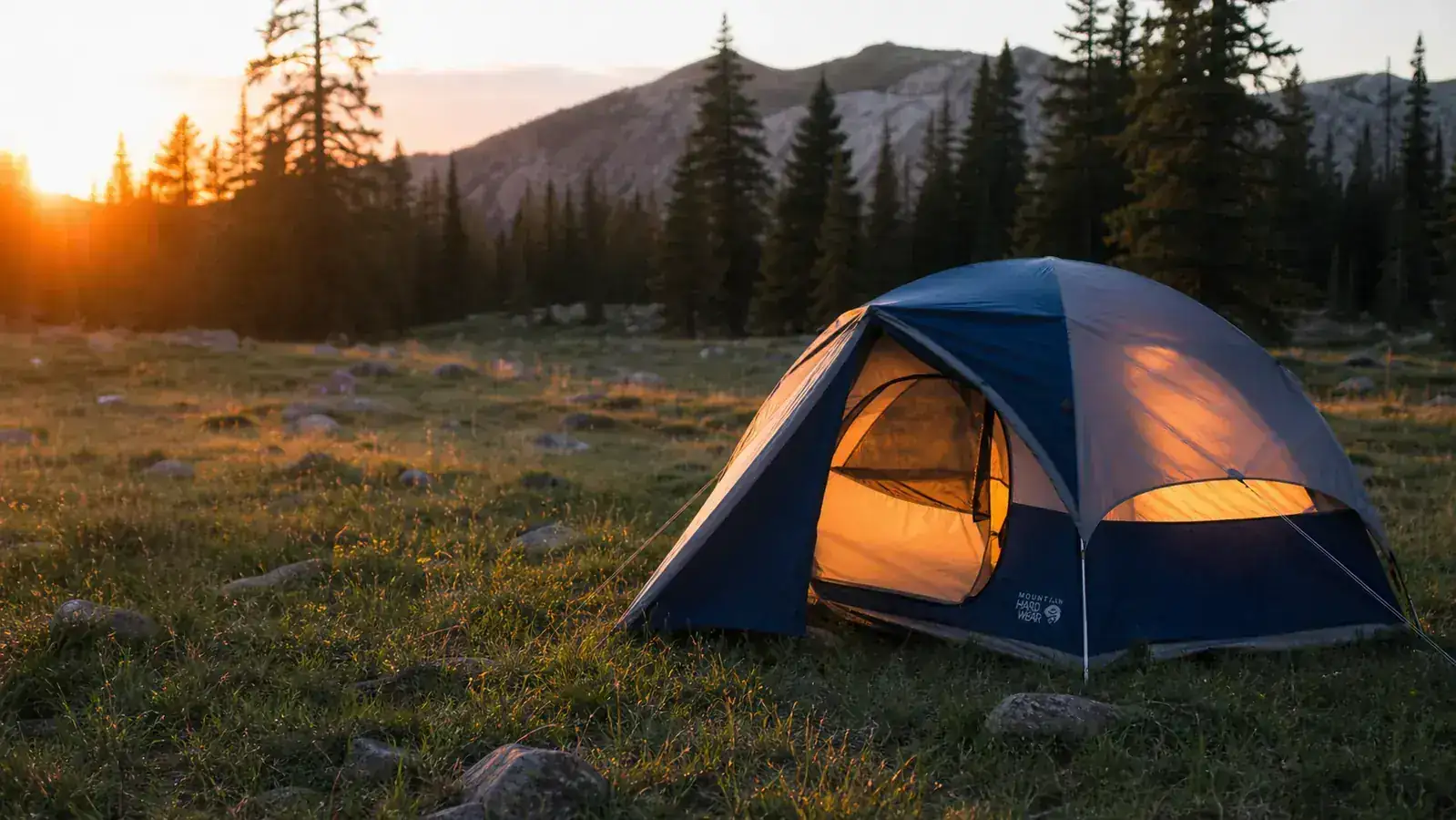
I want to tell you something that the Amazon listing will never tell you about the Coleman Sundome: the first time I set it up in the rain, I made three mistakes that had nothing to do with the tent and everything to do with what nobody warned me. I had bought it the week before for a four-day trip to Pisgah National Forest, and by 7pm on night one a line of storms rolled through and I found out exactly where my gaps were. The tent handled it fine. I, on the other hand, learned some things the hard way.
This is the honest review. Not the summary of specs you can read on the product page, and not the highlight reel of the times it worked perfectly. This is what I wish someone had told me before I showed up at a soggy campsite with a brand-new tent and a lot of confidence. The Coleman Sundome, ASIN B014LSDUA8, currently rated 4.6 stars across nearly 48,000 reviews, earns most of that praise. But there is a version of this tent that disappoints you, and there is a version that serves you for years, and the difference is knowing a few things up front.
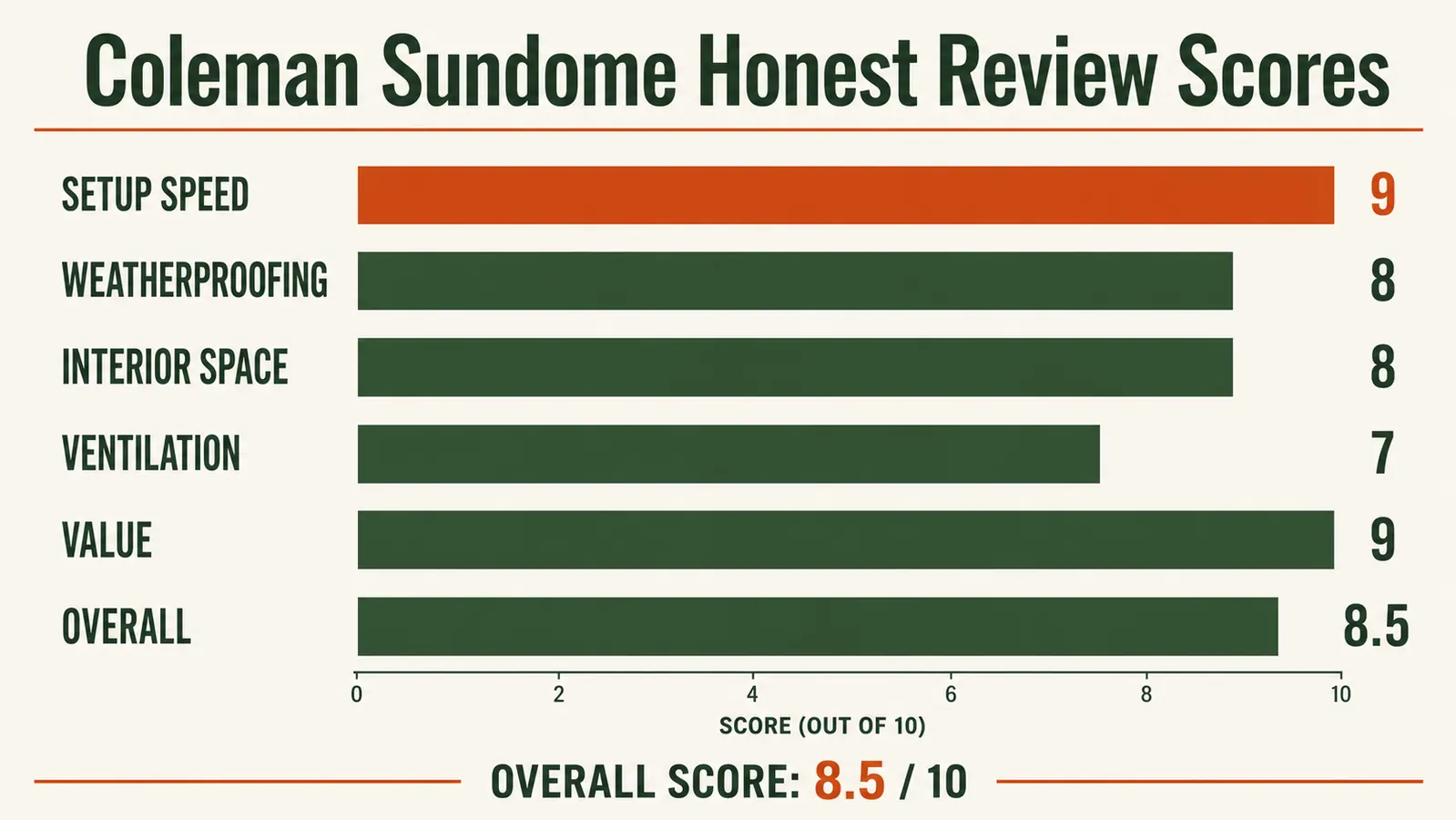
The Quick Verdict
Genuinely solid budget tent that rewards campers who understand its limits. Not weatherproof out of the box without one key step most buyers skip.
Amazon Check Today's Price →If you want the tent Marcus keeps recommending to first-timers, this is it, but read the full review first.
The Coleman Sundome is available on Amazon in 2-, 3-, 4-, and 6-person sizes. Check the current price and availability before you head out.
Amazon Check Today's Price on Amazon →How I've Actually Used It
I want to be specific about my use case because it matters for how you weigh this review. I am a weekend car-camper and occasional trip leader. I have pitched the 4-person Sundome at more than 40 sites across the Southeast and Southern Appalachians over the past three-plus years. My usual group is four adults, sometimes with one or two kids added. Temperatures I have camped in range from the low 30s in the North Carolina mountains in October to Georgia summer nights that never drop below 75. I have had this tent in heavy rain, sustained 30mph wind, thick dew, and one unexpected ice event that coated every surface in a thin glaze by morning.
I have not taken it backpacking. It is too heavy for that, and if you are looking for a lightweight pack-in tent, this is not your tent and I will save you the trouble of reading further. But for car-camping, which is how most weekend campers actually camp, the weight is a non-issue. It fits in the back of a truck cab or a car trunk without taking up the whole space.
I own the 4-person model. Some things I say here apply differently to the 2-person, which has a slightly different pole count and a more stretched proportional layout. I will note where size matters.
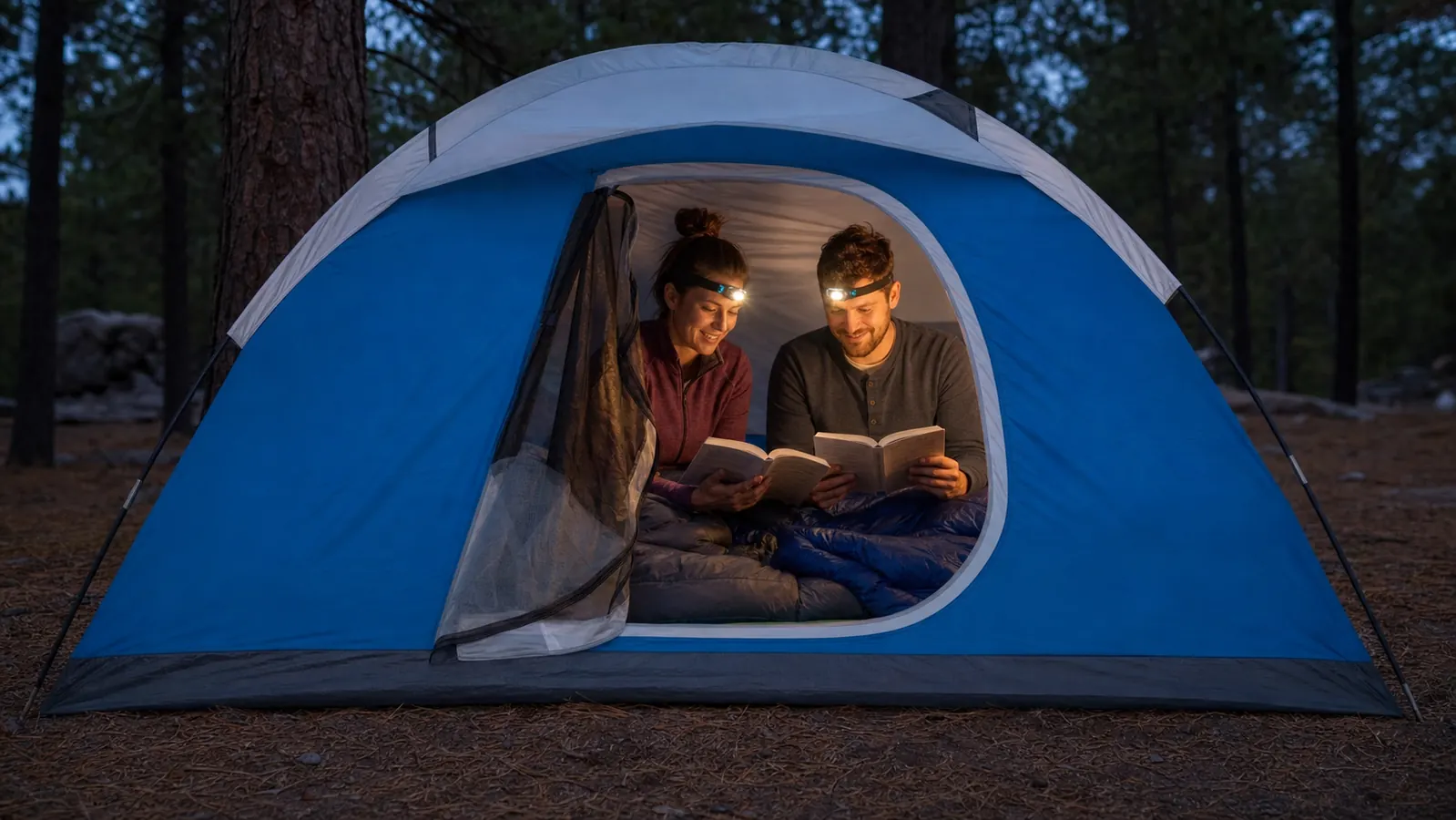
The Thing Nobody Warns You About: The Rainfly Gap
Here is the one piece of information I wish had been printed on the outside of the box. The Coleman Sundome's rainfly does not cover the entire tent. There is a deliberate gap at the base of each long wall, roughly 8 to 10 inches of exposed mesh between the bottom of the rainfly and the ground. Coleman designed it that way for ventilation, which is a smart call in summer heat. The problem is that nobody tells you this means rain can blow in horizontally at low angle and wet the bottom of the inner tent wall.
That Pisgah trip I mentioned: the storms came in from the southwest with wind behind them. Water came in under the rainfly gap on the windward side and soaked a corner of my sleeping pad. The tent itself did not leak through the seams or the floor. The WeatherTec seam-sealing that Coleman does at the factory is real and it held. But the open gap at the bottom of the fly is a design choice you need to account for in your campsite selection. Face the gap side of the tent away from the direction the weather typically comes from. On exposed sites, dig a small drainage trench 6 inches upwind of the fly edge if you know rain is coming.
Once I understood this and started orienting the tent correctly, the problem went away entirely. But it took me two wet corners to figure it out, and it should not have.
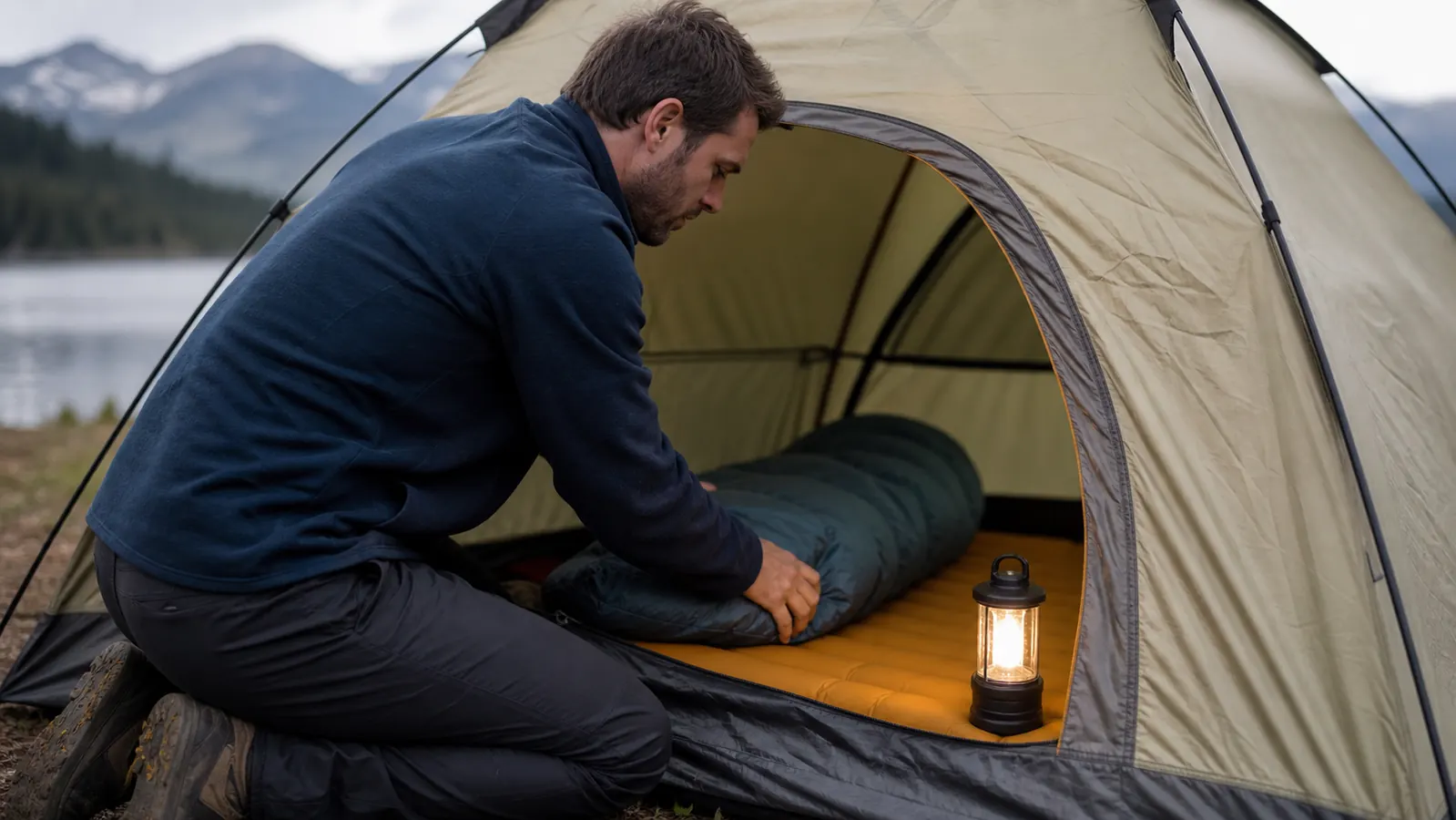
The Condensation Problem (And Why It Is Not a Defect)
On cool, humid nights, you will wake up to water on the inside of the Sundome's inner wall. Not a lot. Not dripping. But a visible film of condensation, especially in the top corners where the mesh ceiling meets the solid fabric panels. I have seen first-time campers open their tent on a 45-degree October morning and immediately tell me the tent leaked. It did not. That is condensation from breathing and body heat meeting cold nylon.
The Sundome handles this better than cheaper tents because the fly creates an air gap above the inner tent wall rather than sitting directly against it. That gap lets moisture-laden air escape before it condenses on the fabric. The mesh panels on the inner ceiling also help pull humid air out. But you will never fully eliminate condensation in a tent this size with two or more people sleeping in it. That is not a Coleman problem. That is physics.
What actually helps: crack the zipper on the door a few inches if the rain has stopped. The cross-ventilation that comes from having one vent open on each end of the tent drops interior humidity noticeably. On nights when I have done this and the temperature is above 45, I rarely see condensation in the morning. On cold nights with the tent sealed, I do. Plan for it.
The tent did not leak. The condensation was from breathing and body heat. I have watched campers pack a wet tent into the car convinced they got a bad unit when really they just need to leave a zipper cracked.
What the Floor Space Number Actually Means
The 4-person Sundome lists 56 square feet of floor space, which sounds generous. The interior footprint is roughly 8 feet by 7 feet. What the listing does not tell you is that the dome geometry means the walls slope inward steeply starting about 18 inches from the floor on the long sides. So you have 56 square feet of floor, but only the center strip of that space is tall enough to sit up in. Toward the edges, the ceiling drops down and your sleeping bags end up against sloped nylon, which is fine for sleeping but means you cannot place four people's gear bags along the walls without some of them pressing on the fly.
The honest way to think about size: the 4-person Sundome is a comfortable 2-person tent with gear, or a tight-but-workable 3-person tent, or a 4-person tent where everyone is comfortable in their sleeping bag and nothing else. If you are camping with four adults and expecting room to organize, change clothes, or sit out a rain delay inside the tent, you will feel cramped. This is standard for dome tents in this price class, not a specific failure of the Sundome, but the gap between marketed capacity and livable capacity is worth naming.
The Poles: Where the Cost Shows Up
The Sundome uses fiberglass poles, not aluminum. This is where Coleman trims cost to hit the price point, and it has real-world consequences. Fiberglass does not spring back with the same snap as aluminum after repeated bending. Over two or three seasons of regular use, fiberglass poles will develop what campers call stress whitening, small cracks in the outer coating that do not immediately fail the pole but warn you that it is under fatigue. Aluminum poles bend rather than splinter; fiberglass can shatter if it gets extremely cold and you stress it during setup.
In practice, I have not broken a pole in three-plus years. But I have been careful. I do not force a pole into a fitting when it is stiff from cold. I warm the pole sleeves in my hands first in below-40 temperatures before bending them to fit. And I store the tent with the poles coiled loosely rather than bent and compressed. If you treat the poles with some awareness, they hold up fine for car-camping frequency. If you throw the tent in the back of a truck, set it up hard, and pack it rough every weekend, plan on replacing a pole section in year two. Replacements are cheap and available directly from Coleman.
One practical tip I pass on to everyone I take camping for the first time: when the pole end is close to fitting but not quite, check that you have the right sleeve first before forcing it. The 4-person model has two main poles and one ridge pole, and they are similar in diameter. Forcing the wrong pole into a sleeve at the wrong angle is how most fiberglass poles crack in the field.
What Genuinely Works Well
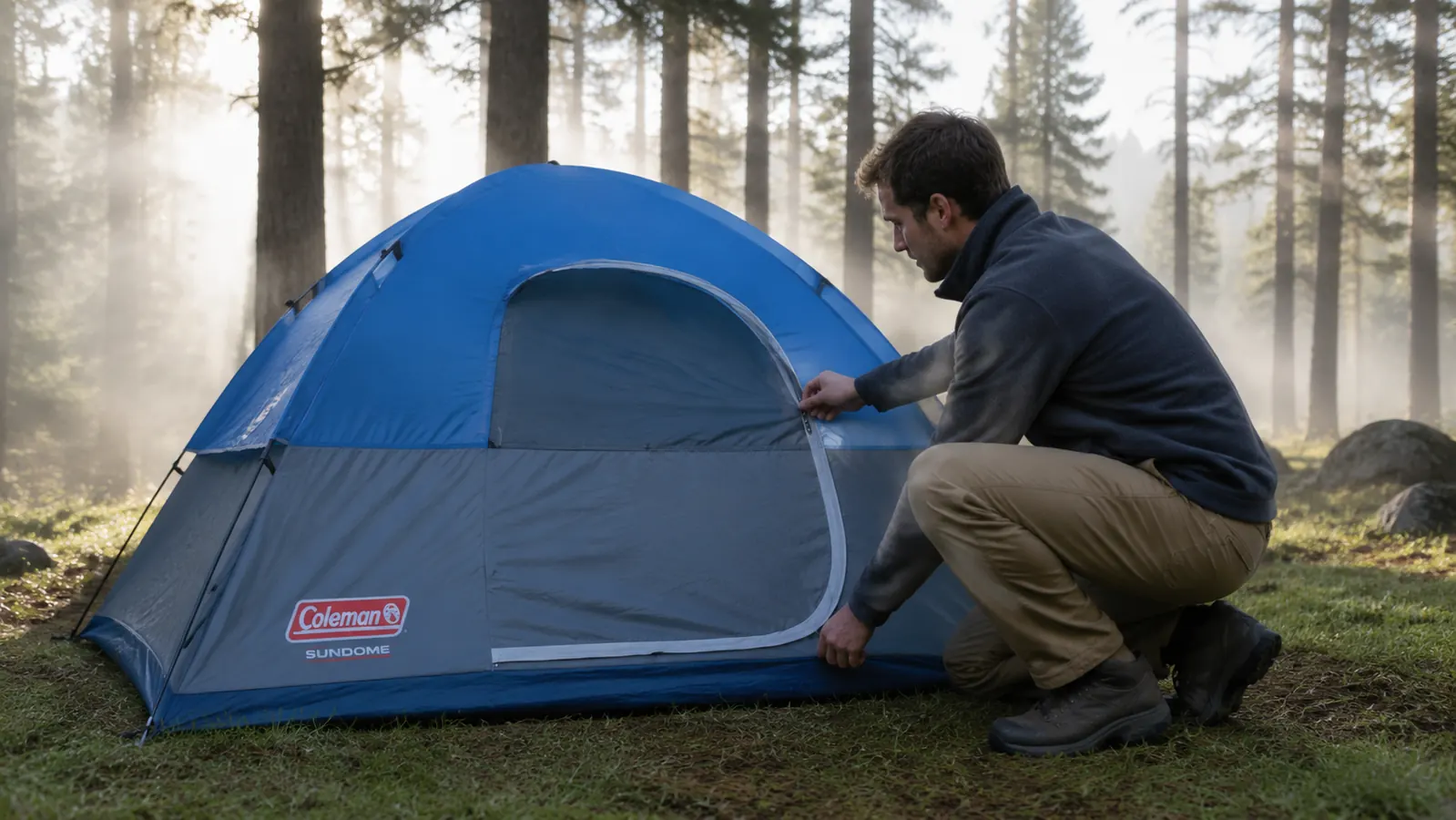
The setup speed is real. Coleman advertises 10 minutes and that is accurate for someone who has done it twice before. The color-coded pole clips (yellow clips, yellow pole tips) eliminate the confusion that plagues cheaper tents where you are guessing which pole goes where. I have set this up after dark with a headlamp on a site I had never seen before, and been inside with the fly on in 13 minutes. That matters when you arrive at camp late, tired, and hungry, which happens more often than it should.
The two doors are underrated. A lot of tents in this price range give you one door and a vague promise of ventilation. The Sundome's two doors plus the E-port cable port let you run power inside if you are at a site with hookups, keep one door cracked for airflow without a bug problem, and get in and out on your side of the tent without crawling over your tentmate at 3am. Small quality-of-life win that compounds over a weekend trip.
The WeatherTec system, Coleman's branded combination of taped seams and a tub-style floor that runs partway up the wall, genuinely prevents the floor leaks that ruin cheaper tents. I have had standing water pooling outside the tent in a hard rain and woken up to a dry floor every single time. The floor protection works. Do not pitch the tent in a low spot and expect it to turn into a boat, but on a flat or slightly elevated site with reasonable drainage, the floor stays dry.
What I Liked
- 10-minute setup with color-coded poles that actually match what they claim
- WeatherTec floor sealing holds in hard rain, no floor leaks in 40-plus nights
- Two doors plus E-port cable access, genuinely useful on a 2-night trip
- Comes with a fitted rainfly that adds meaningful weather protection
- Fiberglass poles hold up with reasonable care for 3-plus years of car-camping use
- Strong ventilation cross-draft keeps summer nights tolerable
Where It Falls Short
- Rainfly gap at the base allows wind-driven rain to wet the lower tent wall on exposed sites
- Fiberglass poles splinter rather than bend if cold-stressed or forced during setup
- Marketed 4-person capacity is closer to 2 adults with gear in real-world comfort
- Condensation builds up noticeably in cold, sealed conditions with two or more people
- No footprint included and the ground sheet matters for long-term floor protection
Who This Is For
The Sundome is right for weekend car-campers who want a proven, no-drama shelter at a price that does not hurt if something goes wrong. It is right for families doing established campground trips where sites have a flat pad and a fire ring, not exposed ridge camping or technical backcountry sites. It is right for people who are buying their first tent and want something with a long track record, actual customer reviews from people who have actually used it, and a brand with replacement parts available. It is especially right for trip leaders who want a consistent tent to recommend to the people they take camping, because the setup is simple enough that a first-timer can do it without frustration.
Who Should Skip It
Skip the Sundome if you are going to be camping in sustained high wind or exposed alpine environments. The dome geometry handles moderate wind, but it is not a four-season tent and it is not designed for sites where the wind never stops. Skip it if you need to backpack with your tent, the weight and packed size are not competitive with purpose-built backpacking shelters. Skip it if you are camping in genuinely cold conditions below 20 degrees Fahrenheit, because fiberglass poles under real cold stress are a liability you do not want to manage on a winter trip. And skip it if four people actually need four-person living space, because you will resent the tent for something it was never built to provide.
If you are on the edge, go up one size from what you think you need. The 3-person if you camp alone with a lot of gear, the 6-person if you actually have four people. The price difference between sizes is small relative to the comfort difference on night two of a three-day trip.
For more on how the Sundome stacks up over a full two-year stretch of weekly use, see the long-term review at Coleman Sundome Tent Review: Two Years of Weekend Car-Camping. For a direct matchup against the Core Dome, which runs at a similar price point and targets the same buyer, check the Coleman Sundome vs Core Dome comparison.
You now know what the listing does not tell you. If the Sundome still fits your use case, here is where to buy it.
The Coleman Sundome is one of the most-reviewed tents on Amazon for good reason. Check current pricing across all four size options and read what 48,000 verified buyers have to say.
Amazon Check Today's Price on Amazon →