
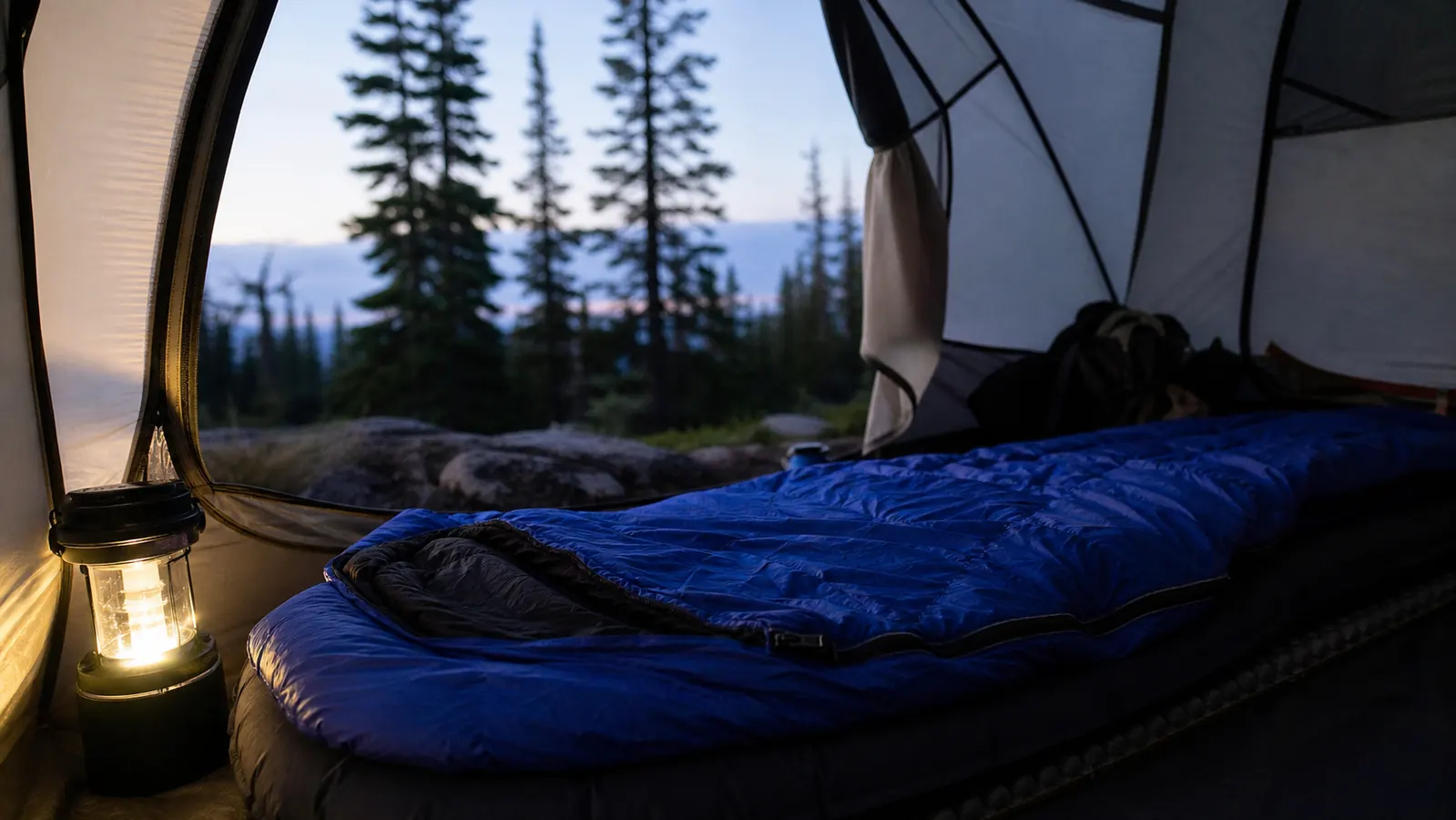
I want to tell you something that most sleeping bag reviews skip right over: a 0-degree rating does not mean you will be comfortable at 0 degrees. It means you will technically survive at 0 degrees, assuming you are a 40-year-old man of average build who ate a big dinner and slept in dry base layers on a well-insulated pad. If that is not you exactly, the number means less than you think. I learned this the hard way with the Coleman North Rim 0 Degree Mummy Sleeping Bag on a late November trip in the Uwharrie National Forest when the temp dropped to 9 degrees overnight and I woke up at 3am pulling on every layer I had packed.
That story has a nuanced ending, and I will get to it. But I want to lead with it because it is the thing I wish someone had told me before I put this bag in my cart. The Coleman North Rim is a genuinely solid cold-weather bag for the money. It is also not what its label says it is, at least not in any practical sense for most people. If you want the full picture before you buy, here it is.
The Quick Verdict
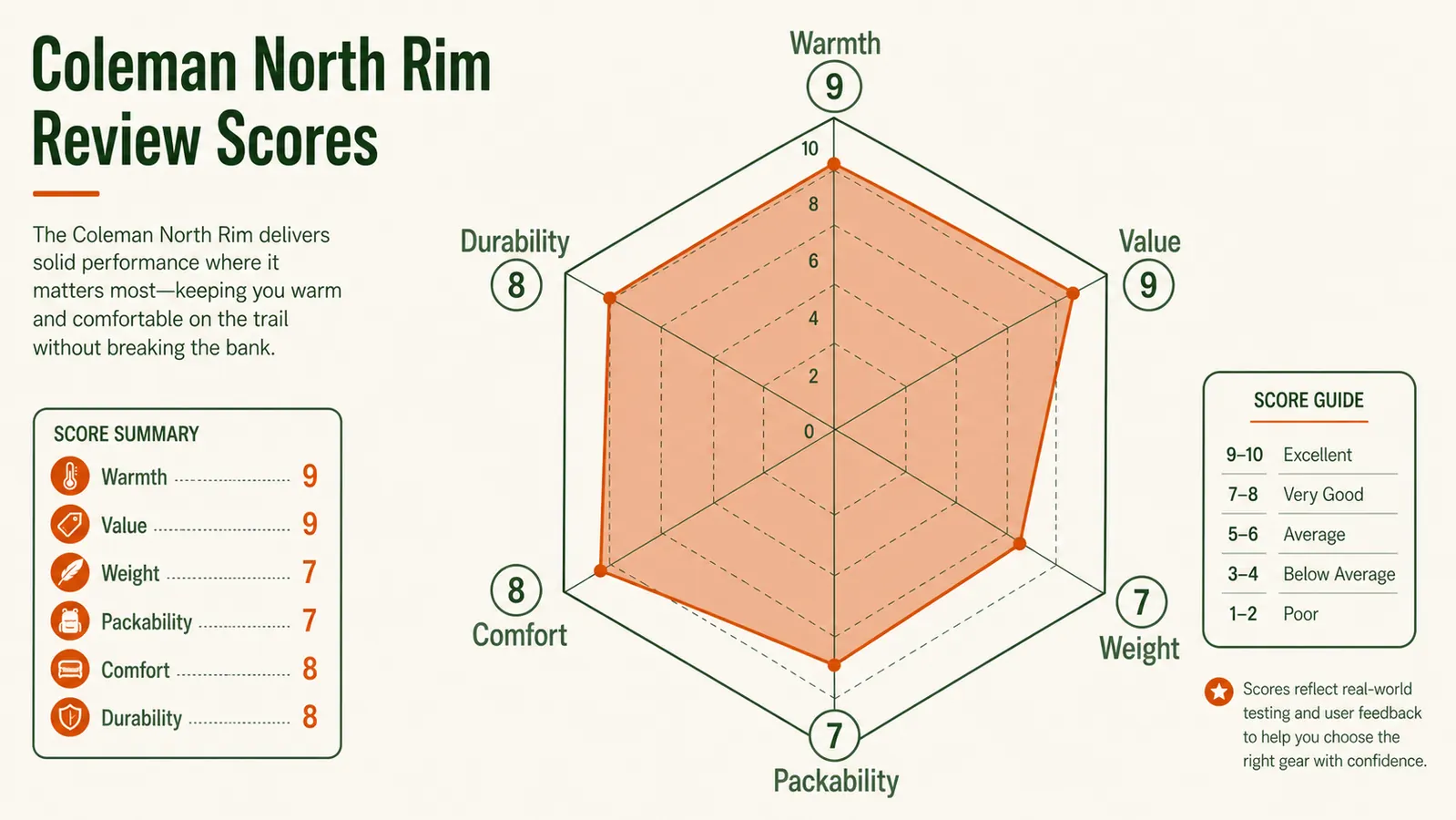
A dependable budget cold-weather mummy bag with honest limitations: real comfort floor is closer to 15 degrees than 0, the zipper snags on the draft tube at least once a trip, and the packed size is bigger than competitors at the same price. Worth it for car-campers sleeping in shoulder season and mild winter conditions. Not the bag for solo backpackers counting ounces or anyone planning to push below 10 degrees.
Amazon Check Today's Price →If cold nights have been keeping you up, the North Rim is worth a serious look at its current price.
More than 11,000 reviewers have used this bag in real conditions. Check what they are saying and see today's price on Amazon.
Amazon Check Today's Price on Amazon →What Nobody Tells You About the 0-Degree Rating
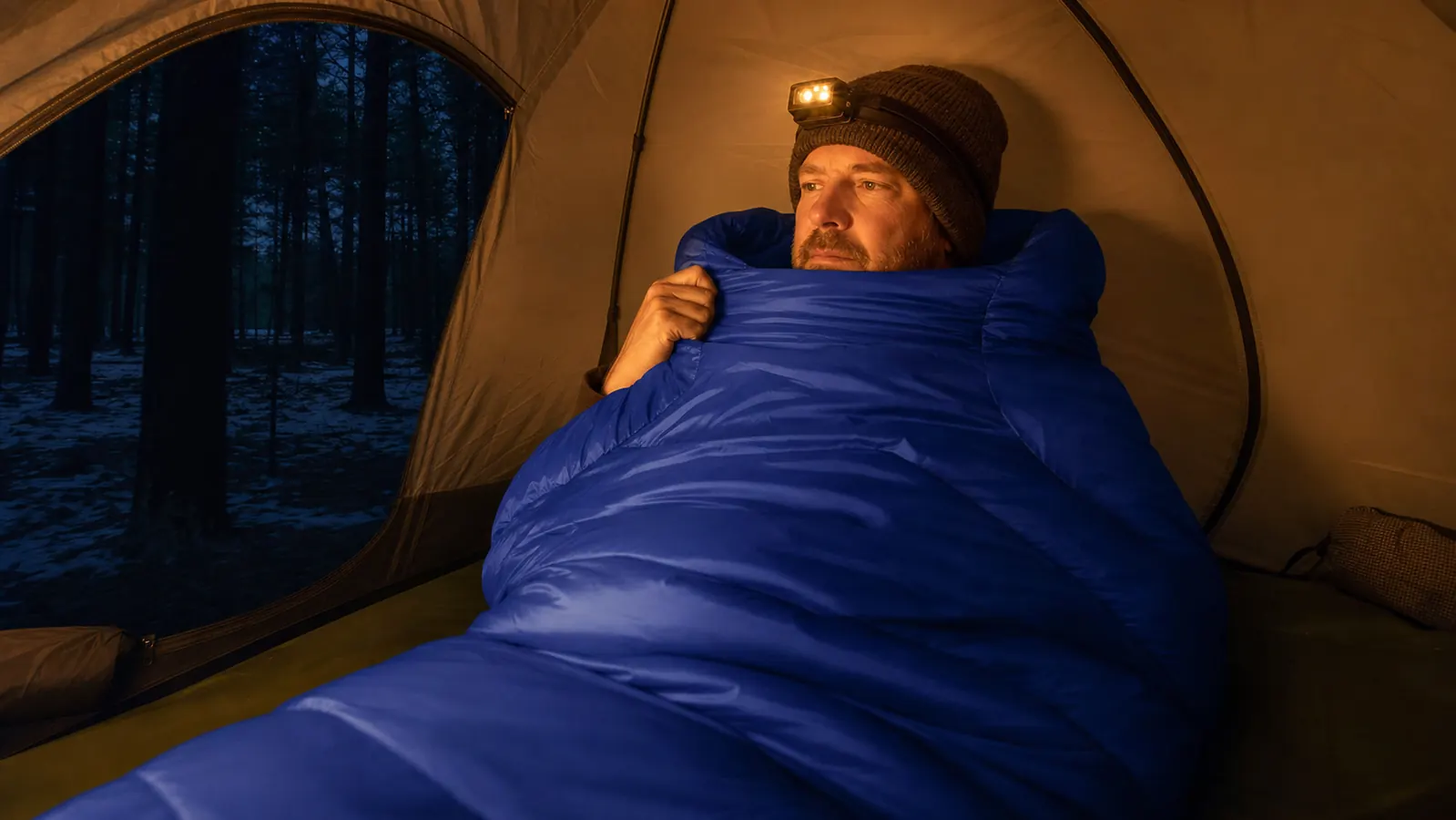
The sleeping bag industry uses the EN 13537 and ISO 23537 temperature rating standards, which test bags on a thermally average adult male in a specific controlled environment. The lower limit rating, which is what most manufacturers call the survival or extreme rating, is not a comfort rating. The comfort rating for the North Rim, by Coleman's own published specs, is closer to 20 degrees Fahrenheit. That is already 20 degrees warmer than what the headline says. In practice, across three winters, I have found the real comfort floor to be around 15 degrees for me, a 34-year-old male at 185 pounds who sleeps warm.
If you are a woman, or a lighter sleeper, or someone who tends to run cold, knock another five to ten degrees off that. I have camped with people who needed to layer a fleece liner inside this bag to stay comfortable at 25 degrees. That is not a knock on the Coleman specifically. It is an industry-wide truth that most product pages hide in fine print or skip entirely. I am putting it at the top because it is the most important thing to understand before you buy any budget cold-weather bag. A fleece liner costs around twenty dollars and genuinely extends the bag's useful range by about ten degrees, so factor that into your planning if you are targeting shoulder-season and winter use.
For three-season camping and shoulder-season trips where overnight lows stay above 15 degrees, the North Rim performs exactly as you would want it to. It is when you start pushing into the single digits that you discover the real limits. And at that point, no amount of wool socks will fully compensate. The bag simply does not have the insulation density to deliver genuine comfort at its marketed extreme temperature for most real-world sleepers.
The Zipper Situation (This Will Happen to You)
The North Rim uses a left-hand zipper that runs from the shoulder down to the foot box. There is a draft tube sewn along the interior side of the zipper to block cold air from sneaking through the teeth. In theory, great design. In practice, that draft tube has a texture and looseness that causes it to fold over and pinch into the zipper track about once every three or four zips. When it catches, the zipper locks up completely. You cannot force it without risking a tear. You have to unzip partially, feel around in the dark for the pinch point, smooth the fabric back, and try again.
At room temperature, in daylight, this is a five-second annoyance. At 2am when you are half-asleep and need to get out quickly, it is infuriating. I have done it enough times that I now have a ritual: before I zip up for the night, I run my hand along the draft tube to make sure it is laying flat, then I zip slowly and pause at the shoulder. That fixes maybe 80 percent of the snags. The other 20 percent still find me wrestling with the zipper in the dark. It is a known and consistent issue, not a one-off manufacturing defect.
It is worth noting that the North Rim's zipper is a standard coil zipper, not a YKK. A few reviewers have reported full zipper failure after two or three seasons. Mine has not failed, but the quality gap between this and a bag with a dedicated cold-weather zipper is noticeable. If zipper reliability is a top priority for you, it is worth stepping up to a bag that specifies a YKK or anti-snag zipper construction. The zipper issue alone keeps this bag out of the kit for trips where a malfunction would be genuinely dangerous.
The Packed Size Problem for Backpackers
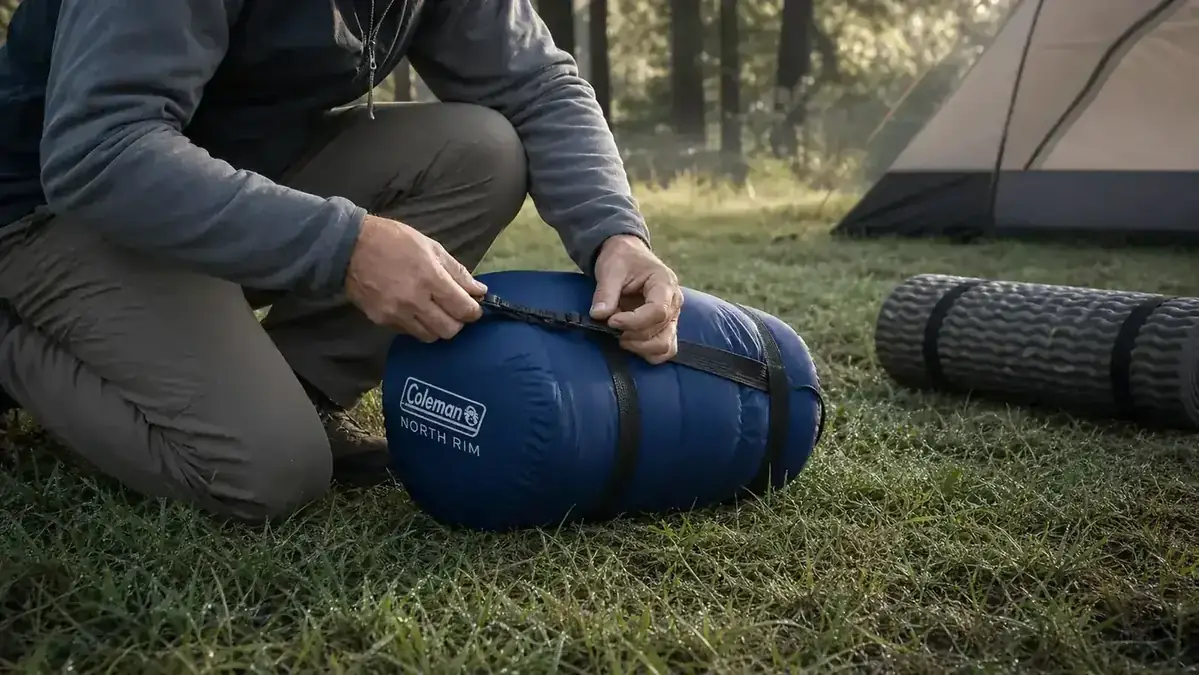
The Coleman North Rim packs down to a stuff sack that is roughly 9 inches by 14 inches and weighs in around 4.5 pounds. That is not a dealbreaker for car camping, where you are loading it into the back of a truck or SUV and pulling it out at the campsite. It is a real problem if you are trying to fit this bag into a 50-liter pack alongside a tent, a sleeping pad, food, and clothing for two or three nights. That stuff sack is going to take up nearly a third of your available volume, and the weight puts you at a significant disadvantage versus down-fill alternatives.
I tried this configuration on a late-February backpacking trip in the Appalachians and ended up having to strap the stuff sack to the outside of my pack. In temperatures that cold, having your sleeping bag strapped to the exterior is not ideal. Moisture from snow flurries got into the stuff sack, and while the bag's synthetic fill handled the slight dampness fine, it was not a situation I wanted to repeat. For backpackers, there are compressible synthetic alternatives in the same price range that pack down meaningfully smaller. The North Rim's bulk is the single biggest reason I do not recommend it as a primary backpacking bag, even though the warmth-to-price ratio is genuinely strong for car camping.
For car camping in shoulder season and winter conditions above 15 degrees, the North Rim delivers real warmth at a fair price. Just know what you are buying before the temperature drops.
What the North Rim Actually Does Well
The fill is a ColMaxx synthetic insulation that Coleman developed for their own line. It is not the warmest-per-ounce insulation you will find, but it has two qualities that matter a great deal in real camping conditions. First, it retains most of its loft and thermal performance even when slightly damp. If your tent gets humid overnight and some condensation wicks onto the bag shell, the insulation does not collapse the way a down fill would. On shoulder-season trips where overnight temps swing between rain and frost, that moisture resistance is more valuable than the marketing copy suggests. Second, it rebounds well after being compressed in the stuff sack. After a full three seasons and probably thirty-five compression cycles, I have not noticed any meaningful loss of loft.
The shell is a polyester taffeta that feels more durable than the price would suggest. Mine has not developed any tears, and the stitching at the seams and foot box has stayed tight over three seasons of genuine hard use. The mummy cut is a true mummy, narrowing significantly from the shoulder to the foot, which keeps the thermal pocket close to your body and eliminates cold air pooling. Some people find the shoulder and hip fit restrictive. I am 6 feet tall and 185 pounds, and the regular size fits me without feeling like I am strapped down, though I could not comfortably roll over without shuffling the whole bag with me.
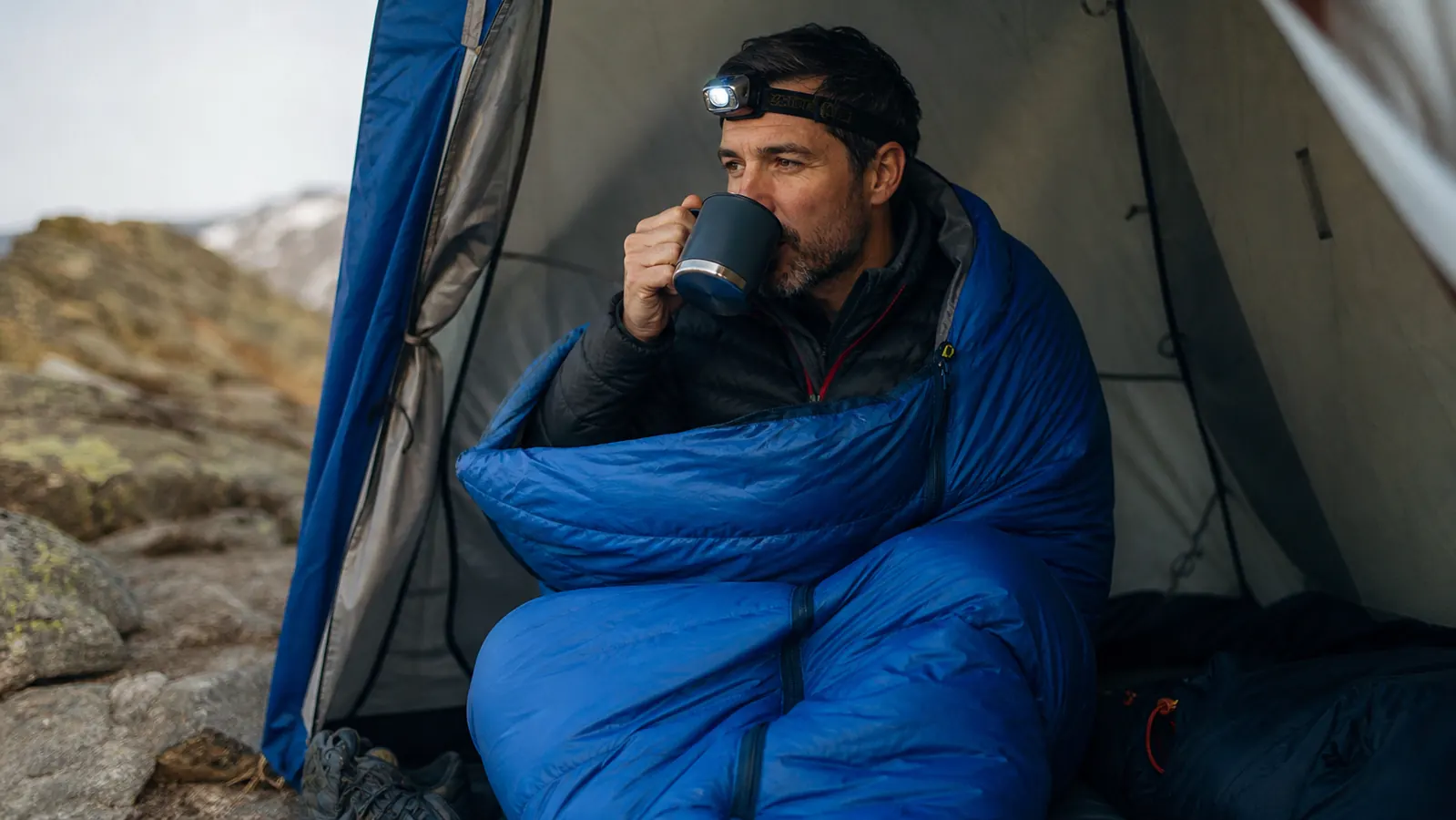
The hood is genuinely good, and it is the feature I mention first when someone asks what the bag does well. It cinches down via a drawcord and actually seals around your face when pulled tight. On the nights when I have been pushing the bag's real limits, cinching the hood down to just a breathing aperture made a noticeable difference in retained warmth around my neck and ears. A lot of budget bags put in a token hood that flops around and does not seal properly. The North Rim's hood functions the way a good mummy bag hood should.
How It Compares to What I Used Before
Before the North Rim, I was using a rectangular synthetic bag rated to 20 degrees. Moving to the mummy cut alone added meaningful warmth, because the mummy design eliminates the cold air pockets that form around your legs and feet in a rectangular bag. The North Rim felt noticeably warmer at the same temperature not because of the insulation difference specifically, but because the shape stopped me from losing heat to empty air space. If you are upgrading from a rectangular bag to this one, set realistic expectations about how much of the warmth improvement comes from the Coleman's insulation versus the geometry switch. The geometry does a lot of the work.
I have also tested the Teton Sports Celsius XXL and borrowed a friend's Marmot Trestles Elite Eco for back-to-back comparison trips. The Teton is wider and more comfortable to move around in, which cold sleepers tend to prefer because you can wear more clothing inside it without feeling pinched at the hips. The Marmot, at nearly double the price, is noticeably warmer at equivalent temperatures and packs down to a significantly smaller stuff sack. If the Coleman North Rim is the floor for this category, the Marmot is the ceiling. The North Rim sits comfortably in the middle of that range, which is exactly where most weekend campers with a budget constraint need it to be. I have recommended it to friends a dozen times, always with the temperature-rating caveat.
What I Liked
- Synthetic ColMaxx fill stays lofted even in damp conditions, where down collapses and loses warmth
- Hood cinches down tightly and genuinely seals around your face, which matters below 20 degrees
- Mummy cut eliminates cold air pockets at the feet and hips, delivering warmth well above its price range for car campers
- Shell fabric and seam stitching feel more durable than comparable bags at the same price point
- Insulation holds its loft across three-plus seasons and dozens of compression cycles without noticeable degradation
Where It Falls Short
- Real comfort floor is closer to 15 degrees for average adult male sleepers, not 0 as marketed
- Draft tube snags the zipper consistently, typically once or twice per night in cold weather when you are moving around
- Packed size at roughly 9 by 14 inches is too large for backpackers trying to fit a full kit into a 50-liter pack
- Zipper is not YKK-grade, and some users report zipper failure after two or three seasons of regular use
- Mummy cut is restrictive enough that restless side-sleepers may find themselves fighting the bag rather than sleeping in it
Who This Is For
The Coleman North Rim is the right bag if you are a car-camper or car-camping trip leader who needs a reliable cold-weather option for overnight lows in the 15-to-35 degree range. It is a strong pick for scouts, youth group leaders, and family camping trips where cost is a real factor and you need a bag that will hold up beyond one season. It works well as a second bag to keep in the truck for surprise cold snaps, or as a loaner for a fellow camper who shows up underprepared. The moisture-resistant synthetic fill means it tolerates the kind of damp, unpredictable conditions you get on a mid-November weekend campout far better than a budget down bag at the same price. If you know going in that your real-world overnight temps will stay above 15 degrees and you are loading in by vehicle, this bag delivers exactly what you need.
Who Should Skip It
Skip the North Rim if you are planning multi-night backpacking trips where packed size and carry weight matter. At 4.5 pounds and a 9-by-14 stuff sack, it will cost you comfort on trail. Skip it if you are a cold sleeper who genuinely needs true 0-degree performance, because you will be layering inside it all night and fighting the mummy cut every time you try to roll over. Skip it if zipper reliability is non-negotiable for your conditions, because the draft tube snag is consistent and the zipper hardware is not top-grade. Skip it if you tend to sleep hot and want the option to vent easily, because the mummy cut plus the non-ideal zipper experience makes temperature management annoying. And skip it if you need a bag that converts to a blanket or pairs well with a double sleeping system, because the mummy geometry does not play well with that kind of flexibility. For those use cases, look at the Teton Sports Celsius, the Kelty Cosmic, or budget up to the Marmot Trestles.
If the North Rim fits your camping style, it is one of the better cold-weather values in this price range.
Over 11,000 buyers have put it through real winters. Check today's price on Amazon and read what they found on the nights it counted.
Amazon Check Today's Price on Amazon →