
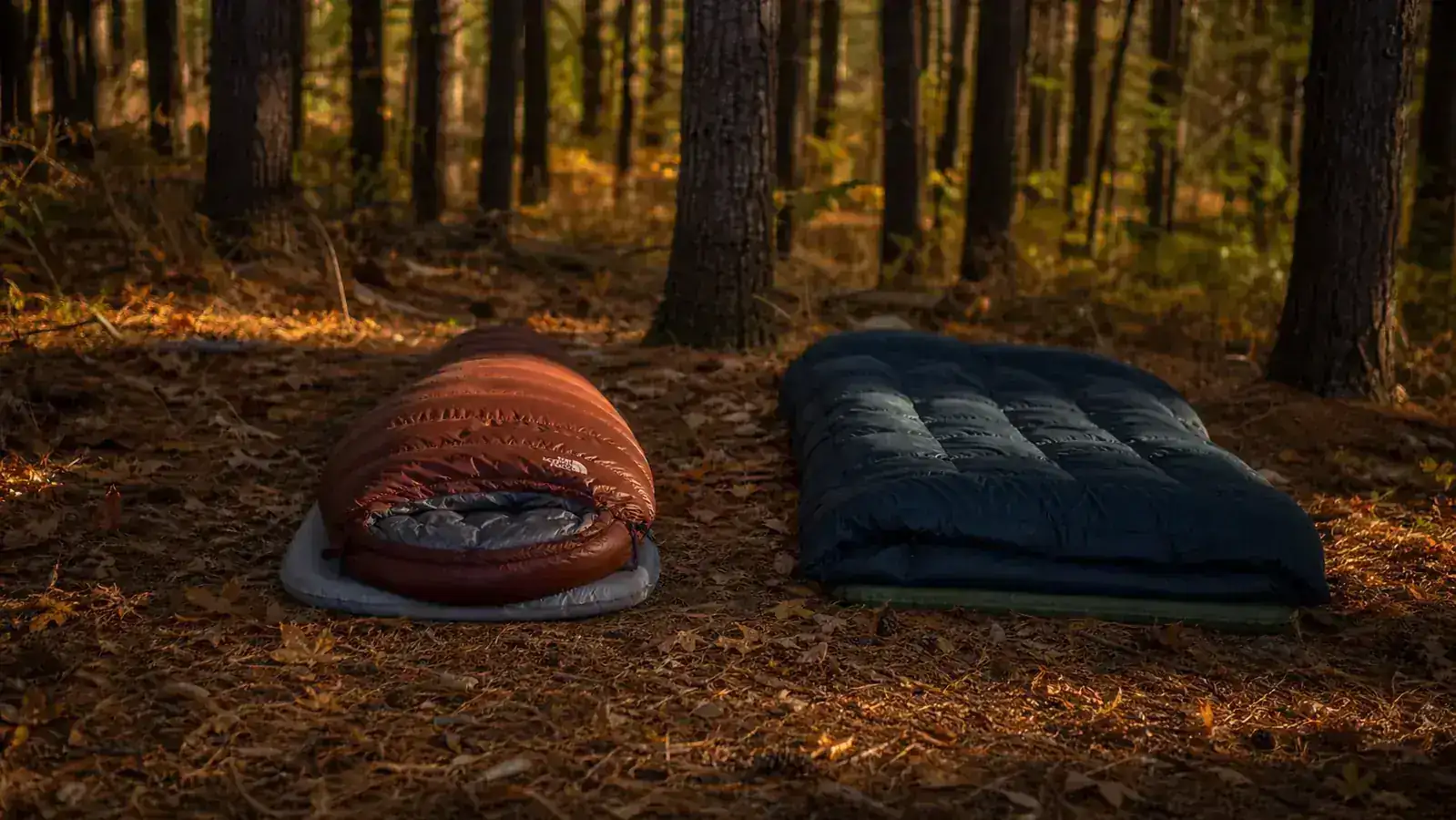
I spent my first three camping seasons in a big rectangular bag that I borrowed from my neighbor. It was fine in July. But the first time I camped in October, I woke up at 3am shivering so hard I could hear my teeth. I told myself I just needed more layers. What I actually needed was a different shape. A mummy bag. Specifically the Coleman North Rim, which has been my go-to cold-weather bag for three seasons now and which I have taken everywhere from Cataloochee Valley in November to a January car-camp in the Smoky Mountain foothills where the overnight low hit 14 degrees.
The shape difference is not a minor detail. It changes how warm you sleep, how much the bag weighs, how small it packs, and how much it moves around while you're trying to rest. If you are shopping for a bag that will handle temperatures below 40 degrees, here are ten reasons the mummy design wins every time.
Still waking up cold at 3am? The Coleman North Rim is rated to 0 degrees and it is the bag I reach for when the forecast is ugly.
Over 11,000 campers have rated it 4.6 stars on Amazon. Check the current price and availability below.
Amazon Check Today's Price on Amazon →A Mummy Bag Eliminates the Cold Air Pockets That a Rectangular Bag Traps
Your body heat is the furnace inside any sleeping bag. The bag's job is to trap that heat and hold it close. A rectangular bag is a wide open room for that warm air to spread into, and a wide open room for cold air to infiltrate from the sides, the foot, and the gap around your shoulders. A mummy bag hugs close to your body shape, so there is almost no dead air to heat up. The Coleman North Rim uses a barrel-style mummy cut that does this without feeling like a straitjacket. On my first night in it at 28 degrees, I stayed warm in a base layer and light fleece. Same conditions in a rectangular bag, I would have been adding every layer I owned by midnight.
The Hood Seals In Heat Where You Lose It Most
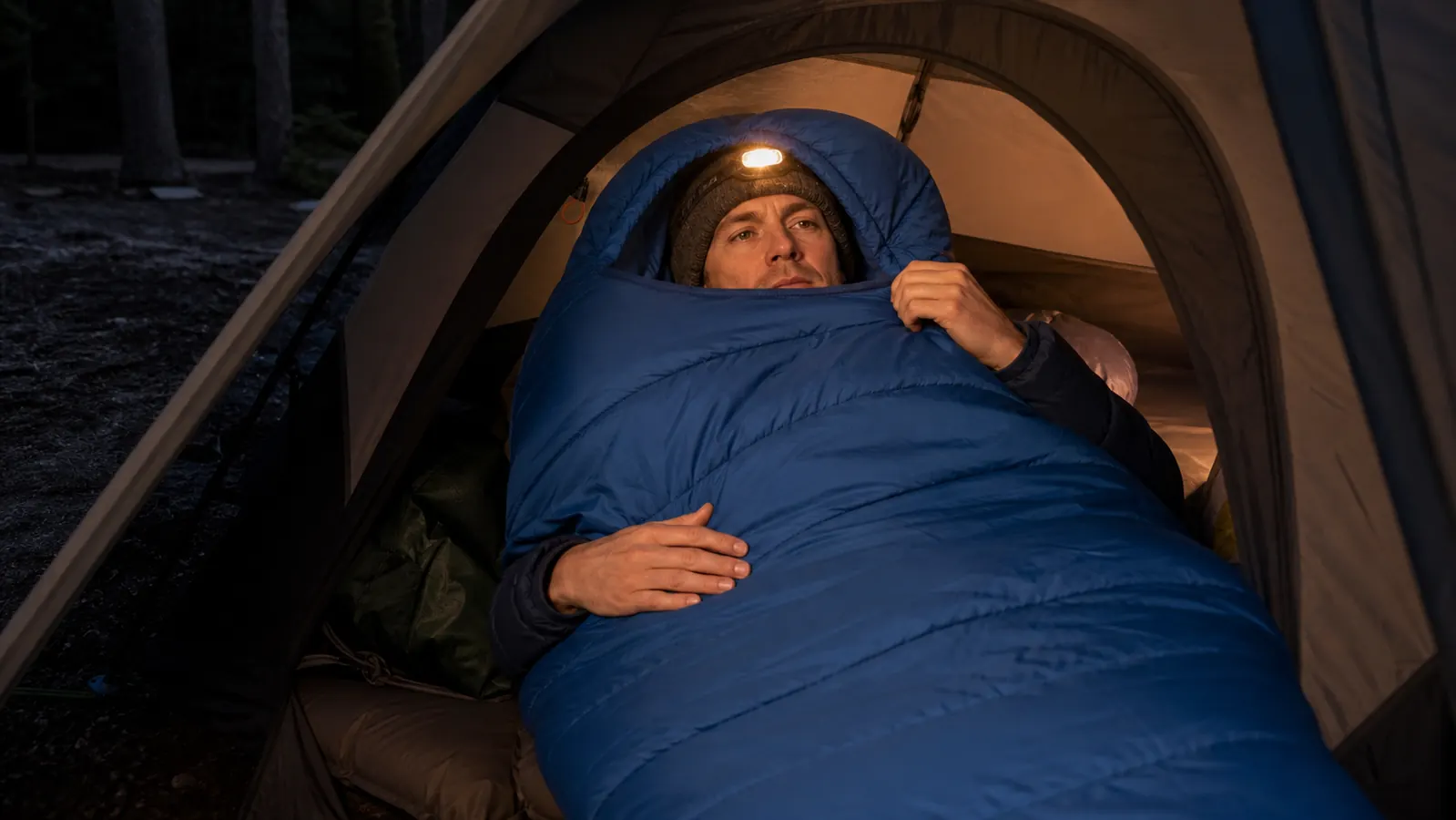
Up to 40 percent of your body heat escapes through your head and neck when they are not covered. A rectangular bag does nothing for your head. You have to pile on a beanie and hope it stays put. A mummy bag has a contoured hood that cinches down around your face, leaving just a breathing gap. The North Rim's hood is generously sized and does not collapse onto your face like cheaper bags. You can tighten the drawstring from inside the bag without taking your hands out, which matters a lot when it is 20 degrees and you do not want to expose your arms.
Mummy Bags Pack Down Far Smaller
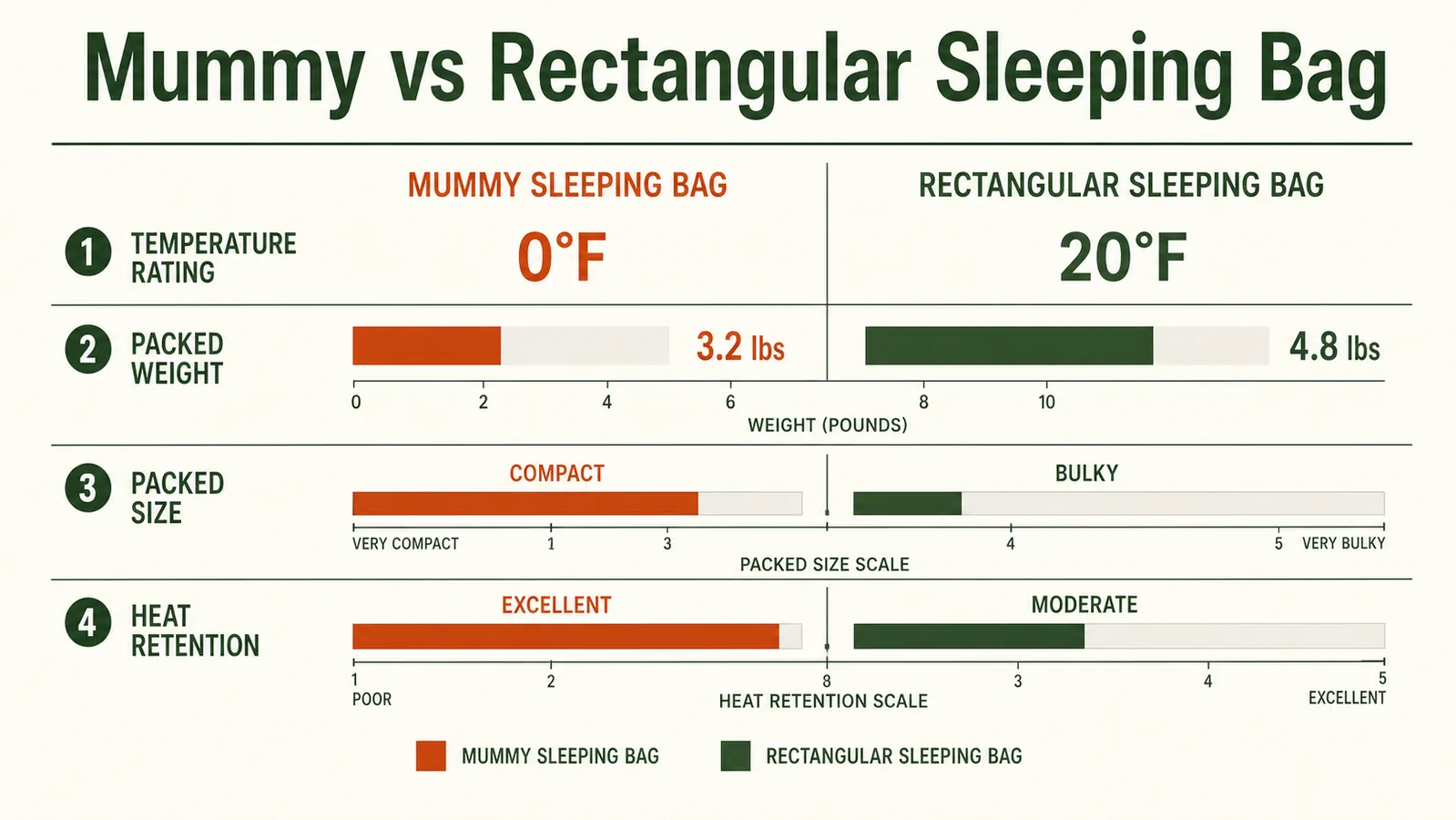
The rectangular bag I used to borrow stuffed down to the size of a carry-on suitcase. It took up a third of my car trunk on car-camp weekends and was a complete nonstarter for backpacking. The Coleman North Rim compresses into a stuff sack that I can fit alongside a weekend's worth of food and gear without rearranging everything twice. If you ever plan to move beyond car-camping to any kind of foot travel, the mummy shape is the only practical option.
They Weigh Less for the Same Temperature Rating
Less fabric, less insulation to fill empty space, less hardware on the zipper run. A mummy bag rated to 0 degrees weighs significantly less than a rectangular bag with the same temperature rating, because the rectangular bag has to insulate a much larger air volume. The North Rim comes in at around four and a half pounds for the regular size, which is solid for a 0-degree synthetic bag. You feel that savings on a long carry from the parking area to a backcountry site.
The Footbox Keeps Your Feet Warm Without Piling on Socks
Cold feet are what ruins sleep on a winter campout. Rectangular bags have a flat foot section that lets your feet slide to the corners, away from each other, where they get cold fast. A mummy bag has a shaped footbox that cups your feet together and keeps them in the insulated zone all night. I used to sleep in two pairs of wool socks in my old rectangular bag. In the North Rim I wear one light pair and my feet stay comfortable down to around 20 degrees.
I slept in a rectangular bag for three seasons. Then I slept one night in the North Rim at 28 degrees and I have not touched a rectangular bag since.
Mummy Bags Do Not Twist Around While You Sleep
A rectangular bag is loose enough that when you roll over, the bag stays behind and you end up wrestling it back into position at 2am. A mummy bag moves with you, because it fits close to your body. The Coleman North Rim has a trapezoidal cut that gives enough shoulder room to roll over without fighting the bag, but is still close enough that it does not bunch up underneath you. After three seasons I can roll over in my sleep without waking up.
A Full-Length Draft Tube Blocks Cold Air at the Zipper
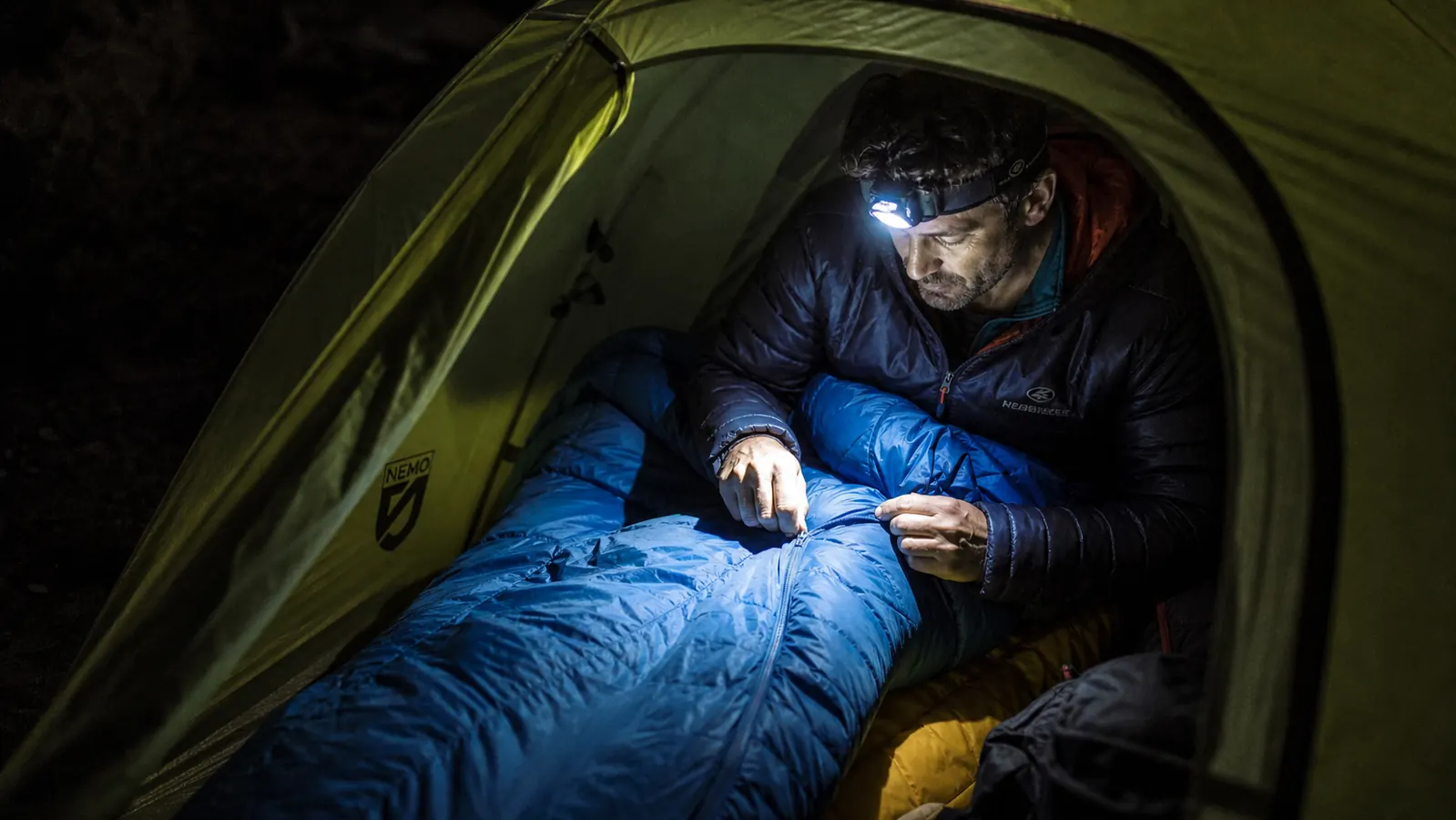
The zipper on any sleeping bag is the weakest point in the insulation. Cold air seeps through the coil if there is nothing behind it. The North Rim has a full-length draft tube, a tube of insulation that runs the entire length of the zipper on the inside and blocks that cold channel completely. Rectangular bags rarely include this feature at the same price point. On a 15-degree night it is a meaningful difference.
Temperature Ratings Mean More on a Mummy Bag
When a manufacturer rates a rectangular bag to 20 degrees, they are testing it with a sleeping pad, a liner, and a mannequin in an ideal lab setup. Real-world performance is usually 10 to 15 degrees warmer than the rating suggests, meaning that 20-degree rectangular bag is really a 30 to 35 degree bag in honest field use. A mummy bag's temperature rating is more reliable because the shape does a better job matching lab conditions. The North Rim is rated to 0 degrees, and in my experience it performs right around 10 degrees in real conditions, which is accurate and honest for a bag in this category.
Synthetic Fill Stays Warm Even If It Gets Damp
The North Rim uses Coleman's Coletherm synthetic insulation rather than down. Down collapses and loses most of its loft when wet, which is a real problem if your tent gets condensation overnight or you get caught in weather. Synthetic fill retains much of its warmth even when damp. I have woken up to a wet tent floor more than once. A down bag in that situation is a problem. The North Rim keeps working. For three-season and winter car-camping in the eastern US where humidity is a constant companion, synthetic is the practical call.
The Coleman North Rim Costs Less Than Premium Alternatives for the Same Job
A 0-degree synthetic mummy bag from Western Mountaineering, Marmot, or REI will run you $300 to $600. The Coleman North Rim handles the same temperature range for a fraction of that figure. The tradeoffs are weight and pack size relative to the top-tier options, both of which are real. But for weekend car-camping and light backpacking where you are not counting every ounce, the North Rim does the job at a price that leaves money for the rest of your kit. After three cold seasons and more than 30 nights below 30 degrees, mine is still in excellent shape.
What I'd Skip
If you camp only in summer, from June through August, in campgrounds that rarely dip below 55 degrees at night, a mummy bag is overkill. You will be too warm and the snug fit can feel claustrophobic on a 60-degree night when you just want to sprawl. A rectangular bag or a semi-rectangular bag rated to 40 or 45 degrees is the right tool for that use case. The mummy shape earns its keep when the temperature actually drops. If your camping calendar runs October through April or you are in elevation, it is the only design that makes sense.
The Coleman North Rim is the cold-weather bag I have trusted for three seasons. If you camp anywhere it gets cold, it belongs in your kit.
Rated to 0 degrees, built with a full-length draft tube and contoured hood. See the current price and what other campers are saying on Amazon.
Amazon Check Today's Price on Amazon →