
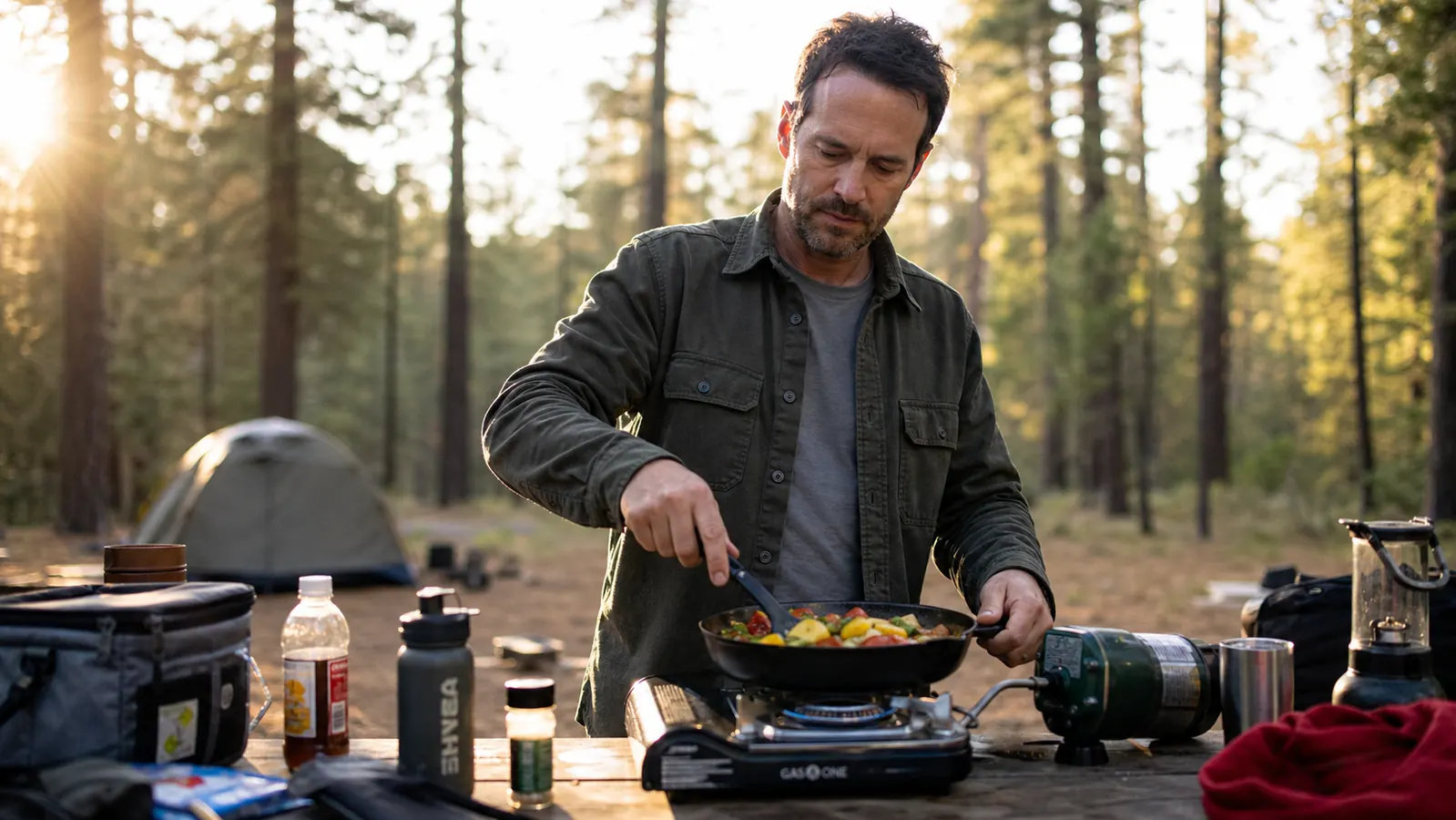
For the first several years I led group camping trips, I had a reputation for serving cold food. Not deliberately. I just could not get a campfire going fast enough, or consistently enough, to actually cook on it. By the time the coals were right, people had already eaten granola bars and gone to bed. I told myself it was part of the experience. It was not. It was a failure of equipment.
I had tried a basic propane canister stove a few years back, one of those screw-top burners you put directly on a green Coleman cylinder. It worked fine at low altitude on a calm day. But we camp in Northern California, and the trips where I needed heat most, the cold October mornings and the rainy November weekends, were exactly when that stove let me down. Propane gets sluggish when it is cold. The flame would sputter, recover, sputter again. I would stand there shielding the burner from the wind with my jacket while everyone waited.
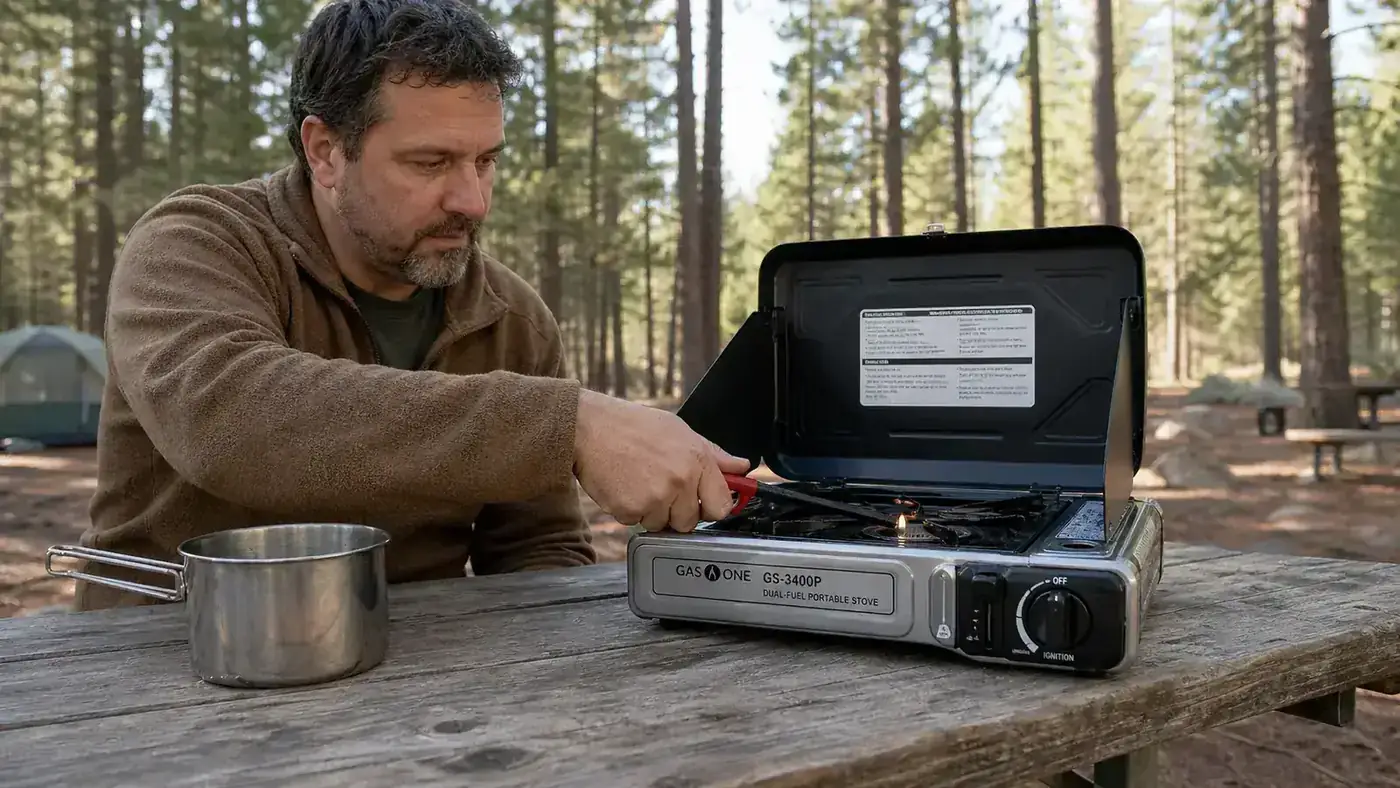
A friend of mine named Dale had been using the Gas One GS-3400P for a couple of seasons. He brought it on a four-person trip to Del Valle in late October. I watched him boil water for coffee in about four minutes flat, at 45 degrees with a steady breeze coming off the reservoir. He did not hover over it. He just turned the knob and it worked. I asked him what was different.
He explained the dual-fuel setup. The GS-3400P runs on either propane canisters or butane, with a single dial that switches between the two. Butane performs better in the cold than most people expect, and when you are in a pinch, you can grab a butane canister at practically any grocery or gas station in California. That flexibility mattered to me. I had been burned before by showing up at a campsite with no fuel because the hardware store near the trailhead only stocked the other kind.
He just turned the knob and it worked. No hovering, no wind block, no waiting. I bought one before the next trip.
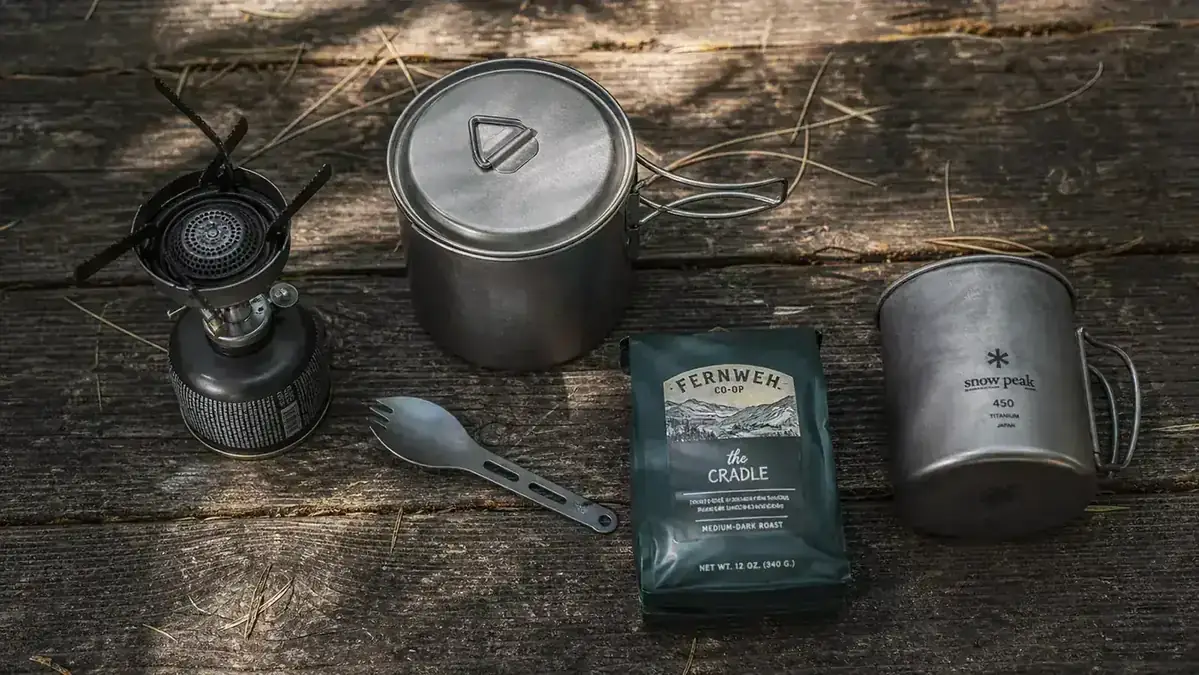
I ordered the Gas One GS-3400P before our next trip. It came in a compact carrying case, which I appreciated because I pack light and have zero tolerance for gear that rattles loose in the truck bed. The stove itself is about the size of a hardback book when closed. It opened, clicked into the ready position, and felt solid. Not flimsy. The kind of solid where you can tell the mold and material quality decisions were made by someone who actually uses this thing, not someone who designed it from a conference room.
First trip with it was a three-night weekend at Grizzly Creek Redwoods in November. Morning temperatures were in the low 40s. I ran it on a butane canister, and breakfast was hot and on the table before anyone else had found their rain jackets. Scrambled eggs, pre-mixed and poured from a jar. Done in six minutes. I could control the simmer precisely enough to not burn the bottom of the pan, which was something I had genuinely never managed on any stove I had used before at that campsite.
The same stove that fixed my cold-food problem is available on Amazon right now.
The Gas One GS-3400P runs on propane or butane, packs into its own case, and works in cold and wind where single-fuel stoves sputter out. Nearly 15,000 reviews and a 4.6-star rating back up what I found in the field.
Amazon Check Today's Price on Amazon →The trips since then have all had better food. Not because I became a better camp cook, though I think I have relaxed into it more now that I trust the heat source. It is because consistent, controllable heat changes what is possible. I have done garlic butter pasta at camp. Quesadillas. Actual oatmeal that is not a gluey cold mess. One time I simmered a pot of chili for twenty-five minutes while we played cards. The stove just sat there doing its job.
It is not a perfect piece of gear. The igniter gave out after about a year of hard use, and I now carry a lighter. The burner cap shows some rust spots from storage in a damp garage, something I should have prevented with a bit more care. And it runs through butane faster than I expected on max heat, so I bring two canisters on any trip longer than two nights. None of that has made me want to replace it. It is the kind of gear where the flaws are maintenance issues, not design failures.
What I'd Tell You If We Were Sitting at My Kitchen Table
Here is the honest version. If you have been getting by with a campfire and a grate, or you have a single-fuel canister stove that has been letting you down in the cold, you do not need to spend a lot of money to fix the problem. The Gas One GS-3400P costs less than a full tank of gas and fits in a day pack. It runs on fuel you can buy anywhere. It lights reliably, it simmers, and it packs flat. For weekend car-camping and short backpacking trips where you want real food without real hassle, it is the right tool.
Dale still brings his on every trip. So do I. We have cooked side by side on them at campgrounds up and down the central coast and in the Sierras, and I have watched other campers wander over to ask what we are using. I always tell them the same thing I am telling you: it is a twenty-dollar fix to a problem you probably did not realize had a solution this simple.
If cold camp food has become your tradition too, this is how you end it.
The Gas One GS-3400P is the stove I recommend to every new camper in my group. Dual fuel, compact case, reliable ignition, and real simmer control. Read the full two-season field test if you want the deep dive, or check today's price on Amazon and make a decision from there.
Amazon Check Today's Price on Amazon →